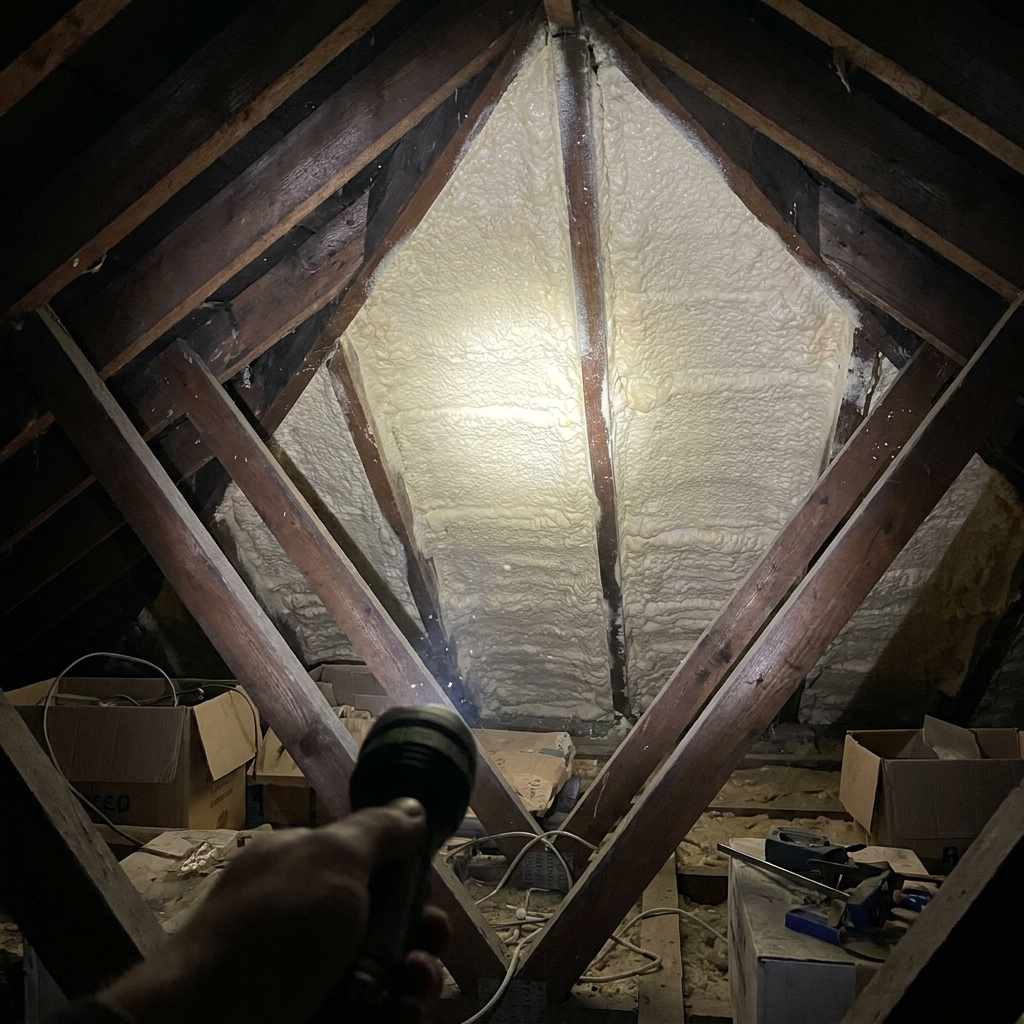
The short answer
Insulation materials, including spray foam, are subject to fire-safety requirements under the building regulations, and the right way to judge a specific installation is to check it against those rules and the manufacturer’s data. Fire performance depends on the product, how it was installed and the building. General reassurance and general alarm are both unhelpful; verification is what matters. For a specific roof, Building Control, the manufacturer’s data and a competent professional are the authorities. This page is general information, not fire-safety advice.
Fire safety is a serious, regulated area, and the responsible thing is to point you to the rules and the right authorities rather than offer blanket reassurance or alarm. This page explains, at a general level, how fire performance of insulation is governed in the UK and how a specific installation should be verified. It is general information, not fire-safety, building-control or legal advice.
Fire safety at a glance
- Governed by Building Regulations Approved Document B
- What matters Product, installation and building together
- Verification Building Control & manufacturer data
- General reassurance Not a substitute for checking your install
- This page is General information, not fire advice
How fire safety of insulation is governed
In England and Wales, fire safety in buildings is addressed through the building regulations, with Approved Document B covering fire safety. Insulation products, including spray foams, are expected to meet the relevant requirements for their use, and products carry classifications describing their reaction to fire. The key point for a homeowner is that fire performance is not a single property of “foam” in the abstract — it depends on the specific product, how and where it was installed, and the building it is in.
This is why honest guidance avoids both blanket reassurance (“foam is always safe”) and blanket alarm (“foam is a fire hazard”). Neither statement is meaningful without reference to the actual product and installation against the regulations.
Why a specific installation must be verified
Because the answer is installation-specific, the sensible path is verification rather than generalisation. Two things are worth establishing:
- The product’s data. The manufacturer’s documentation states the product’s fire classification and the conditions for its correct use.
- The installation’s compliance. Building Control and any competent-person scheme records can indicate whether the work was carried out and signed off appropriately.
If those cannot be evidenced — which is common where foam was sold door-to-door without proper paperwork — that itself is a reason for an independent professional to look at the installation. The same lack of documentation often features in mis-selling concerns.
Where fire safety meets the wider picture
Fire safety sits alongside the other reasons foam attracts scrutiny — obscured timbers, ventilation, moisture and lending. A professional assessing a foamed roof considers the installation as a whole. If you are already arranging an inspection for property or mortgage reasons, raise fire-related questions then so the right specialist can advise or direct you to Building Control. Many homeowners reach this topic alongside the broader question of whether they need the foam removed.
| Question | Right authority |
|---|---|
| Product fire classification | Manufacturer documentation |
| Was the install compliant? | Building Control / competent-person records |
| Building-wide fire safety | A qualified fire-safety professional |
| Regulatory framework | Approved Document B (GOV.UK) |
Why documentation is the practical starting point
As with the wider health questions, the single biggest obstacle to answering a fire-safety query is usually missing information. Where foam was installed by a reputable contractor under a competent-person scheme, there should be records identifying the product and confirming the work. Where it was sold door-to-door with little paperwork — a common pattern — the homeowner may not even know which foam is in the roof, let alone its fire classification. Re-establishing that provenance is the practical first step: locate any certificates, identify the product by its data sheet, and confirm with Building Control whether the installation was notified and approved.
This matters because fire-safety reassurance is only meaningful when tied to specifics. A statement that “modern foams meet relevant standards” tells you nothing reliable about the particular material in your roof if you cannot identify it. Treat the question as a verification exercise, not a debate to be won by general argument, and you will reach a sound answer faster — and avoid both false comfort and needless worry.
What to do next
If fire safety is a concern, gather the manufacturer’s product data, check with Building Control about the installation’s compliance, and, for anything beyond that, consult a qualified fire-safety professional. Where you are also assessing the roof for property reasons, an independent inspection by a RICS surveyor or specialist not selling removal can flag issues and signpost the right authority. This page is general information only and does not constitute fire-safety, building-control or legal advice.
Frequently asked questions
Is spray foam a fire hazard?
Fire performance is not a single property of “foam” in the abstract — it depends on the specific product, the installation and the building, judged against Approved Document B. Both blanket reassurance and blanket alarm are unhelpful. The right step is to verify your specific product and install.
What governs the fire safety of insulation?
In England and Wales, fire safety is addressed through the building regulations, with Approved Document B covering fire safety. Products carry classifications for their reaction to fire and are expected to meet the relevant requirements for their use. Building Control oversees compliance.
How do I check my installation’s fire compliance?
Establish the product’s fire classification from the manufacturer’s documentation, and check with Building Control and any competent-person scheme records whether the work was carried out and signed off appropriately. Missing paperwork is itself a reason to have the install assessed.
Who should I ask about fire safety specifics?
The manufacturer’s documentation for the product, Building Control for installation compliance, and a qualified fire-safety professional for building-wide questions. This page is general information only and is not a substitute for advice from those authorities.
Sources & further reading
- GOV.UK — Building Regulations Approved Document B (fire safety)
- GOV.UK — Building Control and competent-person scheme guidance
- Manufacturer product documentation — fire classification and correct use of a specific foam
- RICS — Spray foam insulation consumer guidance (2023) on verifying installations
This guide is general information, not surveying, structural, legal or financial advice. Whether spray foam needs removing depends on the foam type, install quality, ventilation and your roof timbers’ condition, and an independent inspection by a RICS surveyor or qualified specialist (not a free survey from a company that profits from removal) is essential before you decide.