The short answer
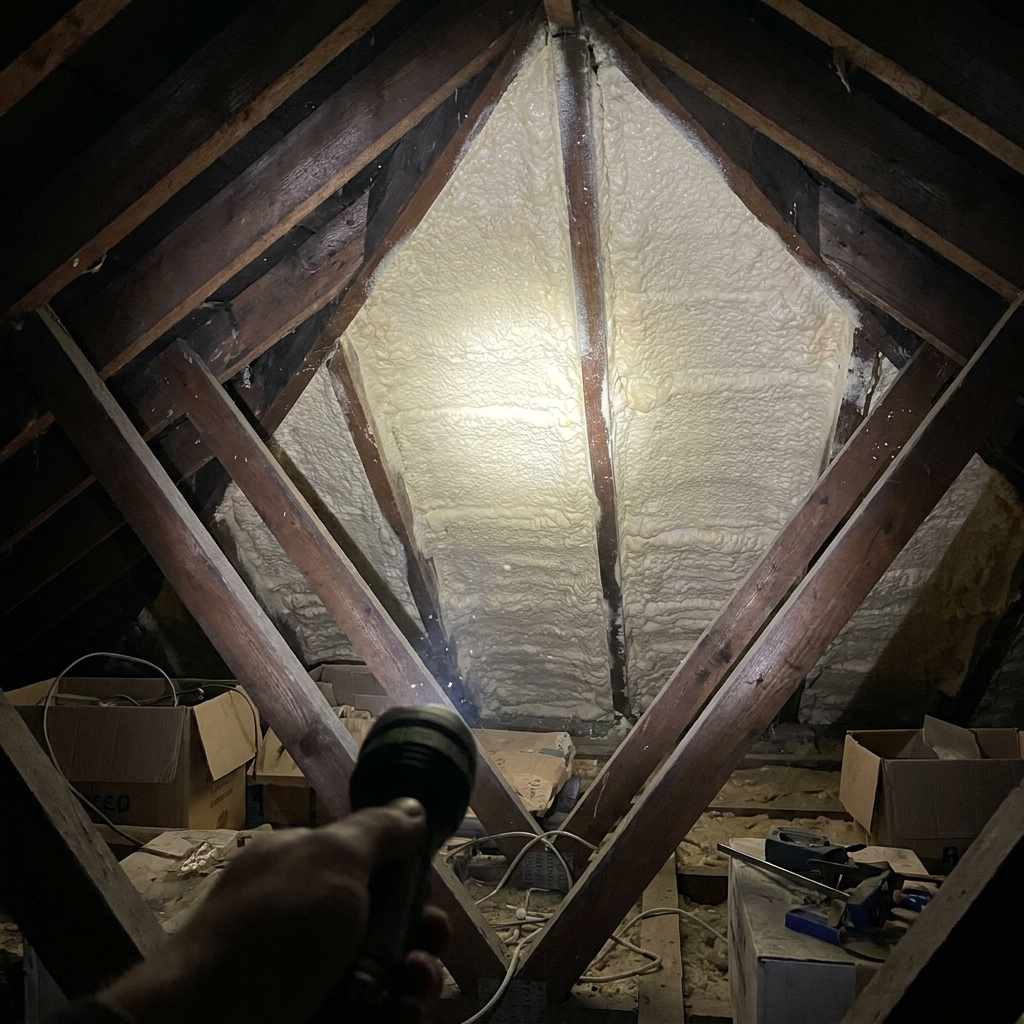
Spray foam removal is a manual, labour-intensive job: there is no chemical that simply dissolves cured foam. A specialist scrapes, cuts and sands the polyurethane off the rafters, felt or roof deck by hand and with power tools, bags the waste, inspects the exposed timbers for moisture or decay, then reinstates ventilation and fits a conventional insulation system. The work usually takes a few days and typically costs £2,000–£5,000+. Always start with an independent inspection, not a free survey from a removal firm.
Cured spray polyurethane foam bonds tightly to whatever it was sprayed onto — rafters, the underside of roofing felt, sarking boards or the tiles themselves. That bond is exactly why removal is awkward: the foam cannot be peeled off in sheets or melted away, so it has to be physically broken back to the substrate. This guide walks through every stage in the order a competent contractor follows it, explains why each step matters to your roof and your mortgage, and shows where an independent professional — rather than the company quoting for the work — should be involved.
Spray foam removal at a glance
- Method Manual / mechanical stripping — no chemical dissolver
- Typical duration 1–5 days for an average loft
- Typical cost £2,000–£5,000+ depending on roof & foam
- Foam types Open-cell (softer) & closed-cell (denser, harder to remove)
- First step Independent inspection, not a free removal-firm survey
- After removal Re-ventilate and reinsulate to current standards
Step one: independent inspection, before anyone quotes for removal
The single most important step happens before a tool touches the roof. You need to know whether the foam is actually causing a problem — or whether it is simply being flagged by a cautious lender — and that judgement should come from someone with nothing to sell. A RICS chartered surveyor or a suitably qualified specialist can assess the foam type, the install quality, the ventilation and, crucially, the condition of the roof timbers underneath. The Royal Institution of Chartered Surveyors’ 2023 consumer guidance is explicit that the decision to remove should rest on an independent survey, not on the word of a firm that profits from saying yes. A good inspector will lift or cut a small inspection patch of foam to view the timber beneath, take moisture readings, and report on ventilation rather than simply glancing through the loft hatch.
This matters financially. Removal typically costs £2,000–£5,000+, while an independent inspection is a fraction of that. Paying for impartial advice first can confirm removal is genuinely necessary — or save you thousands by showing it is not. Be wary of any “free survey” offered by a company that only earns money if you agree to strip the roof; Trading Standards has repeatedly warned that free assessments tied to a sale are sales visits, not impartial diagnoses. Keep the inspection and the removal as two separate transactions with two separate parties wherever you can.
Step two: identifying the foam — open-cell or closed-cell
How the foam comes off depends heavily on what it is. The two families behave very differently, which is why a contractor will identify the product before pricing the job. Open-cell foam is softer, lighter and more vapour-open; it tends to break and crumble, so it is generally quicker to remove. Closed-cell foam is dense and rigid, bonds harder to timber and felt, and is the type more likely to be flagged by surveyors because it can act as a vapour barrier and trap moisture against the roof structure. Closed-cell removal is slower, dustier and more expensive, because the residual bonded skin has to be sanded back rather than simply scraped off. The depth of foam matters too: a thick application takes proportionally more labour than a thin skim.
| Factor | Open-cell | Closed-cell |
|---|---|---|
| Density / feel | Soft, spongy | Hard, rigid |
| Bond to timber/felt | Moderate | Strong |
| Removal effort | Lower | Higher |
| Lender concern | Caution | Greater caution |
Step three: protecting the property and stripping the foam
On the day, the loft is sheeted and sealed, the work area is isolated to control dust, and operatives wear respiratory and skin protection because cutting cured polyurethane produces fine particulate that should not be allowed to circulate through the home. There is no shortcut chemical: the foam is removed by hand and power tools — scrapers, oscillating cutters, wire brushes and sanders — working it back off the rafters and the underside of the felt or roof deck. The aim is to expose clean timber and the original roofing membrane without damaging either. Closed-cell foam often leaves a stubborn skin that has to be sanded back, which is where most of the labour time goes. Working methodically rafter by rafter, rather than tearing the foam off in haste, is what protects the felt and the wood from being gouged.
- Containment: dust sheeting and sealed access to keep particulate out of the living space.
- Mechanical removal: manual scraping and power tools back to the substrate.
- Substrate care: avoiding damage to felt, sarking and rafters during stripping.
- Bagging & disposal: foam waste is double-bagged and removed for proper disposal.
- Site cleanliness: the loft is vacuumed and cleared so the timbers can be seen and assessed.
Step four: inspecting and drying the exposed roof
Once the timbers are exposed, the contractor — ideally alongside your independent surveyor — checks them for the very problems the foam may have hidden: condensation staining, elevated moisture, fungal growth or timber decay. The Property Care Association notes that foam applied over old felt or in a poorly ventilated roof can hold moisture against the wood, so this inspection is the moment of truth: it reveals whether the foam was merely an inspection nuisance or was actively harming the structure. If timbers are sound, the roof is allowed to dry and ventilation is reinstated. If decay is found, remedial joinery — splicing or replacing affected rafters — may be needed, which is another reason the honest inspection comes first so you are not ambushed by costs midway through the job.
Step five: reinstating ventilation and reinsulating
Removing the foam is only half the job. Most spray foam is applied at the rafter line, which closes off the roof void; stripping it out restores the original airflow, but soffit and ridge ventilation should be checked and reinstated so the roof breathes as designed under building regulations — Approved Document C deals with resistance to moisture and Approved Document F with ventilation. The roof is then reinsulated — typically a conventional cold-roof build-up with insulation at ceiling level, or a properly designed warm-roof system — to restore thermal performance the right way. See reinsulating after removal for the options, and never let a contractor leave the loft uninsulated once the foam is gone.
Done properly, the result is a clean, ventilated, well-insulated roof with visible timbers a surveyor can assess — which is usually what a lender wants to see and what restores the property’s mortgageability. Keep all paperwork, photographs and any timber-treatment certificates, because a future buyer’s surveyor will want evidence the work was done correctly. This is general information and not surveying, structural or financial advice; an independent inspection of your specific roof is essential before deciding anything.
Frequently asked questions
Is there a chemical that dissolves spray foam?
No. There is no practical chemical that dissolves cured spray polyurethane foam in a roof. Removal is a manual, mechanical process — scraping, cutting and sanding the foam off the timbers and felt by hand and with power tools.
How long does spray foam removal take?
Most average lofts take one to a few days. Dense closed-cell foam, large roofs and difficult access take longer. See our guide on how long removal takes for the detail.
Will my roof timbers be damaged by removal?
Careful removal aims to leave the rafters and felt intact. The greater risk is decay that was already developing under the foam — which is exactly why an independent inspection of the timbers is part of a proper job.
Can I remove spray foam myself?
It is rarely advisable. The dust is hazardous, the work is slow, and damaging the felt or timbers can be costly. Most importantly, a DIY strip skips the independent inspection lenders and surveyors rely on.
Sources & further reading
- RICS — Spray foam insulation: consumer guidance on removal and mortgage lending (2023)
- PCA — Property Care Association guidance on spray foam, roof ventilation and timber moisture
- GOV.UK — Building regulations Approved Documents C (resistance to moisture) and L (conservation of fuel and power)
- Trading Standards / Citizens Advice — guidance on doorstep selling and free-survey sales tactics
This guide is general information, not surveying, structural, legal or financial advice. Whether spray foam needs removing depends on the foam type, install quality, ventilation and your roof timbers’ condition, and an independent inspection by a RICS surveyor or qualified specialist (not a free survey from a company that profits from removal) is essential before you decide.