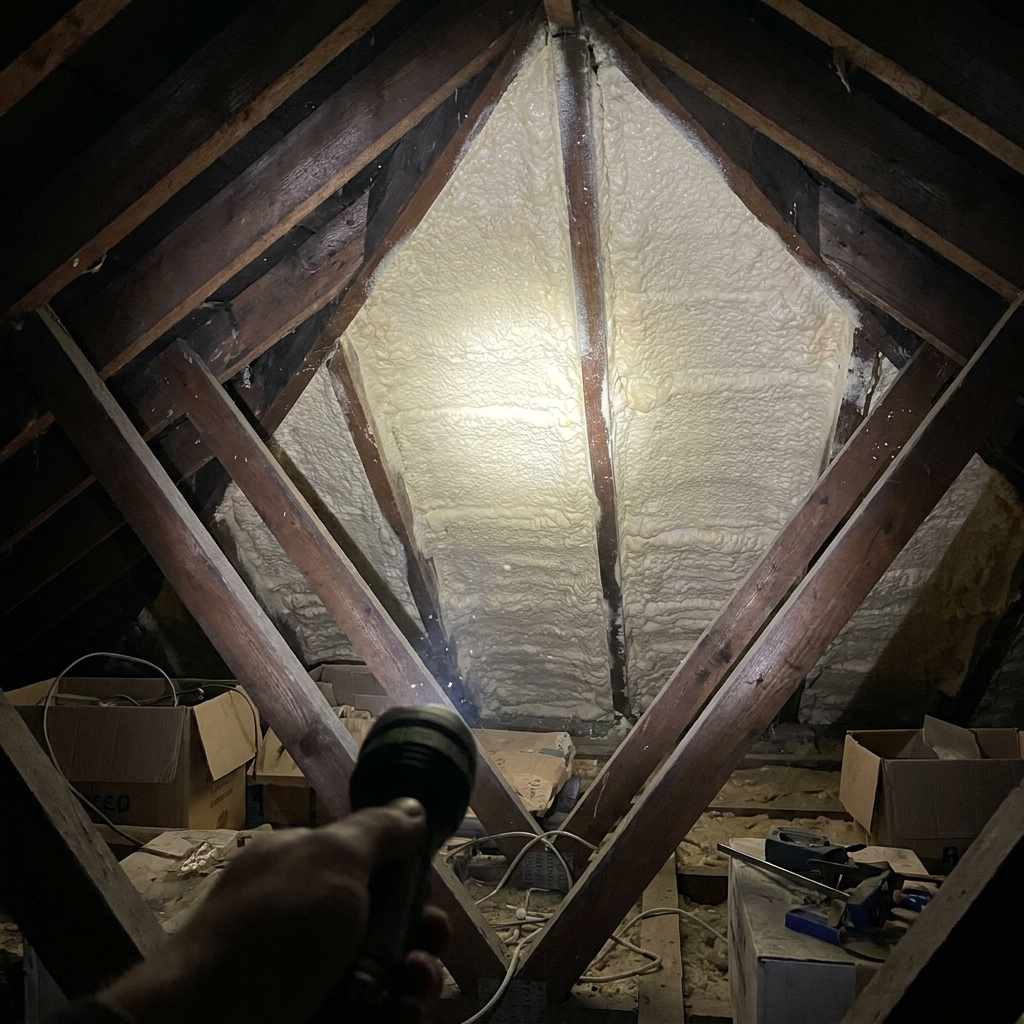
The short answer
Spray foam can change condensation risk because it moves the warm, insulated layer up to the roof slope and can reduce the ventilation a traditional cold roof relies on. If warm, moist indoor air reaches a cold surface behind the foam, interstitial condensation can form and dampen the timbers. This does not happen on every foamed roof, but it cannot be ruled out without inspection. An independent survey assesses the actual conditions in your roof.
Condensation is the central building-science concern with spray foam in roofs. The issue is not that foam is “wet”, but that it changes where the warm and cold surfaces sit, and how easily moist air can move and dry. This page explains how condensation forms in a roof, why foam can shift the risk, and how a surveyor establishes whether your roof is performing safely.
Condensation risk at a glance
- Cause Warm moist air meeting a cold surface
- Type to watch Interstitial (hidden, within the structure)
- Foam effect Can reduce cold-roof ventilation
- Key variable Ventilation and vapour control
- Assessment Independent inspection of the actual roof
How condensation forms in a roof
Air always carries some water vapour. Warm air holds more than cold air, so when warm, moist air from inside a home meets a cold surface, some of that vapour turns back to liquid water — condensation. In a roof this can happen in two places. Surface condensation appears on a visible cold surface. Interstitial condensation is the more important concern: it forms inside the structure, out of sight, where moist air reaches a cold layer within or behind the insulation. Because it is hidden, it can dampen timbers for a long time before anyone notices.
Most UK pitched roofs were built as “cold roofs”: insulation at ceiling level, with the loft above it ventilated so that any moisture is carried away by moving air. The eaves gaps and ridge or tile vents that allow this airflow are not decoration — they are how the roof stays dry.
Why spray foam can shift the risk
When foam is sprayed onto the underside of the roof slope, it effectively tries to turn a cold roof into a warm one, bringing the insulated line up to the rafters. Two things can change the moisture balance:
- Ventilation is reduced. Foam can block or bridge the eaves gaps and the air paths the cold roof depended on, so moisture that does get in has less chance to dry. This is covered in detail under roof ventilation.
- The dew point can land on the timber. Depending on foam type, thickness and where the felt sits, the cold surface where vapour condenses can fall on or near the rafters and felt — exactly where you do not want sustained moisture.
Open-cell foam is more vapour-open, so moisture passes through it more readily; closed-cell is denser and more vapour-resistant. The type, thickness and detailing all influence whether a roof manages moisture safely — which is why a generic “foam is bad” or “foam is fine” answer is wrong. It depends on the specific installation.
Signs and how it is assessed
Possible indicators include musty smells in the loft, damp or staining where timber is visible at the eaves, corrosion on nails and fixings, and persistent high humidity. None of these is conclusive on its own. Because the critical surface is hidden, a competent inspection exposes the timber and felt in test areas and may take moisture readings, in line with the diagnostic approach the Property Care Association sets out. The building-science framework behind all of this is the moisture-control principles in the building regulations and BRE guidance.
| Factor | Effect on condensation risk |
|---|---|
| Loss of eaves ventilation | Less drying capacity — raises risk |
| High indoor moisture (drying washing, poor extraction) | More vapour to manage — raises risk |
| Vapour-open vs vapour-closed foam | Affects where moisture can travel and dry |
| Existing leaks or felt damage | Adds liquid moisture independent of condensation |
Why everyday habits and the home below matter
A roof never deals with moisture in isolation; it manages whatever the home beneath it sends upward. Cooking, bathing, drying laundry indoors and even breathing all release water vapour, and that vapour rises towards the roof. In a well-ventilated home with working extractor fans and a breathing roof, this is carried away harmlessly. But if a household generates a lot of moisture — for example by drying washing on radiators — and the roof’s ability to dry has been reduced by foam, the balance tips towards condensation. This is why two identical roofs with the same foam can perform differently: the occupants’ moisture output and the rest of the home’s ventilation are part of the equation. A surveyor assessing condensation risk will therefore ask about how the property is used, not just look at the foam.
It also explains why condensation problems can appear seasonally. Cold winter months, when external surfaces are coldest and windows are kept shut, are when interstitial condensation is most likely to form and least likely to dry. A roof that seems fine through summer can show problems in deep winter, which is another reason a single quick glance is never enough to clear a foamed roof.
What to do next
If you are concerned about condensation under spray foam, the right move is an independent inspection by a RICS surveyor or PCA-registered specialist who is not selling removal. They assess ventilation, expose a sample of timber and judge whether moisture is being managed safely, ideally taking readings rather than relying on appearance alone. That evidence — not a sales pitch — tells you whether the roof is performing or whether removal is warranted, and it costs a fraction of a removal job. If you are also dealing with lending questions, the same inspection supports the conversation covered under spray foam and mortgages. This page is general information, not surveying advice; an inspection of your specific roof is essential before any decision.
Frequently asked questions
Does spray foam always cause condensation?
No. Condensation depends on ventilation, vapour control, foam type, indoor moisture levels and roof detailing. Some foamed roofs manage moisture safely; others reduce ventilation enough to raise risk. Because the critical surfaces are hidden, the only reliable answer comes from an inspection of your specific roof.
What is interstitial condensation?
It is condensation that forms inside the structure rather than on a visible surface — where warm, moist air reaches a cold layer within or behind the insulation. In a foamed roof this can occur on or near the timbers and felt, where it can dampen the wood unseen for a long time.
Can I tell if there is condensation without removing the foam?
Not reliably. Surface clues like musty smells, eaves staining or corroded fixings may hint at a problem, but the key surfaces are hidden. A competent inspection exposes timber and felt in test areas and may take moisture readings to reach a sound conclusion.
Does better ventilation fix the condensation risk?
Restoring ventilation is part of managing moisture in a cold roof, but with foam in place the picture is more complex and depends on the whole system. An independent specialist should assess ventilation, vapour control and timber condition together before recommending any remedy.
Sources & further reading
- BRE (Building Research Establishment) — guidance on condensation and moisture movement in roofs
- GOV.UK — Building Regulations Approved Document C (resistance to moisture) and roof ventilation principles
- PCA (Property Care Association) — diagnosis of condensation and dampness in roof structures
- RICS — Spray foam insulation consumer guidance on ventilation and inspection (2023)
This guide is general information, not surveying, structural, legal or financial advice. Whether spray foam needs removing depends on the foam type, install quality, ventilation and your roof timbers’ condition, and an independent inspection by a RICS surveyor or qualified specialist (not a free survey from a company that profits from removal) is essential before you decide.