The short answer
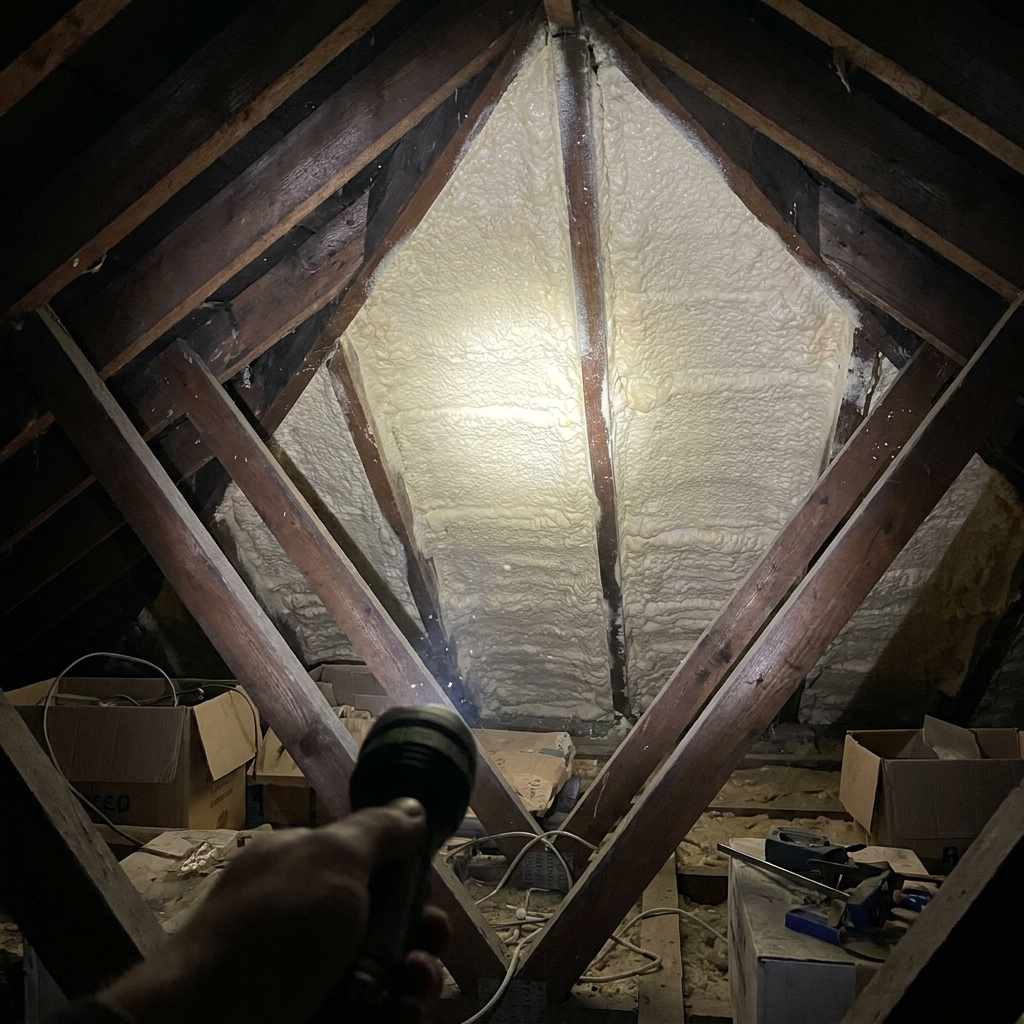
Spray foam does not automatically damage roof timbers, but it can obscure them and, where moisture is trapped, contribute to decay over time. Closed-cell foam in particular bonds hard to rafters and felt, hiding the wood from view and making leaks or rot difficult to spot. Whether your timbers are sound can only be confirmed by exposing and inspecting them. An independent independent survey — not a free check from a removal firm — is the proper first step.
Roof timbers — the rafters, battens, purlins and wall plates that carry your roof — rely on being kept dry and being visible enough to inspect. Spray foam applied to the underside of the roof changes both of those conditions. This page explains how foam interacts with structural timber, why surveyors and the RICS guidance treat it cautiously, and how the condition of the wood is properly assessed.
Roof timbers at a glance
- Main concern Timbers obscured from inspection
- Decay driver Trapped or condensing moisture, not the foam itself
- Higher-risk type Closed-cell foam bonded to felt & rafters
- How to assess Expose and inspect a representative sample
- First step Independent RICS / specialist inspection
Why roof timbers matter
The pitched roof over most UK homes is a timber structure. Rafters run from the ridge to the wall plate, battens hold the tiles or slates, and purlins or collars brace the whole frame. For that timber to last decades it needs two things: to stay dry, and to remain visible enough that a surveyor can confirm it is dry and sound. Spray foam applied to the underside of the roof covering affects both.
It is important to be clear at the outset: foam itself is not a fungus and does not rot wood. The concern is indirect. If foam is applied in a way that reduces ventilation or traps moisture against the timber, the conditions that allow rot can develop. Equally, where foam is bonded directly to rafters and felt it hides the wood, so a developing problem — a slipped tile, a felt tear, a slow leak — may go unnoticed for far longer than it would in a bare loft.
How foam interacts with the timber
There are two broad products, and they behave differently. Open-cell foam is softer and more vapour-open, so moisture can pass through it more readily. Closed-cell foam is dense and rigid; it adheres firmly to whatever it is sprayed onto and is far more likely to be flagged by a surveyor. When closed-cell foam is applied straight onto the rafters and the underside of the roofing felt, three things follow:
- The timber surface is no longer visible — you cannot see staining, fungal growth or insect damage.
- The foam grips the wood and the felt, so removing it later can lift fibres from the timber surface and tear the felt.
- If the felt becomes a vapour barrier on the cold side, any moisture reaching the timber has fewer routes to dry out.
This is why the structural question is really a moisture question. The mechanism that decays timber is sustained dampness, discussed in detail on timber decay and whether foam causes rot.
How the condition of the timber is properly checked
You cannot judge timber you cannot see. A competent inspection therefore involves lifting or cutting back foam in test areas to expose the rafters and felt beneath, ideally at the eaves, near any past leak and at a mid-roof point. The surveyor looks for wet rot, dry rot, beetle activity, felt condition and the type and depth of foam. The Property Care Association, whose members specialise in timber and damp, sets out how decay should be diagnosed rather than assumed.
| What is checked | Why it matters |
|---|---|
| Moisture content of the timber | Persistently high readings indicate a drying problem |
| Visible fungal or insect damage | Confirms whether decay is active or historic |
| Felt and ventilation paths | Shows whether the cold roof can still breathe |
| Foam type and adhesion | Affects removal method and inspection access |
What to do if your roof is foamed
If you are concerned about the timbers under spray foam — whether for peace of mind, a sale or a mortgage — commission an independent inspection before doing anything else. Use a RICS surveyor or a PCA-registered timber specialist who is not selling you a removal job, so the assessment of the wood is impartial. The findings then tell you whether removal is genuinely needed, and inspection costs a fraction of removal. For the related lending angle, see spray foam and mortgages.
This page is general information, not structural, surveying or financial advice. An independent inspection of your specific roof is essential before any decision.
Frequently asked questions
Does spray foam rot roof timbers?
Not by itself. Foam is inert and does not cause rot. The risk is indirect: if foam traps moisture against the wood or reduces ventilation, the sustained dampness that causes rot can develop. It also hides the timber, so problems go unseen for longer. Only an inspection that exposes the wood can confirm its condition.
Can a surveyor inspect timbers through spray foam?
Not visually — the foam covers the wood. A proper assessment requires lifting or cutting back foam in test areas to expose a representative sample of rafters and felt. This is why surveyors and lenders treat fully foamed roofs cautiously: the structure cannot be seen without intervention.
Is closed-cell foam worse for timbers than open-cell?
Closed-cell foam is denser, bonds harder to timber and felt, and is more vapour-closed, so it is more often flagged by surveyors and harder to remove. Open-cell foam is more vapour-open. Neither is automatically damaging; install quality, ventilation and roof condition matter more than type alone.
Should I remove foam to check the timbers?
Not as a first step. Commission an independent inspection that exposes a sample of timber in test areas. That tells you whether the wood is sound and whether full removal is justified, without committing to a costly strip-out before you have the facts.
Sources & further reading
- RICS — Spray foam insulation: a consumer guide (2023), on obscured roof structure and the need for independent inspection
- PCA (Property Care Association) — guidance on diagnosing timber decay and dampness in roofs
- BRE (Building Research Establishment) — building-science principles on moisture and timber durability
- GOV.UK — Building Regulations Approved Document C (site preparation and resistance to moisture)
This guide is general information, not surveying, structural, legal or financial advice. Whether spray foam needs removing depends on the foam type, install quality, ventilation and your roof timbers’ condition, and an independent inspection by a RICS surveyor or qualified specialist (not a free survey from a company that profits from removal) is essential before you decide.