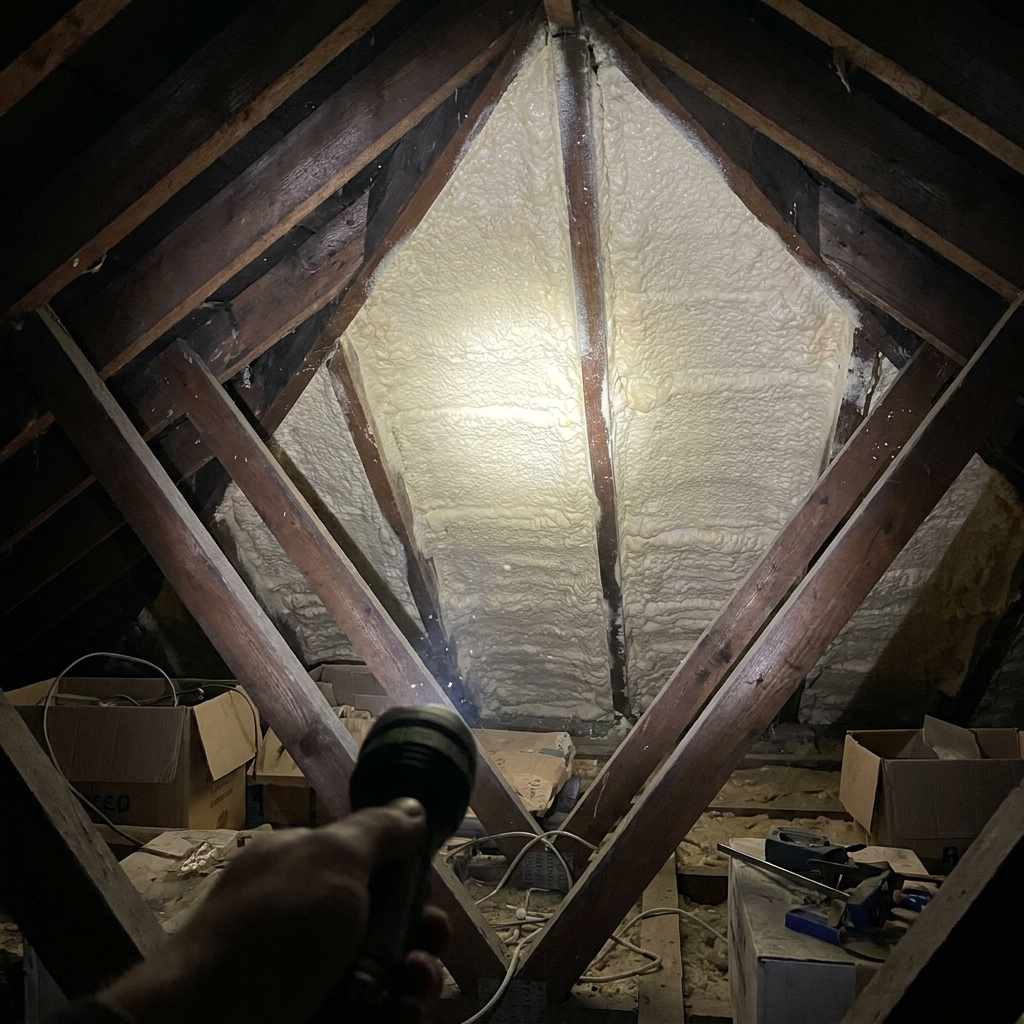
The short answer
Choose a removal company only after an independent inspection has confirmed removal is actually needed — never on the say-so of a free survey from a firm that profits from the work. Vet candidates on verifiable references, a written method statement, public liability insurance, a clear reinstatement and ventilation plan, and a meaningful guarantee. Spray foam removal is largely unregulated, so the burden of proof sits with you. Get at least three itemised written quotes and refuse any pressure to sign on the day.
Because spray foam removal in the UK has no dedicated licensing regime, almost anyone can describe themselves as a “specialist”. That makes the choice of company a genuine consumer-protection question rather than a formality. The good news is that competent firms behave in recognisable ways: they want to see an independent assessment, they put their method in writing, they carry proper insurance, and they plan for what happens to your roof after the foam is gone. This page sets out exactly what to check and the red flags that should end a conversation.
Choosing a company at a glance
- Inspect first Independent RICS / specialist assessment before hiring
- Quotes Get 3+ itemised written quotes
- Must be in writing Method statement, insurance, reinstatement plan
- Typical removal cost £2,000–£5,000+ depending on roof
- Regulation No dedicated UK licensing — vet carefully
Get an independent inspection before you choose anyone
The single most important step happens before you contact any removal company at all: arrange an independent inspection from a RICS chartered surveyor or a qualified specialist who does not profit from removing the foam. A company selling removal has an obvious incentive to conclude that removal is required. An independent assessor judges the foam type (open-cell or closed-cell), ventilation, moisture and the condition of the roof timbers on their merits. Only once you know whether removal is genuinely needed should you start choosing a contractor — otherwise you are letting the salesperson set the diagnosis. RICS’s own 2023 consumer guidance makes the same point: decisions about spray foam should rest on an impartial professional assessment of the roof, not on the word of a party with a commercial interest in the answer.
The checklist: what a competent firm provides
Use this as a hard filter. Because the trade has no dedicated licensing, the documents below are the evidence that does the job regulation does in other trades. A company that cannot or will not provide these in writing should be dropped, however persuasive the sales pitch.
- Verifiable references — recent customers in your area you can actually contact, plus dated photographs of their own completed roofs, not stock images. Ask to speak to at least two past clients and ask those clients whether the firm returned to fix anything.
- A written method statement — how the foam will be removed, how dust and debris are controlled, how your home is protected during the work, and how the team will work safely at height.
- Public liability insurance — ask for the certificate, check the policy is current and the cover is adequate; removal is intrusive work in a structural part of the home, and damage to the felt or timbers during stripping is a real risk.
- A reinstatement and ventilation plan — what happens to the roof ventilation, felt and battens, and how the loft will be re-insulated afterwards. Building regulations (Approved Documents C and L) govern moisture and ventilation, so the roof must be left able to breathe.
- A clear, written guarantee — what it covers, for how long, and whether it is insurance-backed so it survives the firm closing.
- A proper waste plan — how the removed foam and contaminated material are disposed of legally, with a waste transfer note where appropriate.
- Voluntary accountability — membership of a recognised trade body such as the Property Care Association brings a code of conduct and a complaints route, which is worth looking for in an unregulated sector.
How to compare quotes fairly
Get at least three itemised quotes and compare like with like. The cheapest is not automatically the best, and the most expensive is not automatically the most thorough. Removal of loft spray foam typically falls in the £2,000–£5,000+ range depending on roof size, foam type and access, so wide variation usually signals that firms are quoting for different scopes — one may include reinstatement and re-insulation while another has quoted for stripping the foam alone. Ask each firm to break out removal, reinstatement, re-insulation and waste disposal as separate lines, and to confirm whether the quote is fixed or could attract extras once the work starts. A vague single figure with no breakdown makes genuine comparison impossible and is itself a warning sign.
| What to compare | Good answer | Red flag |
|---|---|---|
| Diagnosis | “Get an independent survey first” | “You must remove it today” |
| Quote format | Itemised, written, dated, fixed | Verbal only, “today-only” price |
| After the foam | Reinstatement & ventilation specified | Removal only, roof left bare |
| Guarantee | Written, insurance-backed | “Trust me” / nothing in writing |
| Insurance | Current certificate shown | Excuses or delay |
Watch how the company behaves
The way a firm conducts the sale tells you as much as its paperwork. A competent contractor is comfortable with you obtaining an independent opinion, gives you time to compare quotes, and never demands a large deposit before any work begins. Pressure to sign on the day, irritation at reasonable questions, reluctance to put anything in writing, or insistence that you do not need a second opinion are all reasons to walk away. Doorstep and cold-call approaches deserve particular caution — Citizens Advice notes that such contracts usually carry cancellation rights, and high-pressure doorstep selling is a recurring feature of the worst operators in this market.
What to do next
Shortlist firms that pass the checklist, take up references, and ask the right questions before signing anything. Be alert to the common removal scams that target worried homeowners. If you were pressured into the original installation, you may also have been mis-sold the foam — a separate consumer-rights question worth pursuing. This page is general information, not surveying, structural, legal or financial advice; an independent inspection is essential before committing to removal.
Frequently asked questions
Is spray foam removal regulated in the UK?
No. There is no dedicated licensing scheme for spray foam removal, so vetting the company yourself — references, insurance, written method statement and guarantee — is essential. See our page on spray foam removal regulation for detail.
Should I trust a free survey from a removal company?
Treat it as a sales visit. A firm that profits from removal has an incentive to recommend it. Confirm any diagnosis with an independent RICS surveyor or specialist who does not sell removal.
How many quotes should I get?
At least three, all itemised and in writing, covering removal, reinstatement, re-insulation and waste disposal so you can compare like with like.
What guarantee should a removal company give?
A clear written guarantee, ideally insurance-backed so it remains valid even if the company ceases trading. Ask exactly what it covers and for how long.
Sources & further reading
- RICS — consumer guidance on spray foam insulation and mortgage lending (2023)
- Property Care Association (PCA) — guidance on spray foam in roofs and choosing competent contractors
- Citizens Advice — how to find and check a trader; doorstep selling rights
- GOV.UK — Building Regulations Approved Documents C and L (ventilation and condensation)
This guide is general information, not surveying, structural, legal or financial advice. Whether spray foam needs removing depends on the foam type, install quality, ventilation and your roof timbers’ condition, and an independent inspection by a RICS surveyor or qualified specialist (not a free survey from a company that profits from removal) is essential before you decide.