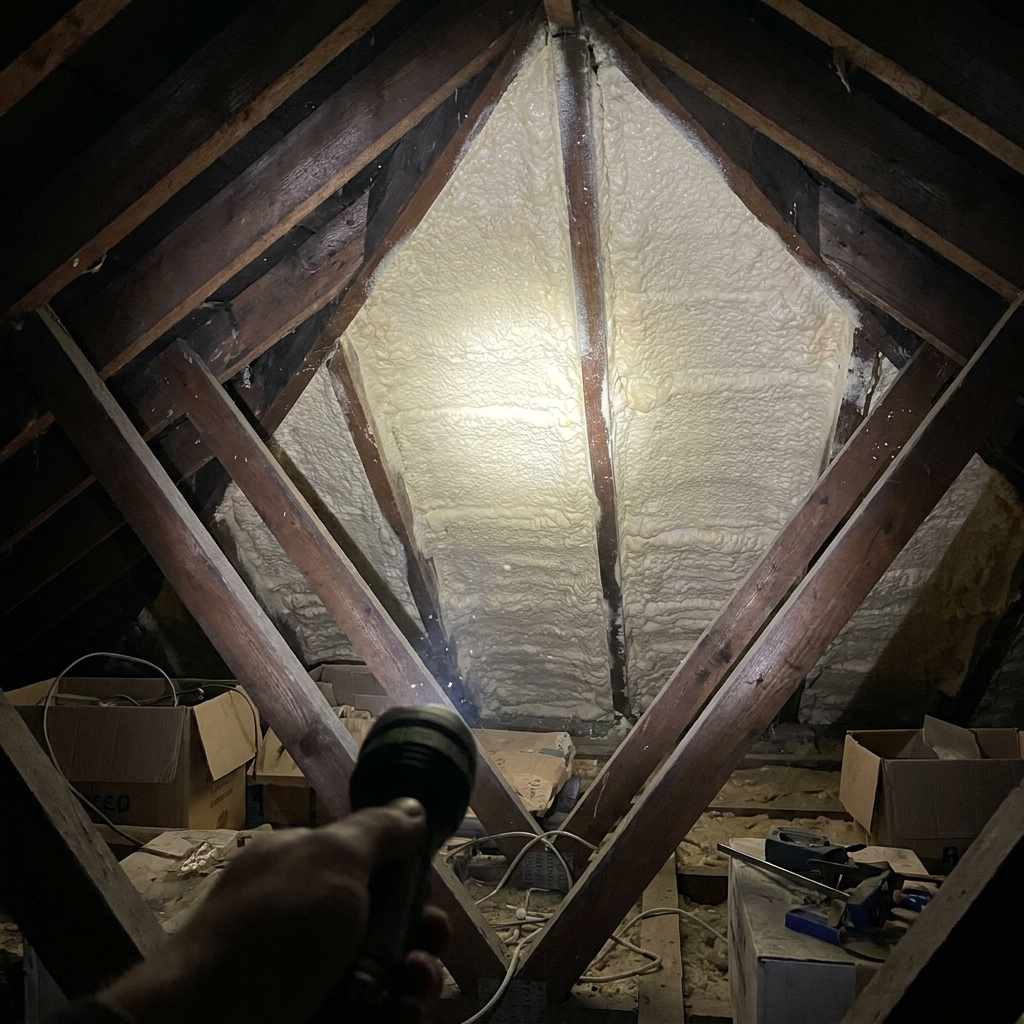
The short answer
Professional loft spray foam removal in the UK typically costs £2,000–£5,000+ in 2026, depending on roof size, the foam type (open-cell or closed-cell), how hard the foam has bonded, and access. Larger or awkward roofs can cost more. Before paying for removal, commission an independent inspection from a RICS surveyor or specialist who does not profit from the removal work — it is far cheaper and tells you whether removal is genuinely needed.
Spray foam removal is a manual, labour-intensive job, so most of the cost is time and skilled hands rather than materials. Prices vary widely because no two roofs are the same: the foam type, the area covered, how aggressively it has bonded to the timbers and felt, the roof pitch and the ease of access all move the number. This page sets out the typical 2026 UK range, what sits behind it, and the single most important step — an independent inspection — that should happen before you sign anything.
Removal cost at a glance
- Typical loft removal £2,000–£5,000+
- Main cost driver labour / hours on site
- Cheaper first step independent inspection
- Closed-cell vs open-cell closed-cell usually harder & dearer
- Beware free surveys from removal firms
What is the typical cost in 2026?
As a working range, professional removal of spray foam from a domestic loft roof in the UK typically falls between £2,000 and £5,000 or more in 2026. Small, simple, easily accessed roofs sit at the lower end; large roofs, steep pitches, dense closed-cell foam bonded hard to the timbers, or jobs needing scaffolding and significant making-good push toward and beyond the top of the range. Because removal is mostly hand work — scraping, cutting and lifting foam off rafters without damaging them — the price tracks the hours involved rather than any single fixed rate.
| Job characteristic | Effect on price |
|---|---|
| Small, accessible roof | Toward lower end of range |
| Large or steep roof | Higher — more hours, possible access equipment |
| Closed-cell foam, hard bond | Higher — slower, more careful removal |
| Open-cell foam | Often quicker to strip than closed-cell |
| Re-felting or repairs needed | Adds to the total |
Why the price varies so much
The biggest single factor is labour. Removing foam well means taking it off the rafters and the underside of the roof without scarring the structural timbers, then clearing debris and leaving a roof that a surveyor can inspect. The type of foam matters: closed-cell is denser and bonds harder, so it usually takes longer to remove than softer open-cell. After stripping, many roofs need the felt or breathable membrane reinstating and the loft re-insulated to a compliant standard, which is a separate cost the headline removal quote may not include.
- Foam type and thickness — closed-cell and thicker applications take longer.
- Roof size and pitch — more area and steeper angles mean more time and sometimes access gear.
- How hard it has bonded — foam fused to felt or timber is slow, delicate work.
- Making-good — re-felting, repairs and re-insulation are often extra.
- Region and access — labour rates and site logistics vary.
Inspection before removal — and the financial logic
An independent inspection by a RICS-qualified surveyor or competent specialist costs a fraction of removal and answers the question removal firms cannot answer impartially: is removal actually needed, and if so, why? RICS’s 2023 consumer guidance recognises that spray foam is not automatically a problem, but that it can obscure the roof structure and, where ventilation or moisture is wrong, contribute to timber decay. A surveyor records the foam type, the condition of the timbers and whether the roof is ventilated — the evidence a lender or buyer will want. Paying for that first can save you from removing foam unnecessarily, or give you the documentation to do it properly.
What the cost actually buys
It helps to see removal as buying back the ability to assess and maintain your roof, not just clearing foam. A well-executed job leaves the rafters clean and visible, the felt or breathable membrane reinstated, any damaged timbers repaired, and the loft re-insulated to a compliant standard. That is what reassures a surveyor or lender, and it is why the cheapest “strip only” figure is rarely the figure that solves your problem. The premium for a complete job over a bare strip is real, but it is the difference between a roof that passes inspection and one that still raises questions.
Two further points shape the total. First, the work is disruptive: the loft must be cleared and access protected, and on occupied homes the timing matters. Second, the condition revealed once the foam is off can change the scope — if the timbers show decay or the felt has perished, repairs add cost. A reputable firm will allow for inspection of the structure as part of the job rather than discovering surprises mid-way and re-pricing.
How to read a quote
Ask whether the quote includes debris removal, re-felting, re-insulation and any structural repairs, or just stripping the foam. Get itemised written quotes from more than one firm, check what evidence of completion you will receive, and treat headline “from” prices with caution. Confirm whether VAT is included, whether disposal is part of the price, and what happens if the firm finds damaged timbers once the foam is off. A realistic total for many homes lands within the typical range above once making-good is included — and a quote that looks dramatically cheaper than the rest usually omits something that you will still have to pay for later. See what affects the cost for the full list of drivers, and treat any firm pressuring you to sign on the day with caution.
Frequently asked questions
Is spray foam removal always expensive?
It is usually a four-figure job because it is labour-intensive hand work, but the exact cost depends on roof size, foam type and access. A typical UK loft removal in 2026 falls in the £2,000–£5,000+ range, with larger or harder jobs costing more.
Does the quote include re-insulating the loft?
Not always. Some quotes cover only stripping the foam. Re-felting, repairs and fitting new compliant insulation can be separate costs, so ask for an itemised quote and check what is and is not included.
Should I pay for an inspection if I already have removal quotes?
Yes — an independent inspection is far cheaper than removal and is the only impartial way to confirm removal is genuinely needed. Quotes from removal firms answer “how much to remove it”, not “should it be removed”.
Why is closed-cell foam more expensive to remove?
Closed-cell foam is denser and rigid, and tends to bond harder to the roof timbers and felt. Removing it without damaging the structure takes longer and more care, which increases the labour cost.
Sources & further reading
- RICS — consumer guidance on spray foam insulation and mortgage lending (2023)
- PCA (Property Care Association) — guidance on spray foam in roofs
- GOV.UK — energy efficiency and home insulation information
This guide is general information, not surveying, structural, legal or financial advice. Whether spray foam needs removing depends on the foam type, install quality, ventilation and your roof timbers’ condition, and an independent inspection by a RICS surveyor or qualified specialist (not a free survey from a company that profits from removal) is essential before you decide.