The short answer
Spray foam can affect a remortgage because switching lenders usually triggers a fresh valuation, and a new surveyor may flag foam your original lender never saw. A product transfer with your existing lender often avoids a new survey, while moving to a new lender exposes you to their foam policy. An independent inspection report and a broker help you choose the right route.
Many homeowners discover spray foam is an issue only when they try to remortgage. The original purchase may have completed before the foam was installed, or under a lender that did not flag it — but a remortgage to a new lender means a new valuer and a new policy. This page explains how remortgaging interacts with sprayed roofs, and how to protect your deal.
Remortgaging with spray foam at a glance
- Triggers a new valuation? Usually, if switching lender
- Product transfer Often avoids a new survey
- Main risk New surveyor flags foam
- Best preparation Independent inspection report
- Route advice Whole-of-market broker
Why remortgaging surfaces foam problems
When you remortgage to a new lender, that lender almost always commissions its own valuation as a condition of the offer. A fresh surveyor inspects the property and may notice sprayed foam in the roof — even if your original lender never raised it, or even if the foam was installed after you bought. The new lender then applies its policy, which can differ sharply from your previous one. So a roof that was perfectly acceptable for years can suddenly become a sticking point, not because anything about the roof has changed, but simply because you have changed lender. For many homeowners this is the first time they learn the foam is an issue at all.
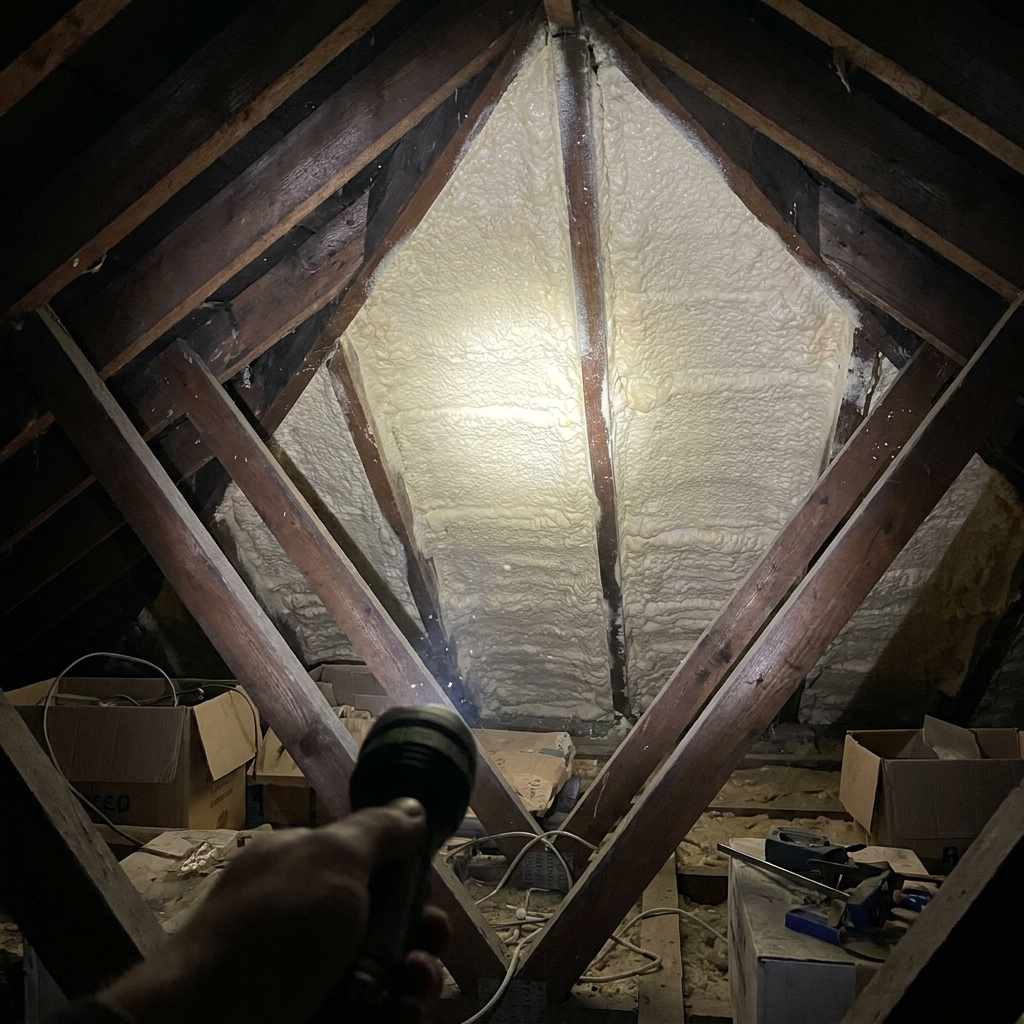
The underlying mechanism is exactly the one that affects purchases. The foam obscures the rafters, the felt and the ventilation path, so the valuer cannot verify the roof’s condition. They cannot see whether the timbers are sound or whether moisture is being trapped behind dense closed-cell foam. A cautious valuer responds to that uncertainty by recommending the lender require an inspection report, hold a retention, or — less often — insist on removal. None of this means your roof is defective; it means the lender cannot prove it is not. See spray foam and mortgages for how that judgement is formed.
Product transfer versus switching lender
There is an important distinction that can decide whether the foam ever becomes a problem:
- Product transfer (staying with your lender) — moving to a new rate with your existing lender typically does not require a fresh full valuation, so the foam may never be re-examined. This is frequently the smoothest route if your current lender offers a competitive rate, and it can sidestep the foam question entirely.
- Remortgage to a new lender — this triggers a new valuation and exposes you to the new lender’s foam policy. The potential reward is a better rate or product; the risk is a foam-related condition, retention or outright refusal.
Neither route is automatically right. The point is to make the choice deliberately, with a clear view of the trade-off, rather than walking into a new lender’s valuation unprepared and being caught out. If the rate saving from switching is small, the certainty of a product transfer may be worth more than the difference.
| Route | New valuation? | Foam re-examined? |
|---|---|---|
| Product transfer (same lender) | Usually no | Often not |
| Remortgage to new lender | Yes | Yes |
How to protect your remortgage
Preparation makes the difference between a smooth switch and a stalled one. Before approaching a new lender, do the groundwork:
- Commission an independent inspection so you know the real condition of the roof and can evidence it to the new lender rather than leaving the valuer to guess.
- Gather your installation records — product data sheets, certificates and any competent-person documentation that shows the foam was properly specified.
- Use a whole-of-market broker who knows which lenders currently accept sprayed roofs, so your application is not wasted on a lender certain to decline.
- Compare the rate available from a new lender against a product transfer with your current lender, factoring in the certainty the latter offers.
If a new lender or your inspection genuinely requires action, weigh whether removal is worth it against simply staying put on a product transfer. Removal is a significant cost at £2,000–£5,000+, so confirm it is actually required — and not merely assumed — before committing a penny to it.
If a remortgage is declined
A decline from one lender is not the end of the road, and it certainly does not mean your property is unmortgageable. Because policies vary so widely, a broker can often place you with a different lender that is comfortable with sprayed roofs and treats the same roof without concern. If you are mid-deal and time-pressured — for example, coming off a fixed rate and facing a jump to a standard variable rate — a product transfer with your existing lender can be a pragmatic fallback that protects you financially while you resolve the foam question properly with an inspection and a broker.
This page is general information, not mortgage, surveying or financial advice. Speak to a qualified broker and obtain an independent inspection before you remortgage.
Frequently asked questions
Will remortgaging trigger a new survey?
If you switch to a new lender, almost always yes — and the new valuer may flag spray foam your original lender never saw. A product transfer with your existing lender often avoids a fresh full valuation.
Can I remortgage with spray foam in the roof?
Often yes, but it depends on the new lender’s policy, the foam type, the install quality and the roof’s condition. An independent inspection report and a whole-of-market broker greatly improve your chances.
Is a product transfer a way to avoid the foam issue?
It can be. Staying with your current lender on a new rate usually avoids a new valuation, so the foam may not be re-examined. Compare the rate against switching before deciding.
What if my remortgage is refused because of spray foam?
A refusal from one lender is not universal. A broker can often place you with a more accommodating lender, and an independent inspection report frequently resolves the concern without removal.
Sources & further reading
- RICS — 2023 consumer guidance on spray foam insulation and mortgage lending
- UK Finance — remortgaging and lending criteria
- GOV.UK — remortgaging and home finance guidance
- Property Care Association (PCA) — roof ventilation and moisture guidance
This guide is general information, not surveying, structural, legal or financial advice. Whether spray foam needs removing depends on the foam type, install quality, ventilation and your roof timbers’ condition, and an independent inspection by a RICS surveyor or qualified specialist (not a free survey from a company that profits from removal) is essential before you decide.