The short answer
You can sell a house with spray foam insulation, but the main obstacle is usually your buyer’s mortgage rather than the sale itself. If a buyer’s lender is cautious, the chain can stall. An independent inspection report you can hand to buyers, honest disclosure, and pricing that reflects the position all help. Removal is one option, but an inspection should come first — it is far cheaper and may make the sale proceed without it.
Spray foam most often becomes a problem at the point of sale, when a buyer’s mortgage valuer spots it and the buyer’s lender hesitates. The frustrating part for sellers is that the house may be perfectly sound — the issue is the lender’s inability to verify the roof. This page explains how foam affects a sale, what you can do to keep the chain moving, and how to handle disclosure properly.
Selling with spray foam at a glance
- Can you still sell? Yes
- Main hurdle Buyer’s mortgage / valuer
- Strongest seller tool Independent inspection report
- Disclosure Required — answer honestly
- Cash buyers Possible but often at a discount
Why foam complicates a sale
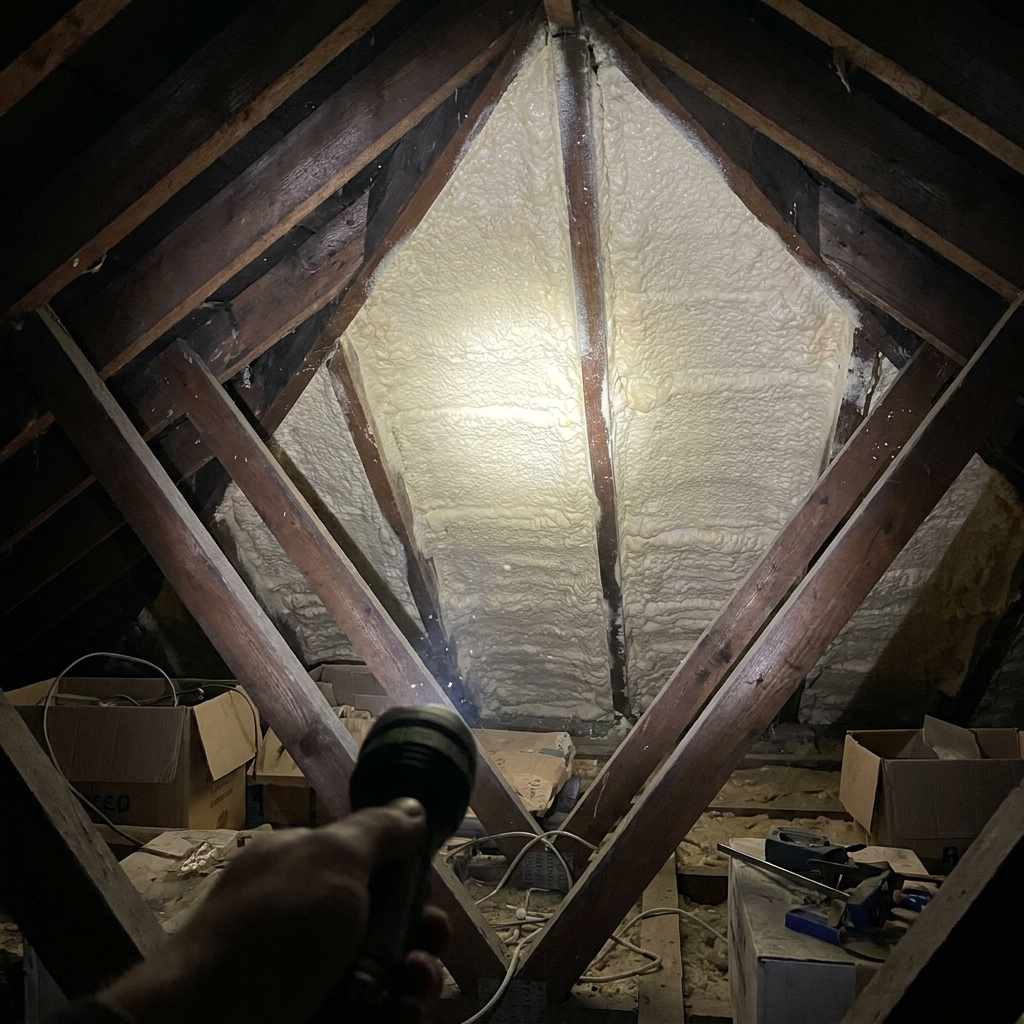
When your buyer applies for a mortgage, their lender sends a valuer to assess the property as security. If that valuer sees sprayed foam in the roof, the lender applies its foam policy — which may mean a condition, a request for an inspection report, a retention, or a refusal. Because the buyer depends on that lender, your sale can stall even though there is nothing structurally wrong with your home. The valuer’s difficulty is the familiar one: the foam obscures the rafters, felt and ventilation, so they cannot verify the roof’s condition. It is the inability to inspect — not a proven defect — that usually drives the caution. See spray foam and mortgages for how lenders reach these decisions.
The practical consequence is that the foam can narrow your pool of buyers to those whose lender is comfortable with sprayed roofs, plus cash buyers who need no lender at all. A smaller pool tends to mean fewer competing offers, which can soften both the price you achieve and the speed of the sale. That does not make the house unsellable — many homes with foam sell perfectly well — but it does make preparation genuinely worthwhile, because the right evidence widens the pool back out again.
What helps a sale go through
- An independent inspection report — the single most powerful thing you can offer. A clear report on the foam type, ventilation and timber condition lets a buyer’s lender lend with confidence, and reassures the buyer that they are not taking on a hidden problem. It typically costs a fraction of removal.
- Installation records — product data sheets, certificates and any competent-person documentation that shows the foam was properly specified and installed.
- Realistic pricing — price the property to reflect the position, particularly if you are open to cash buyers, rather than chasing a figure the foam will not support.
- Honest disclosure — answer the standard property information questions truthfully (covered below), which protects you and keeps the chain together.
- Flexibility on buyer type — cash buyers and buyers with accommodating lenders are more straightforward, though cash buyers often expect a discount in exchange for the certainty they bring.
Disclosure: do it properly
When you sell, you complete a property information form (in England and Wales, the TA6 form). You must answer the questions honestly, including those about alterations, works and the roof. Concealing the presence of spray foam, or actively misrepresenting it, can expose you to a misrepresentation claim from the buyer after completion — a serious and avoidable risk. Disclosure is not merely a legal box-ticking exercise: being upfront, ideally with an independent inspection report attached, builds trust with the buyer and their solicitor and keeps the chain together when it might otherwise wobble. If you suspect the foam was mis-sold to you in the first place, that is a separate matter you can pursue against the installer, but it does not change your own disclosure obligations as a seller now.
| Buyer type | What to expect |
|---|---|
| Mortgage buyer, accommodating lender | Inspection report usually unlocks the sale |
| Mortgage buyer, cautious lender | May need removal or a different lender |
| Cash buyer | No lender hurdle, but often a lower offer |
Should you remove the foam before selling?
Not automatically, and rarely as the first move. Removal costs £2,000–£5,000+ and may be entirely unnecessary if an inspection report satisfies your buyer’s lender. The sensible order is: commission an independent inspection first, so you know the true condition of the roof and have a document to share; market the home with that report available to serious buyers; and only remove the foam if a committed buyer’s lender genuinely requires it as a condition of their offer. At that point you can weigh the cost against the value of securing the sale. Pre-emptive removal “to be safe” often spends money that the right buyer and lender would never have demanded — see whether removal is worth it.
This page is general information, not legal, surveying or financial advice. Take an independent inspection and conveyancing advice when selling a property with spray foam.
Frequently asked questions
Can I sell a house that has spray foam insulation?
Yes. The main hurdle is usually your buyer’s mortgage, not the sale itself. An independent inspection report, honest disclosure and realistic pricing all help keep the chain together.
Do I have to tell buyers about the spray foam?
Yes. You must answer the property information form honestly, including about the roof. Concealing or misrepresenting foam can expose you to a claim after completion. Being upfront, ideally with a report, builds trust.
Should I remove the foam before selling?
Not automatically. Removal is expensive and may be unnecessary if an inspection report satisfies the buyer’s lender. Get an independent inspection first and only remove if a serious buyer’s lender requires it.
Will I only be able to sell to cash buyers?
Not necessarily. Many mortgage buyers can proceed with an accommodating lender and a good inspection report. Cash buyers are an option but often expect a discount.
Sources & further reading
- RICS — 2023 consumer guidance on spray foam insulation and mortgage lending
- GOV.UK / National Trading Standards — selling property and consumer protection guidance
- UK Finance — lending and property condition positions
- Property Care Association (PCA) — spray foam and roof condition guidance
This guide is general information, not surveying, structural, legal or financial advice. Whether spray foam needs removing depends on the foam type, install quality, ventilation and your roof timbers’ condition, and an independent inspection by a RICS surveyor or qualified specialist (not a free survey from a company that profits from removal) is essential before you decide.