The short answer
For most homeowners the main everyday issues with spray foam are property-related — obscured timbers, ventilation and mortgages — rather than health, but legitimate questions about installation safety and curing exist and deserve honest answers. The highest exposure risk is during spraying, which is why it is a job for trained installers with proper protection. For specifics on a particular product, the manufacturer’s safety data sheet and Building Control are the right authorities. This page is general information, not medical advice.
Health is a topic where misinformation spreads easily in both directions. This page gives a calm, general overview of the health questions people ask about spray foam, points to where authoritative answers actually live, and keeps the everyday property concerns in proportion. It is general information, not medical, surveying or product-specific advice.
Health questions at a glance
- Biggest exposure During spraying / curing, not after
- Why installers train Chemicals are reactive before they cure
- Everyday concern Usually property, not health
- Authoritative sources Manufacturer SDS & Building Control
- This page is General information, not medical advice
Keeping the question in proportion
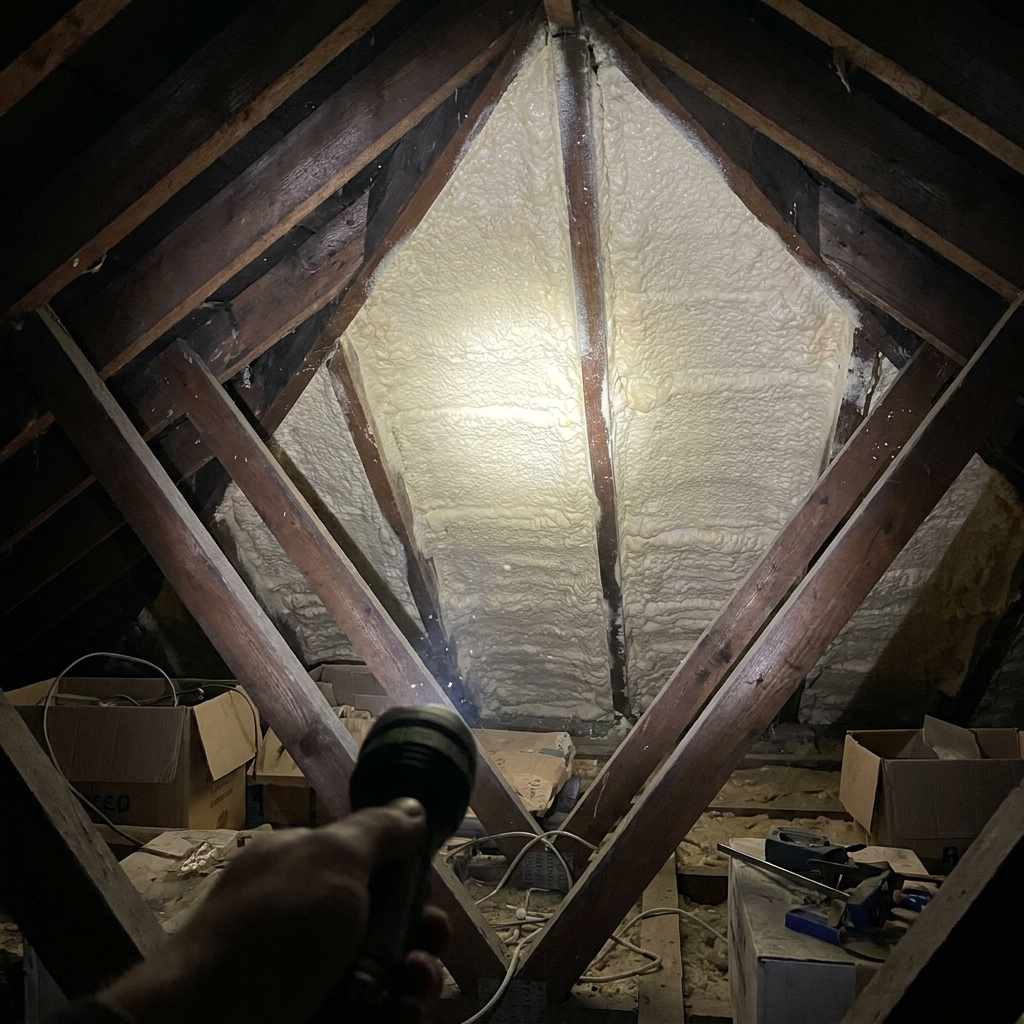
It is worth being clear about what actually drives most spray foam concern in the UK. For the large majority of homeowners, the practical problems are property-related: timbers that cannot be inspected, ventilation that may be reduced, and the caution of mortgage lenders and surveyors. Those are the issues that affect sales, valuations and roof condition day to day. Health questions are raised, and they deserve honest treatment, but they should not crowd out the practical reasons foam is scrutinised.
That said, dismissing health questions entirely would be wrong. Here we set out, at a general and sourced level, what the legitimate considerations are.
Installation versus installed foam
The clearest distinction in any honest discussion is between during installation and after curing:
- During spraying and curing the foam is a reactive chemical system. This is the phase with the highest exposure potential, which is precisely why application is a job for trained installers using appropriate protective equipment and ventilation, and why occupants are typically advised to keep clear during and shortly after spraying.
- Once fully cured, a correctly installed foam is a solid plastic. Questions sometimes raised about long-term off-gassing or odour are best answered for a specific product by its manufacturer, because formulations and cure quality vary.
Because the answer is product-specific, we do not generalise beyond this. The authoritative document for any given foam is the manufacturer’s safety data sheet, and Building Control can advise on whether an installation met requirements.
Indoor air, moisture and ventilation
One genuine, building-science link between foam and a healthy home is indirect: moisture. If foam reduces roof ventilation and contributes to condensation, the resulting damp environment can encourage mould, and damp homes are recognised in UK guidance as undesirable for occupant wellbeing. This is one more reason the moisture and ventilation assessment matters — it is a comfort and air-quality issue as much as a structural one. The remedy is the same: have the roof properly assessed.
| Question | Where the answer lies |
|---|---|
| Is the cured foam safe? | Manufacturer SDS; installation standards |
| Was my install done correctly? | Building Control; competent-person records |
| Could damp affect air quality? | Independent inspection of ventilation/moisture |
| Medical symptoms? | A qualified medical professional |
Why documentation and provenance matter
A practical theme runs through honest health discussion of spray foam: knowing what was actually installed. Much UK loft foam was sold door-to-door, and homeowners frequently have no record of the product, its specification or who applied it. Without that, even well-founded questions cannot be answered, because the relevant facts — the product’s data sheet, its fire and emissions classifications, and whether the install followed the manufacturer’s requirements — are unknown. Re-establishing provenance is therefore often the first useful step: any paperwork, a competent-person certificate, or identification of the product by a professional. Where none of this exists, that absence is itself worth noting and is one of the patterns associated with mis-sold installations.
It is also worth keeping a sense of proportion about new versus old installations. The exposure considerations during spraying apply to a fresh application; for foam that has been cured and in place for years, the live questions are usually the property ones — can the timbers be inspected, is the roof ventilated — rather than acute health hazards. Keeping these distinct prevents both unnecessary alarm and complacency.
What to do if you have concerns
If you have health worries about a specific installation, seek the manufacturer’s data sheet, ask Building Control about compliance, and consult a qualified medical professional about any symptoms — this page cannot and does not give medical advice. If your concern is really about damp and ventilation, an independent inspection of the roof addresses that directly. Keep the broader property questions — timbers, mortgages, removal — with a RICS surveyor or specialist who is not selling you removal. This page is general information only.
Frequently asked questions
Is cured spray foam a health risk in the home?
For most homeowners the everyday concerns are property-related — obscured timbers, ventilation and mortgages — rather than health. Questions about a specific product’s curing or emissions are best answered by the manufacturer’s safety data sheet and Building Control. This page is general information, not medical advice.
When is exposure to spray foam highest?
During spraying and curing, when the foam is a reactive chemical system. That is why installation is a job for trained installers with proper protective equipment and ventilation, and why occupants are usually advised to keep clear during and shortly after application.
Can spray foam affect indoor air quality?
Indirectly, yes — if it reduces ventilation and contributes to condensation, the resulting damp can encourage mould, which UK guidance recognises as undesirable. This is a moisture and ventilation issue best addressed by an independent inspection of the roof.
Who should I ask about a specific foam product’s safety?
The manufacturer’s safety data sheet is the authoritative document for a given product, and Building Control can advise whether an installation met requirements. For any health symptoms, consult a qualified medical professional. Avoid unsourced claims from removal marketing.
Sources & further reading
- GOV.UK — building regulations and Building Control guidance on installation compliance
- Manufacturer safety data sheets (SDS) — the authoritative source for a specific foam product
- RICS — Spray foam insulation consumer guidance (2023) on property considerations
- GOV.UK / public health guidance — damp and mould in homes as a wellbeing concern
This guide is general information, not surveying, structural, legal or financial advice. Whether spray foam needs removing depends on the foam type, install quality, ventilation and your roof timbers’ condition, and an independent inspection by a RICS surveyor or qualified specialist (not a free survey from a company that profits from removal) is essential before you decide.