The short answer
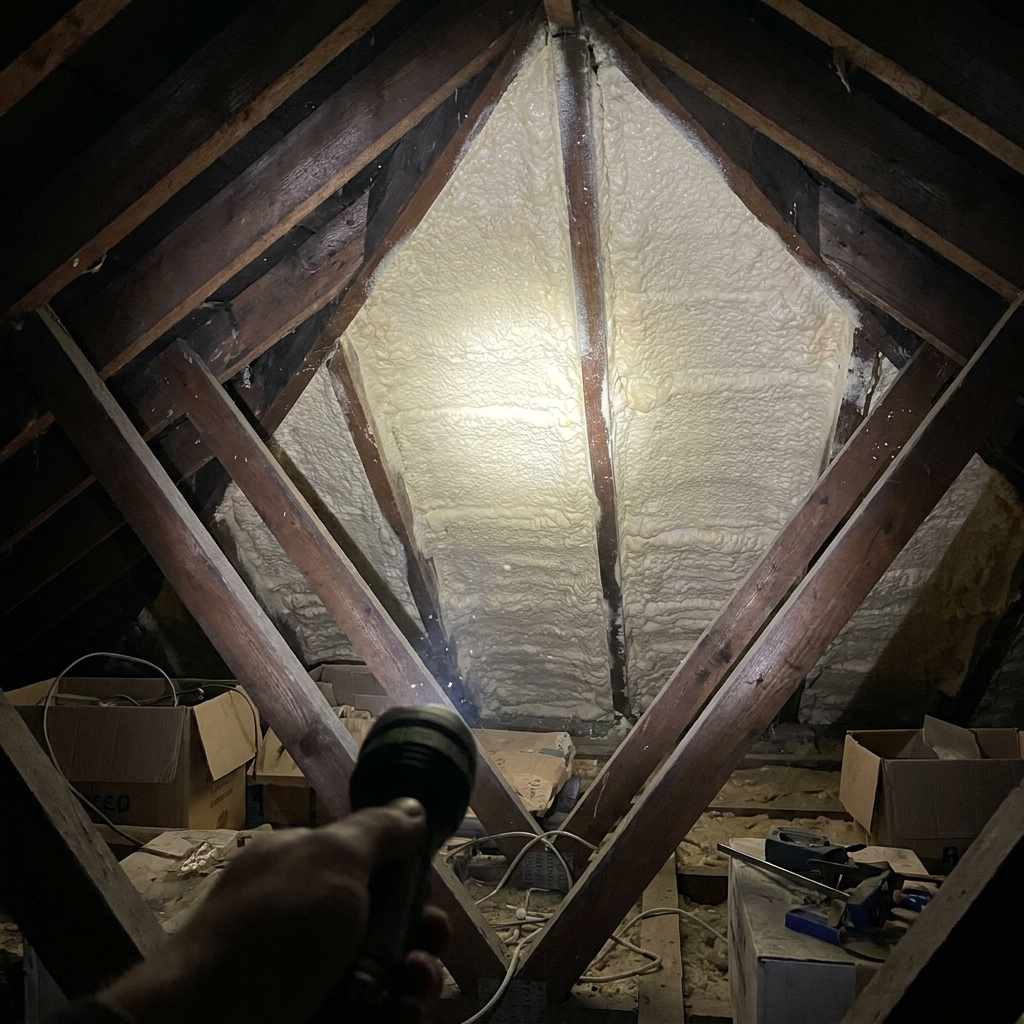
Spray foam does not create damp, but it can hide existing damp and, by reducing ventilation, allow moisture to linger. Damp in a foamed roof usually comes from one of three sources: condensation, a roof leak the foam may be masking, or moisture trapped against the timbers. Because foam conceals the structure, the cause can only be confirmed by exposing the wood. An independent survey diagnoses the real source before any work.
“Damp” is a symptom, not a single cause. In a roof it can come from condensation, from rainwater getting in, or from moisture being trapped where it cannot dry. Spray foam changes the picture mainly by hiding the evidence and reducing drying. This page separates the causes, explains how foam fits in, and sets out how the real source is diagnosed.
Roof damp at a glance
- Common causes Condensation, leaks, trapped moisture
- Foam’s role Hides damp and slows drying
- Masking risk Foam can cover a pre-existing leak
- Diagnosis Expose timber; identify the source
- First step Independent, impartial inspection
The three main sources of roof damp
Before blaming the foam, it helps to know what actually causes damp in a roof. There are three broad sources, and the remedy is completely different for each:
- Condensation — warm, moist indoor air meeting a cold surface and turning to water, often hidden within the structure. This is covered fully under condensation.
- Leaks / penetrating damp — rainwater entering through slipped tiles, failed flashings, cracked mortar or torn felt.
- Trapped moisture — water that has got in (from either source above) but cannot dry out because ventilation has been reduced.
Spray foam does not generate water. Its influence is on the last two: it can mask a leak that was already there, and by closing down ventilation it can stop a roof drying after moisture gets in.
Why foam makes damp harder to diagnose
In a bare loft, a leak announces itself: you see a stain spread across the rafters or felt after rain. When closed-cell foam is bonded to the underside of the roof, that early-warning system is gone. Water can track behind the foam, run down a rafter and pool at the wall plate while the visible foam surface looks dry. By the time damage shows, it may be advanced. This is the masking problem that the RICS consumer guidance highlights and why surveyors want the structure seen, not assumed.
How the cause of damp is established
Effective damp diagnosis identifies the source rather than treating the symptom — the principle the Property Care Association applies to all dampness work. In a foamed roof that means exposing timber and felt in test areas, checking for water staining, taking moisture readings, and looking above for the defect (a slipped tile, a failed flashing) that might be letting water in. Only once the source is known can the right remedy be chosen.
| Symptom | Possible source | What confirms it |
|---|---|---|
| Even damp across a slope | Condensation | Hidden moisture, no single entry point |
| Localised stain after rain | Leak / penetrating damp | Defect found above the stain |
| Damp pooling at eaves | Trapped moisture / poor drying | Blocked ventilation paths |
| Musty smell, no visible water | Interstitial condensation | Readings on exposed timber |
Why “treating the damp” without diagnosis fails
A recurring and costly mistake is to attack the symptom rather than the cause. If a roof is damp because of a slipped tile letting rain in, then improving ventilation will not fix it; if it is damp because ventilation was lost, then patching the tiles will not help either; and if foam is trapping condensation against the timber, neither of those alone resolves it. Spending money on the wrong remedy is common precisely because foam hides which source is at work. The Property Care Association’s approach — identify the source, then choose the remedy — exists to prevent exactly this waste.
There is also a sequencing point. Where damp has already affected timber, simply removing the moisture is not always the end of the matter: any decay it caused must be assessed for whether it is active or historic. A damp patch that has dried may need nothing further, while one that is still wet needs the source addressed first. None of this can be judged from the foam surface, which is why exposure of the timber is the common thread through every damp investigation in a foamed roof.
What to do if you suspect damp
Resist the urge to commission removal on the strength of a free survey from a firm that profits from stripping foam out. The honest answer to “why is my roof damp?” comes from an independent inspection by a RICS surveyor or PCA-registered damp and timber specialist. They identify the source, advise whether the foam is part of the problem, and only then is removal a sensible discussion — see do I need spray foam removed? and the related roof ventilation issues. This page is general information, not a damp diagnosis; an inspection of your roof is essential before any work is commissioned.
Frequently asked questions
Does spray foam cause damp?
Foam does not create water, so it does not cause damp directly. It can make damp worse by masking an existing leak and by reducing ventilation so moisture cannot dry out. The actual cause — condensation, a leak or trapped moisture — can only be confirmed by exposing the timber.
Can spray foam hide a roof leak?
Yes. Closed-cell foam bonded to the roof can let water track behind it and run onto hidden timber while the visible surface still looks dry. This masking effect is one reason surveyors and lenders are cautious about fully foamed roofs.
How do I find out what is causing the damp?
Commission an independent inspection. The specialist exposes timber in test areas, takes moisture readings, looks for the defect letting water in, and distinguishes condensation from a leak. Treating the symptom without finding the source usually wastes money.
Will removing the foam stop the damp?
Only if the foam is genuinely the cause — for example by trapping moisture. If the real source is a leak or a ventilation defect, removal alone will not fix it. That is why diagnosis must come before any decision to remove.
Sources & further reading
- PCA (Property Care Association) — principles of damp diagnosis: identify the source before treating
- RICS — Spray foam insulation consumer guidance (2023) on masking of roof defects
- GOV.UK — Building Regulations Approved Document C (resistance to moisture)
- BRE (Building Research Establishment) — guidance on roof moisture and ventilation
This guide is general information, not surveying, structural, legal or financial advice. Whether spray foam needs removing depends on the foam type, install quality, ventilation and your roof timbers’ condition, and an independent inspection by a RICS surveyor or qualified specialist (not a free survey from a company that profits from removal) is essential before you decide.