The short answer
Spray foam can be a particular obstacle for equity release, because lifetime-mortgage providers often apply stricter property criteria than mainstream lenders. Many will require the foam removed, or a satisfactory independent inspection, before lending — because the loan can run for decades and they need long-term confidence in the roof. It is not always a no, but expect closer scrutiny. An independent inspection and a specialist adviser are essential.
Equity release — usually a lifetime mortgage — lets older homeowners unlock value from their property without moving. Because the loan can last for the rest of the borrower’s life, providers care deeply about the long-term condition and future saleability of the home. Sprayed roof foam, which obscures the timbers and can complicate a future sale, therefore attracts particular caution. This page explains how equity release providers treat foam and what your realistic options are.
Spray foam and equity release at a glance
- Generally stricter than standard mortgages? Yes
- Why Long-term loan, future saleability
- Common requirement Removal or satisfactory inspection
- First step Independent inspection + specialist adviser
- Standards body Equity Release Council
Why equity release providers are more cautious
An equity release plan, typically a lifetime mortgage, is not repaid on a fixed monthly schedule. Instead it is settled when the homeowner dies or moves into long-term care — frequently many years, even decades, later — usually from the proceeds of selling the home. That structure changes the provider’s risk entirely. They must be confident the property will remain sound and saleable for the whole of that long, uncertain term, because the eventual sale is what clears the debt and the accrued interest. Anything that could impair the home’s long-term condition, or deter the future buyers and lenders who will one day need to transact on it, is therefore scrutinised closely.
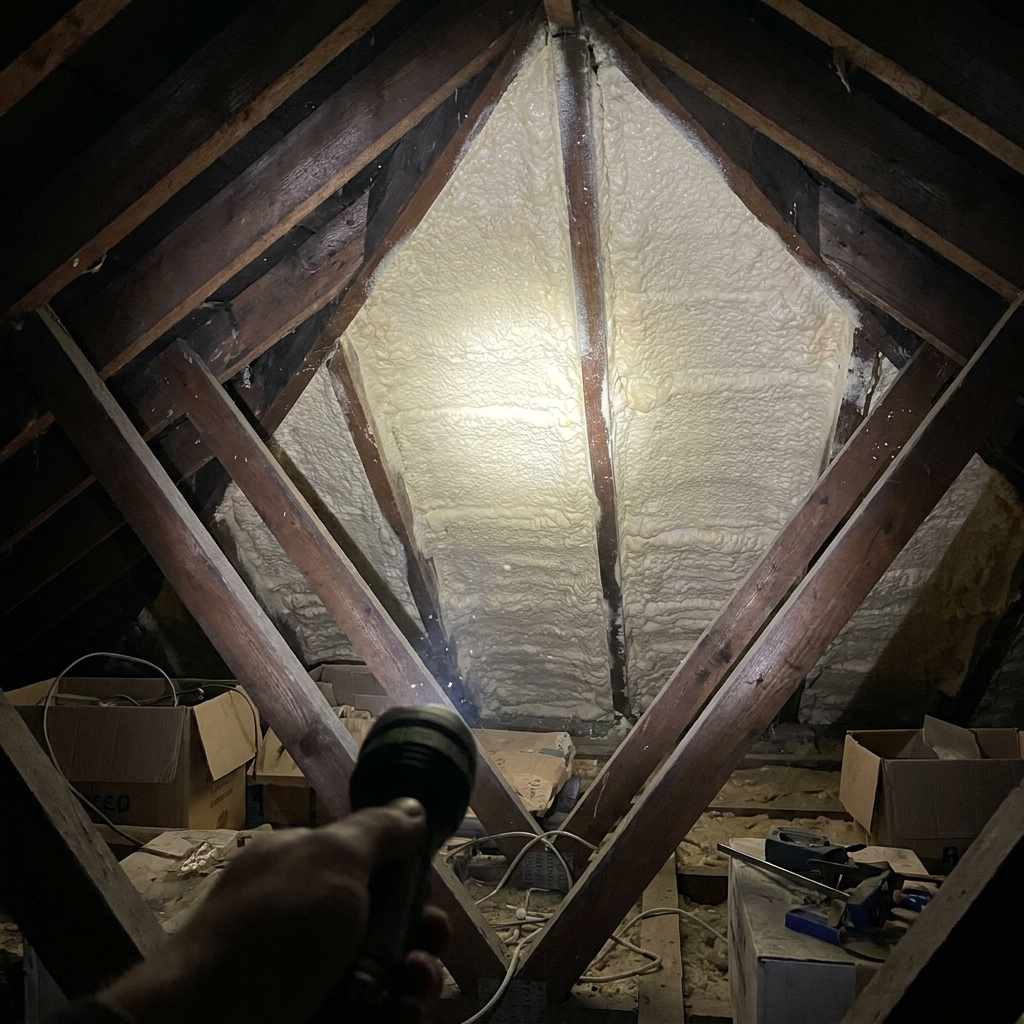
Sprayed roof foam sits squarely in that category. It can obscure the roof timbers so their condition cannot be verified and, where it is poorly specified or unventilated, it can trap moisture and contribute to their deterioration over exactly the kind of long horizon a lifetime mortgage spans. It can also reduce the property’s appeal to the future buyer whose purchase repays the loan. For both reasons, equity release criteria around foam are frequently tighter than those of a standard residential mortgage. A mainstream lender is largely concerned with value today; a lifetime-mortgage provider is concerned with value and saleability decades from now.
What providers typically require
Provider requirements vary, but the common conditions are:
- An independent inspection establishing the foam type, ventilation and timber condition — the same impartial assessment that helps with any mortgage, giving the provider verified evidence rather than an unknown.
- Removal in some cases — a number of providers will want the foam removed before they will lend at all, given the long time horizon and the difficulty of monitoring the roof over decades.
- A satisfactory valuation — the surveyor must be able to value the property with confidence, which sprayed foam can hinder by preventing a proper assessment of the roof.
As with standard mortgages, providers differ. Some may accept a property on the strength of a clean independent report; others maintain a firmer line and insist on removal regardless. A specialist equity release adviser will know current provider attitudes and can target the ones most likely to proceed in your circumstances.
| Provider stance | Your route |
|---|---|
| Accepts with satisfactory inspection | Commission an independent report |
| Requires removal | Obtain quotes; budget £2,000–£5,000+ |
| Declines | Seek an alternative provider via a specialist adviser |
Weighing removal against the benefit
If a provider requires removal, weigh the cost — £2,000–£5,000+, plus any reinsulation to restore the roof’s thermal performance — against the equity you intend to release and the rate available. For some homeowners the released funds comfortably justify the work, and clearing the foam also helps any future sale of the property. For others, it may be worth instructing the adviser to seek a more flexible provider before committing to removal. The crucial discipline is this: never assume removal is mandatory until an independent inspection and a specialist adviser confirm it for your specific plan. Treating removal as the automatic first step can mean spending thousands that a different provider would not have required. See whether removal is worth it in your situation.
The right people to involve
Equity release is a regulated, long-term financial decision with implications for your estate, your beneficiaries and potentially any means-tested benefits you receive. It should never be entered into lightly or on the say-so of a removal firm. Use a qualified, regulated equity release adviser — the Equity Release Council sets standards for the sector — and obtain an independent inspection of the roof. Together, the adviser and the inspection tell you whether the foam genuinely blocks your plan and, if so, the most cost-effective way forward, rather than leaving you to act on assumption or pressure.
This page is general information, not financial, surveying or legal advice. Equity release is a major decision; take regulated advice and an independent inspection before proceeding.
Frequently asked questions
Can I get equity release with spray foam in the roof?
Sometimes, but providers are often stricter than standard lenders. Many require removal or a satisfactory independent inspection because the loan runs for decades and they need long-term confidence in the property.
Why is equity release harder than a normal mortgage with foam?
Because a lifetime mortgage is repaid by a future sale, often many years later. Providers care about long-term condition and saleability, so anything that could impair the roof or deter future buyers is scrutinised more closely.
Will I definitely have to remove the foam for equity release?
Not necessarily. Some providers accept a property with a clean independent report; others require removal. A specialist adviser and an impartial inspection establish which applies to you before you spend on removal.
Who should I speak to about equity release with spray foam?
A regulated equity release adviser (the sector follows Equity Release Council standards) and an independent surveyor. Avoid relying on a removal firm’s free survey for a decision this significant.
Sources & further reading
- RICS — 2023 consumer guidance on spray foam insulation and mortgage lending
- Equity Release Council — standards and consumer guidance for lifetime mortgages
- UK Finance — lending and property condition positions
- Property Care Association (PCA) — roof timber and moisture guidance
This guide is general information, not surveying, structural, legal or financial advice. Whether spray foam needs removing depends on the foam type, install quality, ventilation and your roof timbers’ condition, and an independent inspection by a RICS surveyor or qualified specialist (not a free survey from a company that profits from removal) is essential before you decide.