The short answer
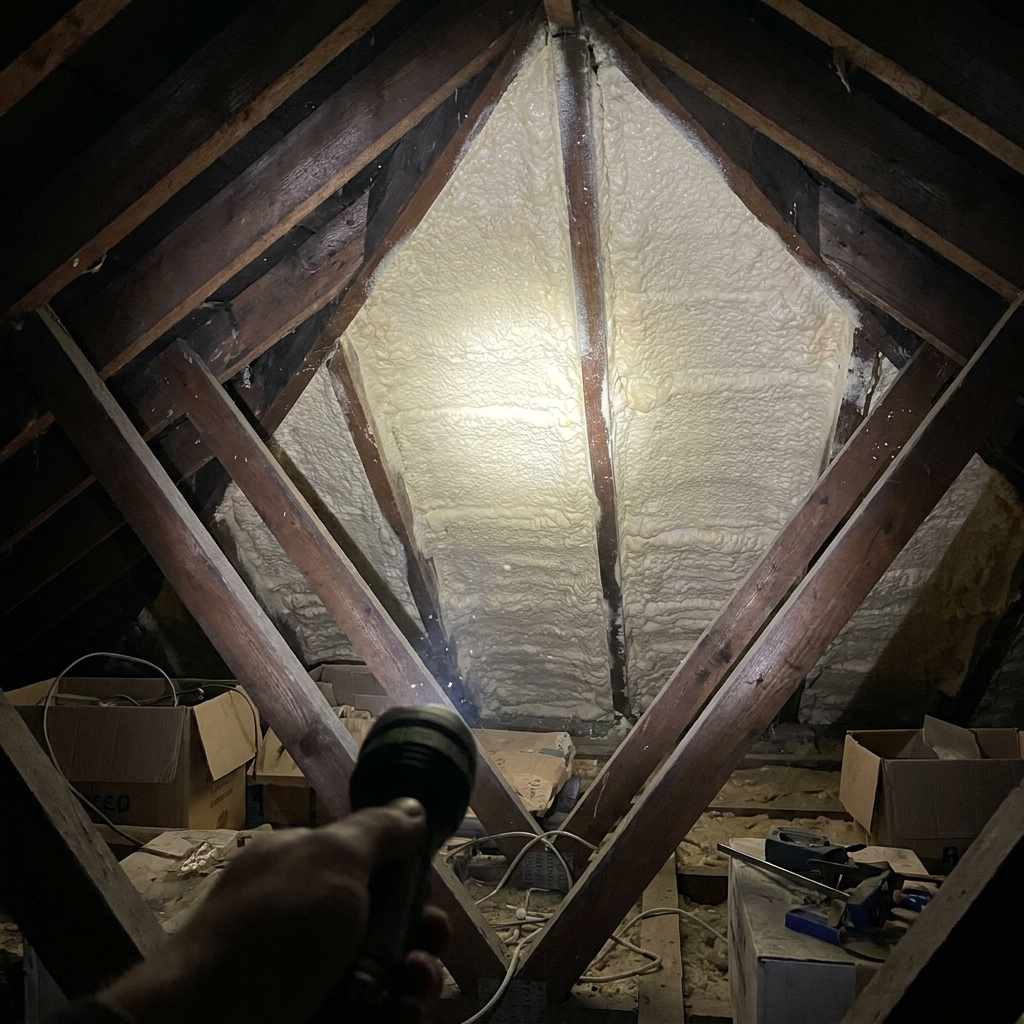
Once spray foam is removed, the roof is normally reinsulated and reventilated to a recognised standard — typically insulation at ceiling level with restored ventilation, designed to meet current building regulations. Reinsulating is part of the job, not an afterthought, and the right specification depends on the roof. The sequence is: independent inspection, removal, timber and ventilation checks, then reinsulation. Costs add to the removal figure. Start with an independent survey, not a removal sales pitch.
Removing the foam is only half the story. A roof left bare loses its insulation, so reinsulation almost always follows, ideally restoring the ventilated cold-roof arrangement and bringing thermal performance up to a sensible standard. This page explains what reinsulating involves, how it fits with removal, and why the work should be planned as a whole.
Reinsulating at a glance
- Why reinsulate Roof loses insulation once foam is out
- Typical approach Ceiling-level insulation, restored ventilation
- Standard to target Current Approved Document L principles
- Order of works Inspect → remove → check → reinsulate
- Cost note Adds to the removal figure
Why reinsulation is part of the job
When spray foam is stripped from a roof, the insulation goes with it. Leaving the roof bare would mean heat loss, cold rooms and higher energy bills, so reinsulation is a normal and expected part of the project rather than an optional extra. The aim is usually to return the roof to a properly functioning, ventilated arrangement and to insulate it to a standard in line with current expectations — the energy-efficiency requirements set out in Approved Document L of the building regulations provide the reference point for thermal performance.
For most homes this means going back to a conventional cold roof: insulation laid at ceiling level, with the loft above ventilated as it was originally designed to be. This restores the moisture-management approach discussed under roof ventilation.
The order of works
Doing the work in the right sequence protects both your roof and your money:
- Independent inspection first. Before any removal, a RICS surveyor or specialist not selling removal assesses the foam, timber and ventilation, so you remove only what genuinely needs removing.
- Removal. The foam is taken off — see how spray foam is removed — with care around timber and felt.
- Timber and felt checks. With the structure exposed, the condition of the timber and the roof covering is confirmed and any necessary repairs identified.
- Reinsulation and reventilation. New insulation is installed and ventilation paths restored to a recognised standard.
Skipping the inspection step is the common mistake: it leads to removing sound foam unnecessarily, or to reinsulating over an unresolved timber or leak problem.
Cost and specification
Reinsulation adds to the cost of removal itself. Professional removal of loft spray foam typically falls in the region of £2,000–£5,000+ depending on roof size, foam type and access, and reinsulation, ventilation works and any timber repairs are additional. The right specification — insulation type, depth and how ventilation is restored — depends on your roof, which is another reason the independent inspection matters. For the cost picture overall, see removal cost and is removal worth it.
| Stage | Purpose |
|---|---|
| Independent inspection | Decide what needs removing and repairing |
| Removal | Strip foam, protect timber and felt |
| Timber / felt repair | Address any decay or covering defects |
| Reinsulate & reventilate | Restore thermal performance and airflow |
Cold-roof reinstatement versus a warm-roof rebuild
There is a genuine design choice at the reinsulation stage, and it is worth understanding. The straightforward option for most homes is to reinstate a conventional cold roof: lay insulation at ceiling level and restore the loft ventilation. This is well understood, relatively economical, and returns the roof to the moisture-management approach it was built for. The alternative — a properly engineered warm roof, with continuous insulation at rafter level and correct vapour control — is more involved and more costly, but keeps the loft space within the insulated envelope. Which is appropriate depends on how the loft is used and on the roof itself.
The important point is that whichever route is chosen, it must be designed as a coherent system rather than improvised. The failures associated with spray foam often came precisely from an in-between situation: a former cold roof whose ventilation was reduced without the vapour-controlled detailing a warm roof needs. Good reinsulation avoids repeating that mistake by committing fully to one approach and detailing it correctly, which is a job for a competent professional, not guesswork.
What to do next
Plan removal and reinsulation as a single project, and begin with an independent inspection rather than a free survey from a removal firm. An impartial assessment tells you whether removal is needed at all, and if it is, lets you specify reinsulation correctly the first time. This page is general information, not a specification for your roof, which a qualified professional should provide.
Frequently asked questions
Do I have to reinsulate after removing spray foam?
In practice, yes — once foam is stripped the roof loses its insulation, so reinsulation is a normal part of the project. The usual approach is insulation at ceiling level with restored ventilation, specified to a recognised standard. Leaving the roof bare would mean significant heat loss.
How is a roof reinsulated after foam removal?
For most homes the roof returns to a conventional cold roof: insulation laid at ceiling level with the loft above ventilated as originally designed. The exact type, depth and ventilation detailing depend on the roof and should target current energy-efficiency standards.
What is the right order of works?
Independent inspection first, then removal, then checks on timber and felt with the structure exposed, then reinsulation and reventilation. Inspecting first avoids removing sound foam, and checking the structure before reinsulating prevents sealing in a defect.
Does reinsulation add much to the cost?
Yes. Removal of loft foam typically falls around £2,000–£5,000+ depending on roof size, foam type and access, and reinsulation, ventilation works and any timber repairs are additional. An independent inspection lets you specify the work correctly and budget realistically.
Sources & further reading
- GOV.UK — Building Regulations Approved Document L (conservation of fuel and power / insulation standards)
- GOV.UK — Building Regulations Approved Documents C and F (moisture and ventilation)
- RICS — Spray foam insulation consumer guidance (2023) on inspection and remediation
- BRE (Building Research Establishment) — cold-roof insulation and ventilation principles
This guide is general information, not surveying, structural, legal or financial advice. Whether spray foam needs removing depends on the foam type, install quality, ventilation and your roof timbers’ condition, and an independent inspection by a RICS surveyor or qualified specialist (not a free survey from a company that profits from removal) is essential before you decide.