The short answer
Per-square-metre pricing is only a rough guide for spray foam removal, because most of the cost is labour driven by access, foam type and bond — not area alone. A whole-loft job in the UK typically totals £2,000–£5,000+ in 2026. Treat any per-m² rate as indicative, insist on an itemised total, and get an independent inspection first.
Homeowners often ask for a price “per square metre” because it feels comparable, but spray foam removal does not scale neatly with area. Two roofs of the same size can cost very differently depending on whether the foam is open-cell or closed-cell, how hard it has bonded, the pitch and the access. This page explains why a per-m² figure is a blunt instrument, how to use it sensibly, and why the total job — and an independent inspection — matter far more than a single rate.
Per-m² pricing at a glance
- Useful as a rough comparison only
- Real driver labour, access, foam type
- Whole-loft total £2,000–£5,000+
- Watch for rates that exclude making-good
- Do first independent inspection
Why per-square-metre is only a rough guide
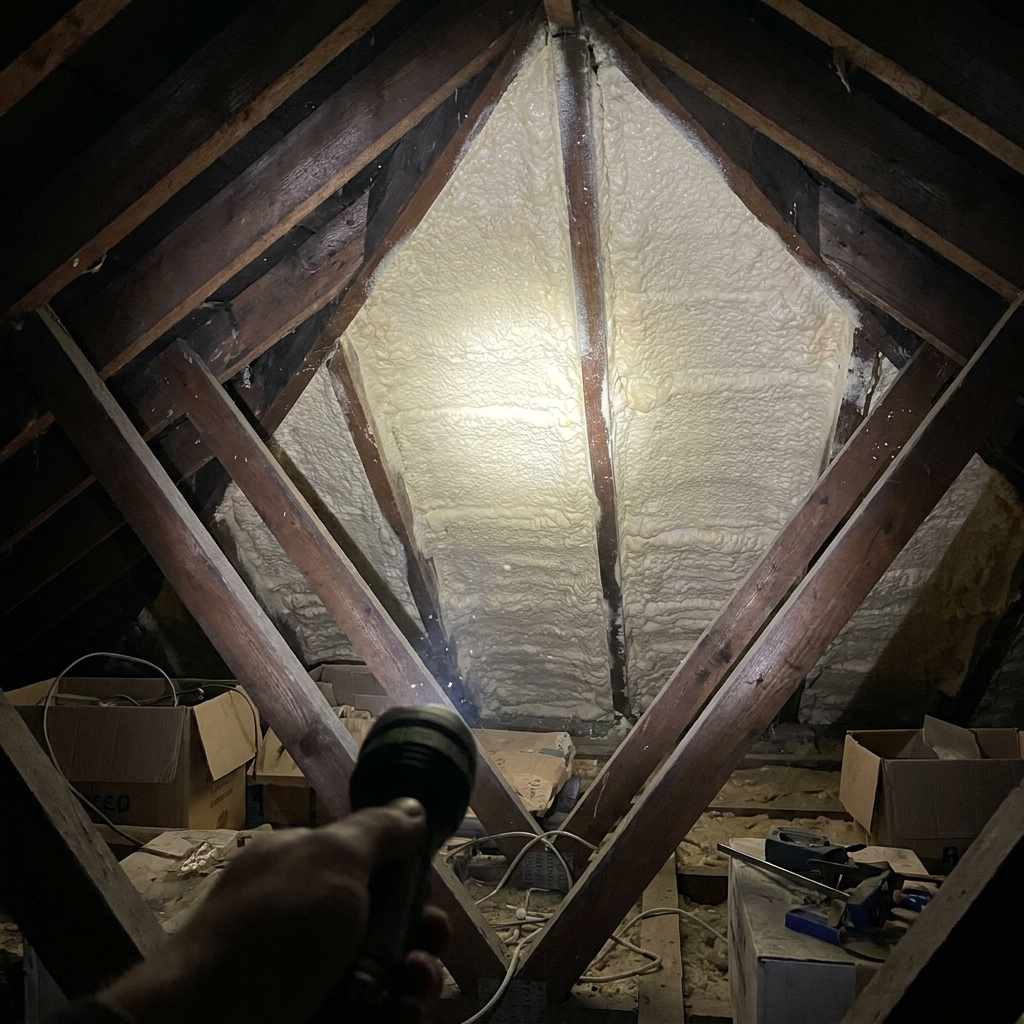
Spray foam removal is hand work. Stripping foam off rafters without damaging the timbers, then clearing the debris and leaving an inspectable roof, takes time that does not rise in a straight line with floor area. A small but steep, awkward roof with dense closed-cell foam bonded hard to the felt can cost more per metre than a larger, simpler roof with softer open-cell. That is why a single “£X per m²” rate, quoted without seeing the roof, should be treated as indicative at best.
| Factor | Why it breaks a flat per-m² rate |
|---|---|
| Foam type | Closed-cell is slower to remove than open-cell |
| Bond strength | Foam fused to felt/timber needs careful, slow work |
| Roof pitch & access | Steep or cramped roofs add hours |
| Making-good | Re-felting and re-insulation often excluded from the rate |
What a quoted rate may quietly exclude
If a firm gives you a per-square-metre price, ask exactly what it covers. Common exclusions include re-felting or replacing the breathable membrane, repairing any timber damage, removing and disposing of debris, and fitting new compliant insulation after removal. A low headline rate that excludes these can end up costing more than a slightly higher all-in figure.
- Debris disposal — foam waste must be cleared and removed.
- Re-felting — the roofing underlay often needs reinstating.
- Repairs — any timbers scarred during install or removal.
- Re-insulation — bringing the loft back to a compliant standard.
- Access equipment — scaffolding or towers where needed.
Use the total, and inspect first
A more reliable way to budget is the whole-job total: many UK loft removals land in the £2,000–£5,000+ range in 2026 once making-good is included. Before that, an independent inspection — far cheaper than removal — confirms whether removal is needed at all. RICS’s 2023 guidance is clear that spray foam is not automatically a defect; the decision turns on foam type, ventilation and the condition of the timbers, which only an impartial inspection establishes.
How a firm arrives at a per-metre figure
When a company does quote per square metre, it is usually working backwards from an estimate of the hours the roof will take and then dividing by area to produce a tidy-looking rate. That is fine as internal maths, but it means the rate already bakes in assumptions about foam type, bond and access that may not match your roof. If those assumptions are wrong — for example, the foam turns out to be closed-cell bonded hard to the felt rather than the open-cell the estimator assumed — the real cost diverges from the quoted rate. This is why a figure given over the phone, without anyone seeing the roof, should never be treated as firm.
It also explains why two honest firms can quote very different per-metre rates for the same roof: they are pricing different scopes, or making different judgements about how stubborn the foam will be. The rate is a symptom of their estimate, not an independent fact about your job.
How to compare quotes fairly
Ask each firm to quote the same scope — strip, dispose, re-felt where needed, repair and re-insulate — and to put it in writing. Then the totals are comparable even if their internal “per metre” maths differs. Ask each to confirm the foam type they assessed and whether they have actually seen the roof, not just the floor area. See what affects the cost for the full list of price drivers, and choosing a removal company for how to vet the firms themselves. This page is general information, not surveying or financial advice; an independent inspection is essential before you commit.
Frequently asked questions
Is there a standard per-square-metre price for removal?
No. Removal cost is driven by labour, access and foam type, not area alone, so there is no reliable standard per-m² rate. Any figure quoted without seeing the roof is indicative only.
Why can a smaller roof cost more per metre?
A small but steep, cramped roof with dense closed-cell foam bonded hard to the felt can take more time per metre than a larger, simpler roof. Access and bond strength matter more than floor area.
Does a per-m² quote include re-insulation?
Often not. Re-felting, repairs and new compliant insulation are frequently excluded. Always ask what the rate covers and compare itemised totals instead.
What should I budget for a whole loft?
Many UK loft removals total £2,000–£5,000 or more in 2026 once making-good is included, but get an independent inspection and itemised quotes for your specific roof.
Sources & further reading
- RICS — consumer guidance on spray foam insulation and mortgage lending (2023)
- PCA (Property Care Association) — spray foam roof guidance
- GOV.UK — home insulation and energy efficiency
This guide is general information, not surveying, structural, legal or financial advice. Whether spray foam needs removing depends on the foam type, install quality, ventilation and your roof timbers’ condition, and an independent inspection by a RICS surveyor or qualified specialist (not a free survey from a company that profits from removal) is essential before you decide.