The short answer
Spray foam removal cost is driven mainly by labour: the foam type, how hard it has bonded, the roof size and pitch, the access, and how much making-good is needed. Closed-cell foam bonded hard to the timbers costs more than softer open-cell on an easy roof. A whole-loft job typically totals £2,000–£5,000+. Get an independent inspection before accepting any quote.
Removal quotes vary widely, and the reasons are consistent once you know what to look for. Because removal is hand work, almost every cost factor comes back to how many careful hours the job takes and how much making-good follows. This page breaks down the main price drivers, shows how they interact, and explains how to read a quote so you can compare firms on a like-for-like basis — with an independent inspection as the essential first step.
Cost drivers at a glance
- Biggest driver labour / hours
- Foam type closed-cell dearer than open-cell
- Bond strength hard bond = slower work
- Roof size, pitch & access
- Often extra re-felting & re-insulation
The main factors
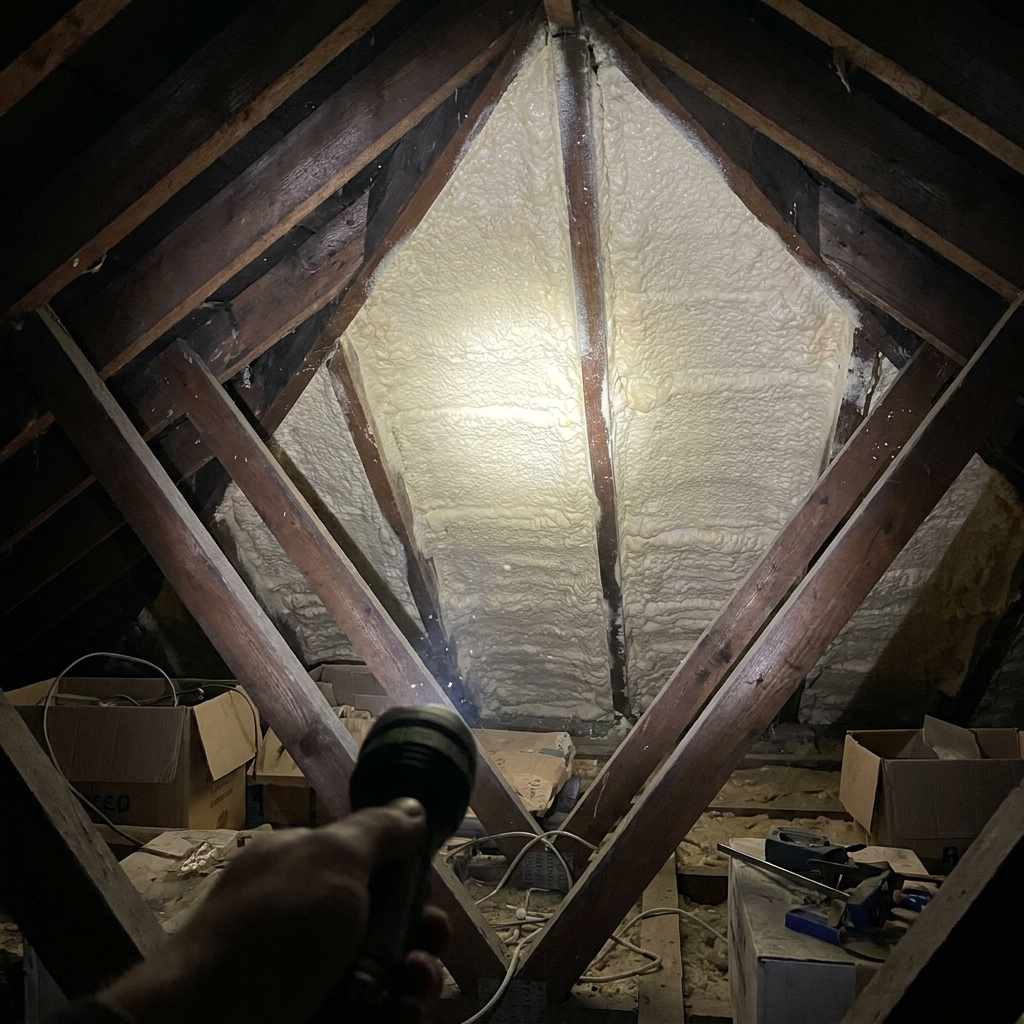
Removal cost is mostly a function of time and care, so the factors that lengthen the job raise the price. The most significant are the foam type and how hard it has bonded; closed-cell is denser and rigid and tends to fuse hard to the timbers and felt, making it slower and more delicate to remove than softer open-cell.
| Factor | Effect on cost |
|---|---|
| Foam type (open vs closed-cell) | Closed-cell usually dearer to remove |
| Bond to timber/felt | Hard bond = slower, more careful work |
| Roof size | More area = more hours |
| Roof pitch & access | Steep/cramped roofs add time and equipment |
| Making-good | Re-felting, repairs, re-insulation add cost |
| Region | Labour rates vary across the UK |
Why making-good matters
The headline price to strip foam is rarely the whole story. After removal, many roofs need the felt or breathable membrane reinstating, any timber damage repairing, and the loft re-insulated to a compliant standard — see reinsulating after removal. These are real, sometimes substantial, costs. A quote that excludes them looks cheaper but can end up costing more than an all-in figure from a firm that includes everything.
- Debris removal and disposal of the stripped foam.
- Re-felting or replacing the roofing underlay.
- Timber repairs where the structure was scarred.
- Re-insulation to bring the loft back to standard.
- Access equipment such as scaffolding where required.
How to read a quote against these factors
Ask each firm to confirm the foam type they have assessed, whether the quote includes debris disposal, re-felting, repairs and re-insulation, and what evidence of completion you will receive. Get it in writing from more than one firm. Treat “from” prices and free surveys with caution — a company that profits from removal has an incentive to recommend the most extensive (and expensive) job.
The cost you only discover once the foam is off
One factor sits outside any quote: the condition of the roof underneath. Because foam can obscure the timbers, neither you nor the firm can be certain of their state until the foam is stripped. If the timbers are sound, the job runs to plan. If they show decay or the felt has perished — risks that rise where foam has trapped moisture — repairs add to the bill. A reputable firm flags this possibility upfront and prices repairs as a clearly identified extra rather than springing a surprise. An independent inspection beforehand reduces the uncertainty, because a surveyor can often gauge the likely condition and ventilation before a penny is spent on removal.
Region, access and logistics
Finally, where you are and how reachable the roof is both move the price. Labour rates vary across the UK, and a roof that needs scaffolding, has a tiny loft hatch, or has limited headroom takes longer to work in. None of these change what the foam is, but they change how many hours the job takes — and since removal is priced on hours, they show up in the total.
Two homes with identical foam can therefore be quoted very differently simply because one has an easy, walk-in loft and the other a cramped hatch over a stairwell. When you compare quotes, bear in mind that part of any difference reflects these site conditions rather than one firm being dearer than another. The point of an itemised, like-for-like quote is to separate the genuine cost drivers from quoting style, so you are comparing the same job, not the same headline number.
Inspect first to control the cost
The single best way to control cost is to commission an independent inspection before getting removal quotes. It confirms whether removal is needed, records the foam type and the condition of the timbers, and gives you an impartial brief to put to removal firms — so you are pricing the right job, not the job a salesperson wants to sell. This page is general information, not surveying or financial advice; an independent inspection is essential.
Frequently asked questions
What is the single biggest cost factor?
Labour. Removal is hand work, so anything that lengthens the job — dense closed-cell foam, a hard bond to the timbers, a large or steep roof, or poor access — raises the price the most.
Does foam type really change the price?
Yes. Closed-cell foam is denser and bonds harder to the structure, so it is generally slower and dearer to remove than softer, more vapour-open open-cell foam.
Why are some quotes so much cheaper?
Often because they exclude making-good — debris disposal, re-felting, repairs and re-insulation. A cheap “strip only” price can cost more once those are added. Compare itemised, like-for-like quotes.
How can I keep the cost down without cutting corners?
Get an independent inspection first so you price only the work that is genuinely needed, then obtain itemised quotes from more than one reputable firm and avoid free surveys from removal-incentivised companies.
Sources & further reading
- RICS — consumer guidance on spray foam insulation and mortgage lending (2023)
- PCA (Property Care Association) — spray foam roof guidance
- GOV.UK — building regulations and home insulation standards
This guide is general information, not surveying, structural, legal or financial advice. Whether spray foam needs removing depends on the foam type, install quality, ventilation and your roof timbers’ condition, and an independent inspection by a RICS surveyor or qualified specialist (not a free survey from a company that profits from removal) is essential before you decide.