The short answer
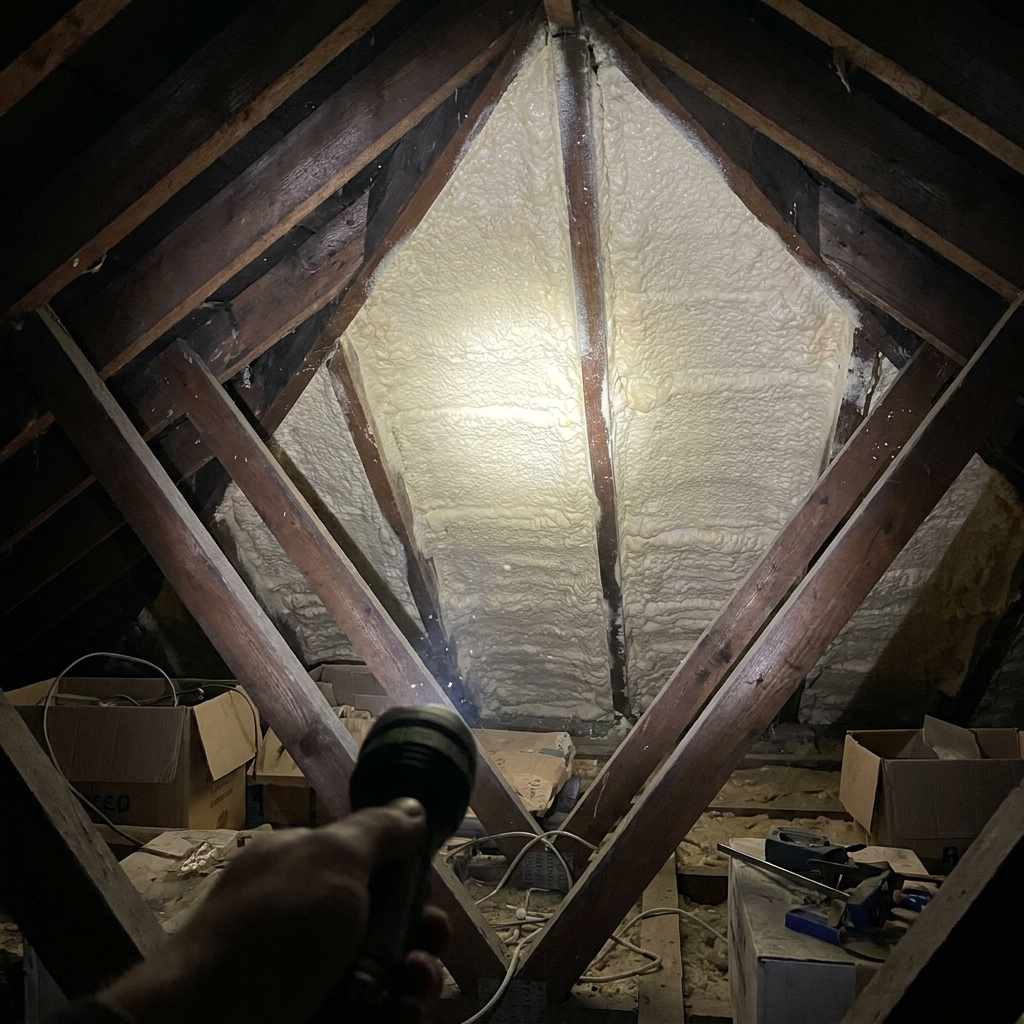
A proper spray foam removal runs in stages: independent inspection, planning and quoting, manual stripping of the foam, debris clearance, re-felting and timber repair, then re-insulation to a compliant standard. It is mostly careful hand work to avoid damaging the roof timbers. The order matters — the independent inspection comes first, before any removal firm is engaged.
Knowing the process helps you judge a quote, plan the disruption and check that a firm is doing the job properly. A sound removal is not just “rip the foam out”; it is a sequence that starts with an impartial inspection and ends with a compliant, inspectable roof. This page walks through each stage in order, explains why the inspection comes first, and flags the points where homeowners are most often misled.
The process at a glance
- Stage 1 independent inspection
- Stage 2 planning & itemised quotes
- Stage 3 manual foam stripping
- Stage 4 debris clearance & repairs
- Stage 5 re-felting & re-insulation
Stage 1 — independent inspection
The process should begin with an independent inspection by a RICS surveyor or competent specialist who does not sell removal. They identify the foam type, assess ventilation and the condition of the roof timbers, and confirm whether removal is genuinely needed. RICS’s 2023 guidance treats foam as a matter for evidence-based assessment, not an automatic defect — so this impartial step decides whether the rest of the process is even necessary.
Stage 2 — planning and quotes
With the inspection in hand, you have an impartial brief to give removal firms. Get itemised written quotes covering the full scope — strip, dispose, re-felt, repair and re-insulate — from more than one reputable company. See choosing a removal company for how to vet firms. Avoid relying on a free survey from a firm that profits from removal.
Stage 3 — manual removal
Removal itself is mostly hand work: cutting, scraping and lifting the foam off the rafters and the underside of the roof without scarring the structural timbers. Closed-cell foam, being denser and harder bonded, takes longer than softer open-cell. The aim is a clean structure a surveyor can inspect afterwards.
| Stage | What happens |
|---|---|
| 1. Inspection | Impartial assessment; confirm if removal is needed |
| 2. Quotes | Itemised, like-for-like, from reputable firms |
| 3. Stripping | Careful manual removal of the foam |
| 4. Clearance & repair | Debris removed; timbers repaired |
| 5. Re-felt & re-insulate | Roof reinstated to a compliant standard |
Stage 4 — clearance and repairs
Once the foam is off, the debris is cleared and disposed of, and any timbers damaged during the original install or the removal are repaired. This is also when the true condition of the roof becomes visible — one reason the inspection matters, so there are no surprises.
Stage 5 — re-felting and re-insulation
Finally, the felt or breathable membrane is reinstated where needed and the loft is re-insulated to a compliant standard, restoring both weather protection and thermal performance. Keep completion evidence — photos and any report — as a lender or buyer may want it.
How a good process protects the structure
The reason removal is done by hand rather than with aggressive power tools is to protect the roof timbers. The structural rafters carry the roof; gouging or weakening them while stripping foam would replace one problem with a worse one. A careful firm works methodically, eases the foam away from the timbers and felt rather than tearing at it, and checks the structure as it is revealed. This is also why DIY removal carries real risk — the temptation to rush or to use the wrong tools can do lasting damage that is expensive to repair and that a surveyor will notice.
Documentation and completion evidence
A frequently overlooked part of the process is the paperwork. Because the usual reason for removal is to satisfy a lender or buyer, the value of the job depends partly on being able to prove it was done properly. Good firms provide before-and-after photographs and a description of the work; combined with the independent surveyor’s report, that gives a clear evidence trail. Keep it safe — you may need it months or years later for a sale, remortgage or equity release.
What to watch for
A proper process is transparent at every stage, so be cautious of firms whose approach skips steps or hides the scope. Common warning signs include:
- Jumping straight to a quote without a proper assessment of the roof.
- Bundling a “free survey” with the removal they hope to sell.
- Leaving making-good — debris, re-felting, repairs, re-insulation — out of the price.
- Pressure to sign on the day, or a vague, unitemised scope.
- No offer of completion photographs or a written description of the work.
This page is general information, not surveying, structural or financial advice — an independent inspection is essential.
Frequently asked questions
What is the first step in removing spray foam?
An independent inspection by a RICS surveyor or specialist who does not sell removal. It confirms the foam type, the condition of the timbers and whether removal is genuinely needed — before any removal firm is engaged.
Is removal just stripping the foam out?
No. A proper process includes debris clearance, timber repairs, re-felting and re-insulation to a compliant standard. Stripping the foam is only one stage of the job.
Why must the inspection be independent?
A firm that profits from removal has an incentive to recommend it. An impartial RICS-led inspection gives an evidence-based view of whether removal is needed, which protects your money and satisfies lenders.
What should I keep after the work is done?
Keep completion evidence — photos and any report — together with the surveyor’s inspection. A lender or buyer may want to see both the assessment and proof the work was completed properly.
Sources & further reading
- RICS — consumer guidance on spray foam insulation and mortgage lending (2023)
- PCA (Property Care Association) — spray foam roof guidance
- GOV.UK — building regulations (Approved Documents C & L) and insulation standards
This guide is general information, not surveying, structural, legal or financial advice. Whether spray foam needs removing depends on the foam type, install quality, ventilation and your roof timbers’ condition, and an independent inspection by a RICS surveyor or qualified specialist (not a free survey from a company that profits from removal) is essential before you decide.