The short answer
In 2023 RICS issued consumer guidance on spray foam insulation and mortgage lending to give surveyors a clearer, more consistent framework and reduce blanket rejections. It encourages a proportionate, evidence-led assessment of the foam type, ventilation and timber condition rather than automatic refusal, and recognises that a competent independent inspection can establish whether a roof is sound — sometimes without removal.
For years, spray foam in a roof often meant an automatic “no” from valuers and lenders, leaving owners stuck. RICS — the professional body for chartered surveyors — responded in 2023 with consumer guidance designed to bring consistency and proportion to how foam is assessed. This page explains, in plain English, what that guidance covers, why it was issued, and what it means for your survey, sale or mortgage.
RICS guidance at a glance
- Issued by RICS (chartered surveyors’ body)
- Year 2023
- Purpose Consistent, proportionate assessment
- Effect Reduce blanket rejections
- Key principle Evidence-led, not automatic refusal
What RICS is and why its guidance matters
RICS — the Royal Institution of Chartered Surveyors — is the professional body that sets standards for chartered surveyors across the UK. When you buy or remortgage, the valuer assessing the property is typically a RICS member working to RICS standards such as the Home Survey Standard and the valuation “Red Book”. So when RICS publishes guidance on how to assess spray foam, it directly shapes the reports that lenders rely on to make their decisions. That is precisely why the 2023 guidance matters to ordinary homeowners: it influences the very surveys that determine whether a foam-insulated property can be mortgaged, sold or remortgaged. Change what surveyors look for and how they report it, and you change outcomes at thousands of kitchen tables.
Why the guidance was issued
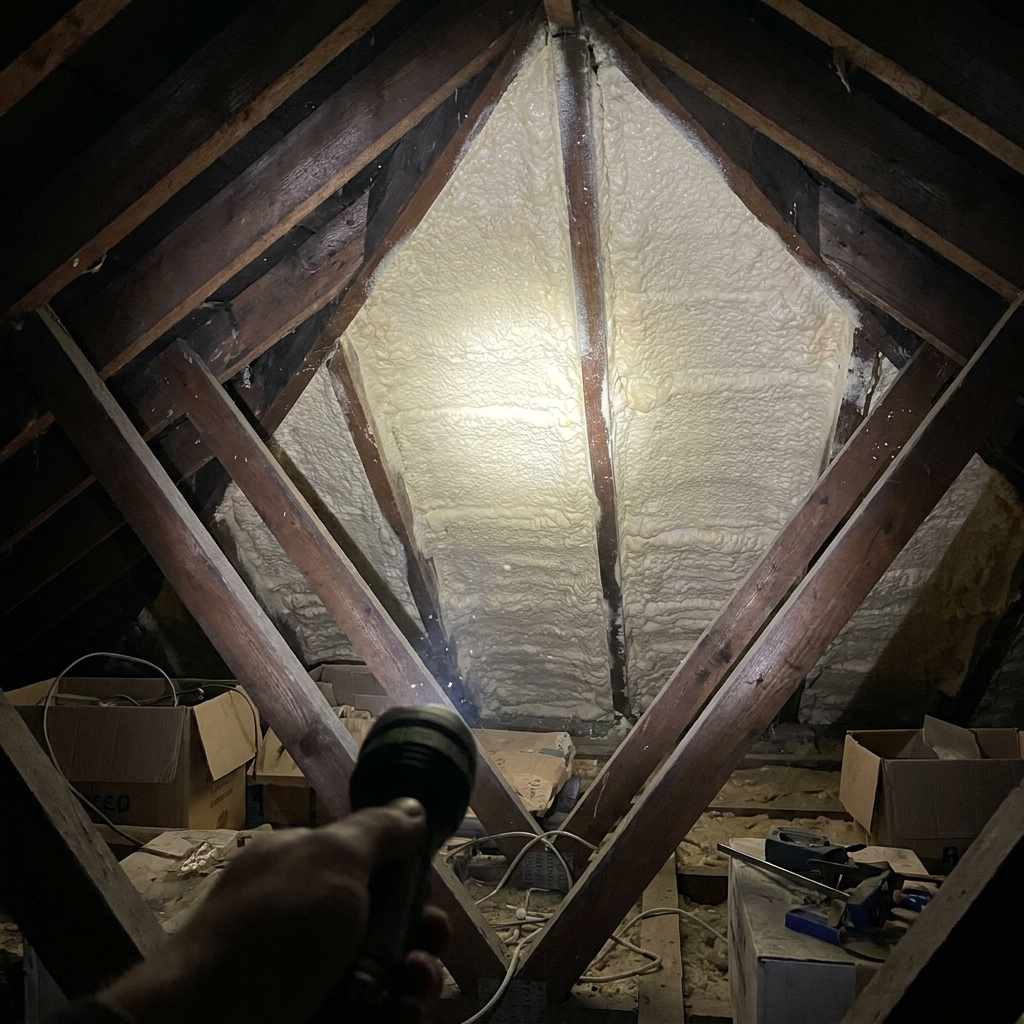
By the early 2020s, sprayed roof foam had become a frequent cause of stalled sales and refused mortgages. Because foam obscures the rafters, the felt and the ventilation path, many surveyors and lenders defaulted to caution and, in practice, to blanket rejections — treating any foam as an automatic problem regardless of the actual condition of the roof beneath it. The result was twofold and unfair. First, owners of perfectly sound, well-insulated homes found themselves unable to sell or remortgage through no fault of the building. Second, treatment was inconsistent: similar properties could be assessed very differently depending on which surveyor and lender happened to be involved. RICS issued the guidance to address both problems — to help surveyors assess sprayed foam more consistently and proportionately, and to discourage refusals that were not actually justified by the evidence in front of them.
What the guidance encourages
- Proportionate assessment — judge the roof on its actual condition, not on the mere presence of foam.
- Consideration of the foam type — open-cell versus closed-cell behave very differently, and that distinction matters to the level of risk.
- Attention to ventilation and moisture — the core technical concerns are whether the roof can still breathe and whether moisture is being trapped against the timbers.
- Recognising independent inspection — a competent, focused assessment of the foam and the timbers can supply the evidence needed to lend, sometimes without any removal.
- Avoiding blanket rejection — the presence of foam alone should not automatically mean a refusal.
| Before the guidance | What the guidance encourages |
|---|---|
| Foam present → often automatic decline | Assess actual roof condition |
| Inconsistent treatment property to property | Consistent, proportionate framework |
| Removal assumed necessary | Independent inspection may suffice |
| Foam type ignored | Open-cell / closed-cell distinction considered |
What it does — and does not — mean for you
The guidance improves your position, but it is important not to over-read it: it is not a guarantee. It does not compel any lender to accept foam — lenders remain free to set their own policies — and it does not declare sprayed foam always acceptable or always safe. What it does is encourage surveyors to assess each roof on its merits and to give proper weight to a competent independent report rather than dismissing the property out of hand. In practice, that makes a clear independent inspection more valuable than it was before, and a good lender match via a broker more likely to succeed. Think of the guidance as a framework for fairness and consistency in how surveyors approach foam — not an automatic approval, but a fairer starting point than the reflexive “no” it was designed to replace.
This page is a plain-English summary for general information, not surveying, legal or mortgage advice. Refer to the RICS guidance itself and take professional advice for your situation.
Frequently asked questions
What did the 2023 RICS spray foam guidance actually do?
It gave surveyors a clearer, more consistent framework for assessing sprayed roof foam and aimed to reduce blanket rejections, encouraging a proportionate, evidence-led judgement of the roof rather than automatic refusal.
Does the RICS guidance force lenders to accept spray foam?
No. Lenders set their own policies. The guidance shapes how surveyors assess foam and discourages reflexive refusals, but each lender still decides whether to lend on a given property.
Why was the guidance needed?
Because foam obscures the roof structure, many surveyors and lenders had defaulted to declining any foam-insulated property, leaving owners of sound homes unable to sell or remortgage. RICS sought consistency and proportion.
How does the guidance help me practically?
It makes a competent independent inspection more valuable, because surveyors are encouraged to assess actual roof condition and consider such reports — which can sometimes satisfy a lender without removal.
Sources & further reading
- RICS — 2023 consumer guidance on spray foam insulation and mortgage lending
- RICS — Home Survey Standard and valuation standards
- UK Finance — lending criteria and property condition positions
- Property Care Association (PCA) — spray foam, ventilation and moisture guidance
This guide is general information, not surveying, structural, legal or financial advice. Whether spray foam needs removing depends on the foam type, install quality, ventilation and your roof timbers’ condition, and an independent inspection by a RICS surveyor or qualified specialist (not a free survey from a company that profits from removal) is essential before you decide.