The short answer
The survey is where spray foam becomes a mortgage issue: the lender’s valuer flags the foam, and the lender then decides what to do. A mortgage valuation is not the same as a detailed inspection — a valuer may simply note that the roof cannot be assessed and recommend caution. Commissioning your own independent inspection gives the lender the evidence a basic valuation lacks, and often resolves the concern.
Spray foam rarely causes a problem until a surveyor sees it. Understanding the different types of survey — and the difference between a lender’s valuation and a proper independent inspection — is the key to managing a foam-related mortgage hurdle. This page explains how surveys and lending interact, what a valuer can and cannot tell, and why your own inspection is often the decisive document.
Surveys, foam and mortgages at a glance
- When foam becomes an issue At the survey
- Lender’s survey Mortgage valuation
- Most useful to you Independent inspection
- What valuers flag Roof cannot be assessed
- Decisive document Independent inspection report
The survey is where it all happens
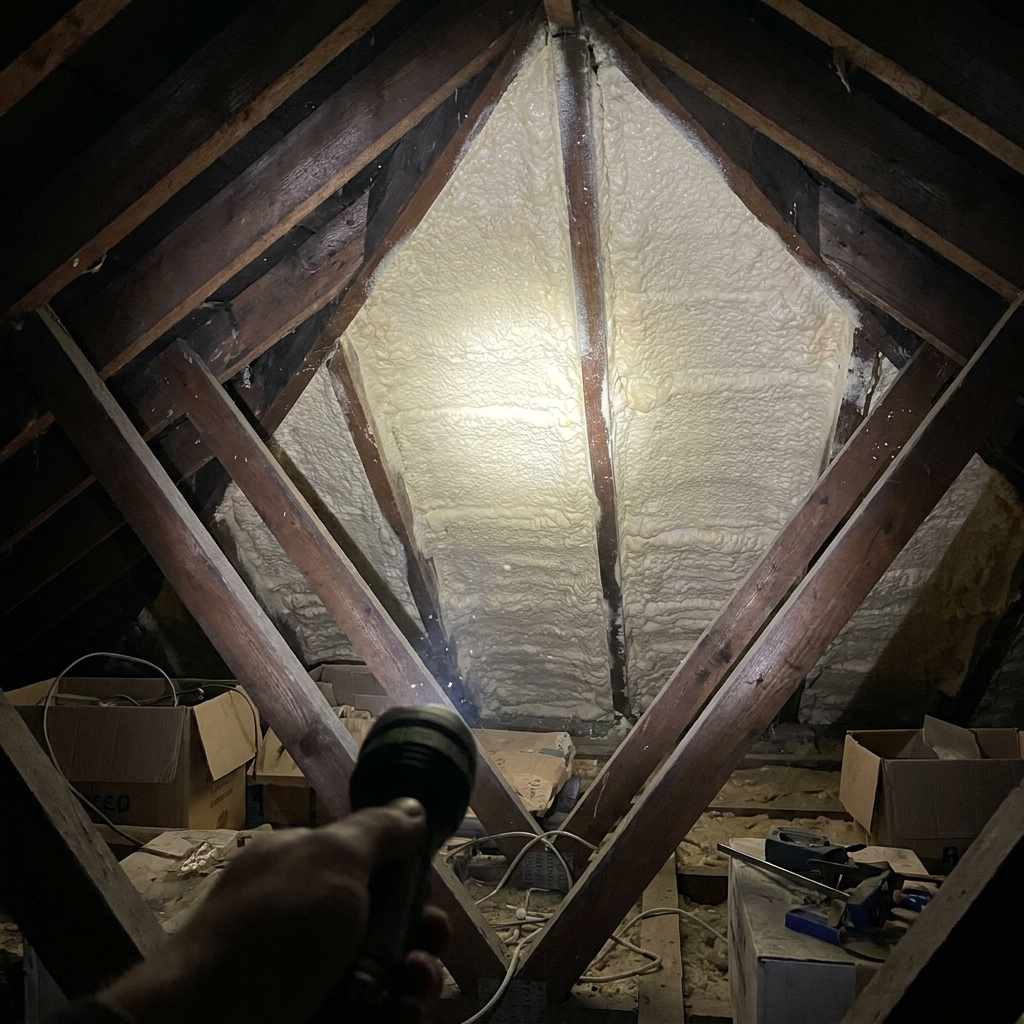
When you buy or remortgage, the lender commissions a mortgage valuation — an assessment, usually by a RICS surveyor, of whether the property is adequate security for the loan. It is emphatically not a detailed condition report; its purpose is to protect the lender, not to advise you on the state of the building. If the valuer sees sprayed foam in the roof, they will typically note that the roof structure cannot be fully inspected, and may recommend the lender treats the property cautiously. That single, often one-line, note can trigger a condition, a request for further evidence, or a refusal. So the survey — specifically the valuation — is the pivot point at which the foam stops being a quiet feature of your loft and becomes a live lending decision.
The three things people call a “survey”
Much of the confusion around foam and mortgages comes from lumping three different things together under the word “survey”:
- Mortgage valuation — commissioned by the lender, for the lender, to confirm the property is adequate security. Limited in scope; this is usually where foam is first flagged, and it rarely investigates the roof in any depth.
- RICS home survey / building survey — commissioned by the buyer, more detailed and covering condition. A higher-level building survey will examine and comment on the roof far more thoroughly than a valuation.
- Independent spray foam inspection — a focused assessment of the foam type, ventilation and timber condition by a RICS surveyor or qualified specialist who does not sell removal. This is the document that most directly addresses a lender’s specific concern.
Confusing these is common and costly. A lender’s valuation telling you the roof “cannot be assessed” is not the same as an expert telling you the roof is unsound — it simply means no one has yet looked at it properly. Treating the first as if it were the second leads owners to pay for removal they may never have needed.
| Survey type | Commissioned by | Best for |
|---|---|---|
| Mortgage valuation | Lender | Confirming security (limited) |
| RICS home/building survey | Buyer | Overall condition |
| Independent foam inspection | Owner/buyer | Evidencing the roof for a lender |
What a surveyor can and cannot tell
Where foam is bonded to the underside of the roof, even a diligent, experienced surveyor faces a hard physical limit: they cannot see the timbers, the felt or the ventilation behind it without intrusive investigation, which a routine valuation does not include. This is the root of nearly every foam-related mortgage problem. A good independent inspection is designed to work around that limit. It identifies the foam type — open-cell or closed-cell, which behave differently — checks the timbers that can be accessed, assesses whether the roof is still ventilated, and looks carefully for signs of condensation or damp. That evidence is exactly what a lender’s basic valuation lacks, and supplying it is why commissioning your own inspection so often unblocks a stalled application.
What to do
If a mortgage valuation flags the foam, do not assume the worst and do not reach straight for a removal quote. Commission an independent inspection and share the resulting report with your lender or broker. If the report is satisfactory, many lenders will proceed without any removal at all. If, on the other hand, it identifies genuine problems — trapped moisture, decaying timbers, no ventilation — you then have a properly evidenced basis on which to decide on removal or remediation, rather than acting on a single cautious line in a valuation that was never meant to diagnose the roof in the first place.
This page is general information, not surveying or mortgage advice. Commission an independent inspection and take professional advice on your survey and lending position.
Frequently asked questions
Is a mortgage valuation the same as a survey?
No. A mortgage valuation is a limited check, for the lender, that the property is adequate security — not a detailed condition report. It is usually where foam is first flagged, but it does not assess the roof in depth.
Why does a surveyor say the roof ‘cannot be assessed’?
Because foam bonded to the roof hides the timbers, felt and ventilation. Without intrusive investigation the surveyor cannot verify their condition, so they note the limitation and the lender reacts cautiously.
Will a more detailed survey help with the mortgage?
It can. A higher-level RICS survey, and especially an independent foam inspection, examine the roof more thoroughly and produce the evidence a lender’s basic valuation lacks — which often resolves the concern without removal.
Should I get my own inspection if the valuation flags foam?
Yes. An independent inspection by a surveyor or specialist not selling removal gives you and the lender concrete evidence of the roof’s condition, and frequently unblocks a stalled application.
Sources & further reading
- RICS — 2023 consumer guidance on spray foam insulation and mortgage lending
- RICS — Home Survey Standard
- UK Finance — mortgage valuations and lending criteria
- Property Care Association (PCA) — roof inspection and moisture guidance
This guide is general information, not surveying, structural, legal or financial advice. Whether spray foam needs removing depends on the foam type, install quality, ventilation and your roof timbers’ condition, and an independent inspection by a RICS surveyor or qualified specialist (not a free survey from a company that profits from removal) is essential before you decide.