The short answer
Spray foam does not directly cause rot, but it can create the conditions for it — trapped moisture and reduced ventilation — and it hides decay so problems are spotted late. Rot needs sustained dampness in timber; foam that keeps wood wet or stops it drying can contribute to that. It is not true that every foamed roof rots. The only way to know your roof’s condition is to expose the timber. Start with an independent survey.
This is the question that worries homeowners most, and it is often answered dishonestly — either dismissed entirely by installers or exaggerated by removal firms. The truthful position sits in between. This page explains what actually causes rot, how foam relates to that mechanism, and why a roof’s condition cannot be judged without inspection.
Foam and rot at a glance
- Direct cause of rot? No — foam is inert
- Real driver Sustained moisture in timber
- Foam’s role Can trap moisture & hide decay
- Always rots? No — depends on the install
- How to know Expose and inspect the timber
What actually causes rot
Timber rot is fungal decay, and fungi need one thing above all: moisture. Wood that stays dry does not rot, however old it is. Wet rot and dry rot both require timber moisture content to stay elevated for a sustained period. So the honest scientific answer to “does spray foam cause rot?” starts here: foam is an inert plastic; it is not a fungus and it does not chemically attack wood. By itself, foam cannot rot a beam.
The fair question is therefore not “does foam cause rot?” but “can foam create the wet conditions that allow rot?” — and there the answer is a careful yes, in some circumstances.
How foam can contribute to decay
Foam can tilt a roof towards decay in two ways:
- By keeping timber wet. If foam reduces ventilation or causes condensation to land on the timber, the wood can stay damp instead of drying — the precondition for rot.
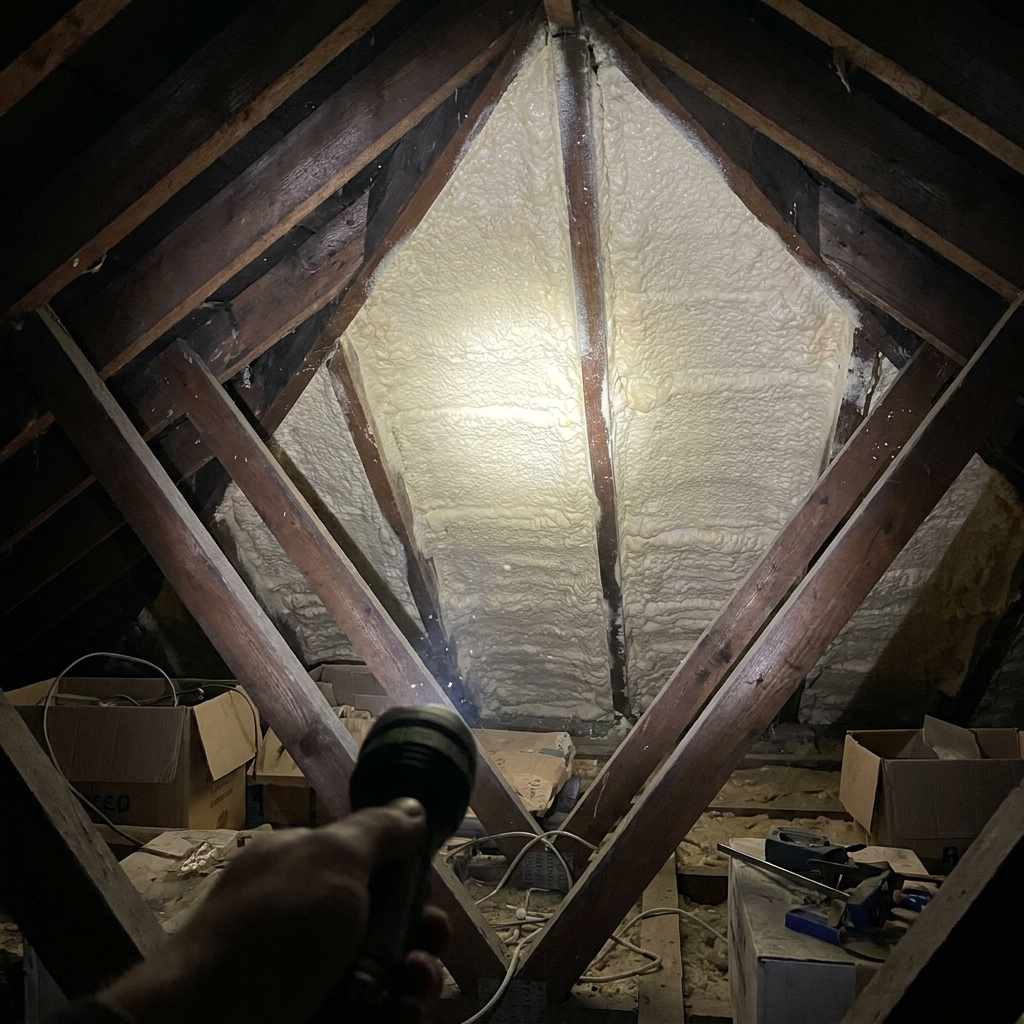
- By hiding the problem. Foam covers the timber, so a leak or early decay can go unseen for years, allowing damage to advance before it is discovered. The harm in this case is not that foam caused the rot but that it delayed its detection.
This is why the question overlaps with timber decay and why the RICS guidance focuses on the roof being obscured. Both effects are about moisture and visibility, not about foam being chemically destructive.
Why you cannot answer it without inspecting
Because rot is driven by moisture conditions that vary from roof to roof, no one can honestly tell you whether your timbers are sound without looking at them. The Property Care Association’s whole approach to decay is diagnosis: expose the wood, assess its moisture, identify whether any decay is active or historic. A foamed roof simply makes that exposure a necessary step rather than an optional one.
| Claim | Honest position |
|---|---|
| “Foam rots every roof” | False — many foamed roofs are sound |
| “Foam can never cause rot” | False — trapped moisture can contribute |
| “You can tell without looking” | False — timber must be exposed to judge |
| “Inspection settles it” | Correct — this is the only reliable route |
Why the “always” and “never” claims both mislead
It helps to understand why this question attracts such polarised answers. Firms that sell removal have a commercial incentive to present foam as a guaranteed cause of rot, because that drives the larger job. Installers and sellers of foam have the opposite incentive, presenting it as entirely benign. Neither position is honest, because both ignore the variables that actually decide the outcome: the foam type, whether ventilation was preserved, how much moisture the home produces, the condition of the felt, and whether there were pre-existing leaks. A roof where all of those are favourable can carry foam for years without decay; a roof where several are unfavourable can develop problems.
This is also why testimonials and horror stories cut both ways and prove little. One homeowner’s rotten roof and another’s sound one are not contradictory — they simply had different conditions. The only thing that resolves the question for your roof is looking at your timber, which is why every responsible source, including the RICS consumer guidance, points back to inspection rather than to a blanket verdict.
What to do
If rot is your concern, do not act on a free survey from a removal company; their incentive is to find a reason to strip the roof. Commission an independent inspection from a RICS surveyor or PCA-registered timber specialist who exposes a representative sample of timber and gives you an impartial verdict. If decay is present, that informs the next step — potentially removal and repair; if the timbers are sound, you have saved yourself a needless and costly job. This page is general information, not a decay diagnosis — an inspection of your roof is essential before any decision.
Frequently asked questions
Does spray foam definitely cause rot?
No. Foam is inert and does not cause rot by itself. Rot needs sustained moisture in timber. Foam can contribute by trapping moisture or reducing ventilation, and it hides decay so problems are found late — but many foamed roofs are perfectly sound. Only inspection reveals the truth.
Why do removal companies say foam causes rot?
Some firms overstate the risk because they profit from removal. The honest position is that foam can contribute to the conditions for rot in some installations, but does not guarantee it. That is exactly why you should rely on an independent inspection rather than a sales-led free survey.
Can rot under foam be reversed?
Active decay must be stopped by removing the moisture source and dealing with affected timber; advice depends on the extent. A specialist diagnoses whether decay is active or historic and recommends proportionate action. Reversal is not the right frame — controlling moisture and treating affected wood is.
How do I know if my timbers have rotted?
You cannot tell through the foam. A competent inspection exposes a representative sample of timber, takes moisture readings and looks for fungal or insect damage. That is the only reliable way to establish whether rot is present in your specific roof.
Sources & further reading
- PCA (Property Care Association) — guidance on wet and dry rot: moisture as the driver of decay
- RICS — Spray foam insulation consumer guidance (2023) on obscured timbers and inspection
- BRE (Building Research Establishment) — building science on timber moisture content and durability
- GOV.UK — Building Regulations Approved Document C (resistance to moisture)
This guide is general information, not surveying, structural, legal or financial advice. Whether spray foam needs removing depends on the foam type, install quality, ventilation and your roof timbers’ condition, and an independent inspection by a RICS surveyor or qualified specialist (not a free survey from a company that profits from removal) is essential before you decide.