The short answer
Timber decay — wet rot, dry rot and wood-boring insects — is driven by moisture, and spray foam matters because it can keep timber damp and hide decay until it is advanced. Each type of decay behaves differently and needs the moisture source removed. Foam itself does not eat wood; the risk is trapped moisture and concealment. Confirming whether decay is present in your roof requires exposing the timber. Begin with an independent survey.
Timber decay is not one thing. Wet rot, dry rot and beetle attack have different causes, appearances and remedies, but they share a common trigger: moisture. Understanding how each works clarifies where spray foam fits — and why a foamed roof needs its timber exposed before anyone can judge its condition. This page sets out the types of decay and their relationship to foam.
Timber decay at a glance
- Wet rot Localised, needs persistent damp
- Dry rot Can spread, needs sustained moisture to start
- Insect attack Beetle larvae in damp or softened wood
- Common trigger Sustained moisture in the timber
- Foam’s role Traps moisture, conceals decay
The main types of timber decay
Decay in roof timber falls into three broad categories, all linked to moisture:
- Wet rot is the most common. It occurs where timber is persistently damp, stays fairly localised to the wet area, and softens or darkens the wood. Remove the moisture and wet rot generally stops.
- Dry rot is less common but more serious because, once established in damp conditions, it can spread through timber and even across masonry. It still needs moisture to take hold, so moisture control remains central.
- Wood-boring insects (such as the common furniture beetle) lay eggs in timber; the larvae tunnel through the wood. Activity is often associated with damp or already-softened timber.
The Property Care Association, whose members specialise in this work, stresses that correct identification of the decay type and its moisture source is the basis of any sound remedy. Misidentifying decay leads to the wrong, often costlier, treatment.
Where spray foam fits in
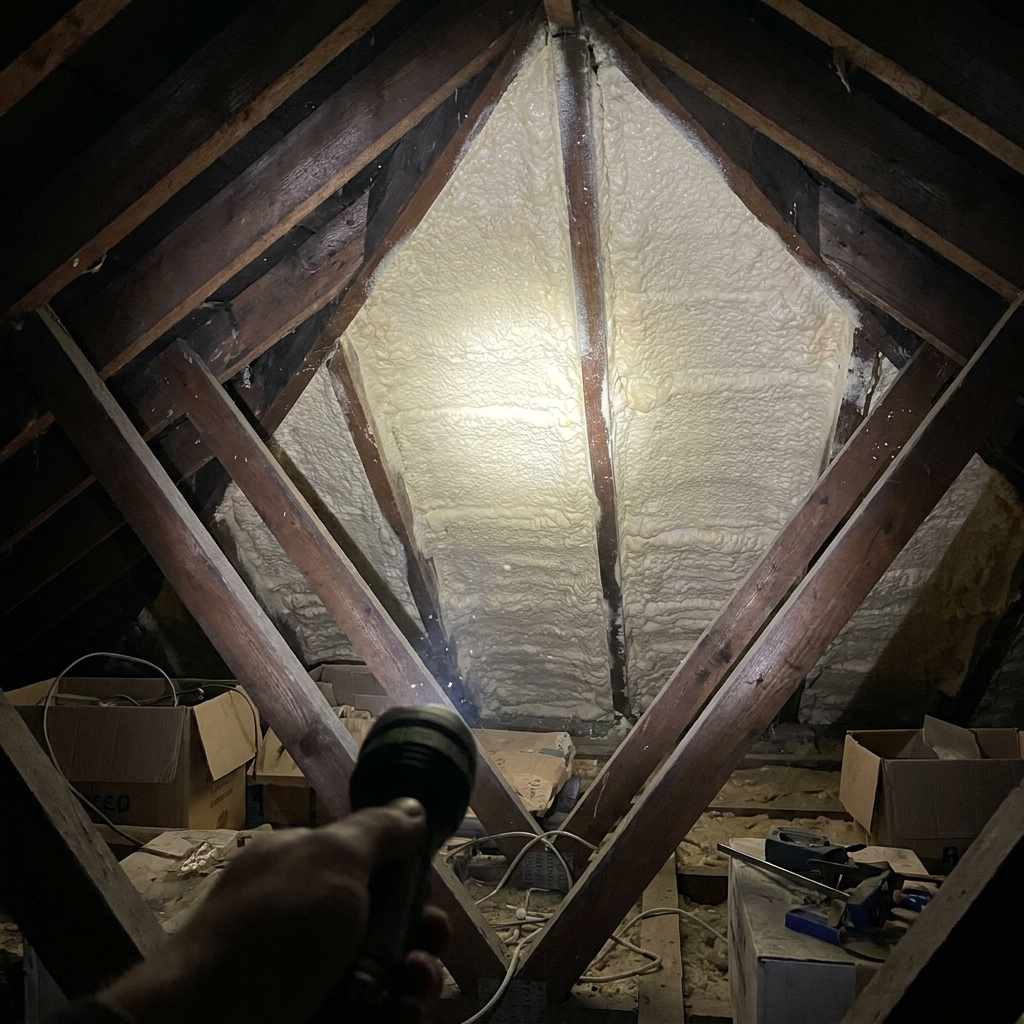
Foam does not feed any of these processes — it is an inert plastic. Its relevance is twofold and consistent with the rest of this cluster: it can keep timber damp by reducing ventilation or causing condensation, and it conceals the timber so decay progresses unseen. A roof that might have shown a small patch of wet rot in a bare loft can, under bonded foam, hide that patch until it has spread. This is the same mechanism discussed under does spray foam cause rot: moisture and concealment, not chemistry.
Active versus historic decay
A crucial distinction in any inspection is whether decay is active (still progressing because moisture is still present) or historic (it happened in the past, the moisture has gone, and the timber is now stable). The two need very different responses, and only exposing and assessing the timber — ideally with moisture readings — can tell them apart. Treating historic decay as if it were active wastes money; missing active decay risks the structure.
| Decay type | Key feature | Moisture link |
|---|---|---|
| Wet rot | Localised softening | Persistent local dampness |
| Dry rot | Can spread further | Sustained moisture to start |
| Beetle attack | Tunnelling, exit holes | Often damp/softened wood |
How decay is found in a foamed roof
Because foam covers the timber, finding decay is not a matter of looking — it requires access. A competent specialist cuts back or lifts foam in test locations chosen where decay is most likely: at the eaves and wall plate where moisture collects, around any historic leak, and at a representative mid-roof point. Each exposed section is examined for softening, staining, fungal growth and insect exit holes, and moisture readings help establish whether any problem is active. Sampling several points matters because decay is often localised; a single test pit can miss a problem a few rafters away, while testing only obviously suspect areas can overstate the picture.
The aim of this process is a proportionate, evidence-based conclusion: how much decay there is, where, what type, and whether it is still progressing. That evidence is what allows a sensible decision about whether timber repair, full removal, or simply monitoring is appropriate — rather than a one-size-fits-all recommendation driven by who is paying whom.
What to do next
If you are worried about decay under foam, the route is the same as elsewhere in this cluster: an independent inspection by a RICS surveyor or PCA-registered timber specialist who exposes a representative sample, identifies any decay and its moisture source, and distinguishes active from historic. Avoid a free survey from a removal-incentivised firm. With an impartial diagnosis you can decide proportionately whether removal and timber works are needed, or whether the rot fears were overstated. This page is general information, not a decay diagnosis; an inspection of your specific roof is essential.
Frequently asked questions
What types of timber decay affect roofs?
The main types are wet rot (localised, needs persistent damp), dry rot (less common but can spread, needs sustained moisture to start) and wood-boring insect attack. All are linked to moisture. A specialist must identify the type and its source before any remedy is chosen.
Does spray foam cause timber decay?
Not directly — foam is inert and does not feed decay. It matters because it can keep timber damp by reducing ventilation or causing condensation, and it hides decay so it advances unseen. The driver of decay is moisture, which is why inspection focuses on moisture and timber condition.
What is the difference between active and historic decay?
Active decay is still progressing because moisture remains; historic decay happened in the past and the timber is now stable. They need different responses, and only exposing and assessing the timber, often with moisture readings, can tell them apart.
Can decay under foam be treated?
Yes, once correctly diagnosed. The essential step is removing the moisture source; affected timber may be treated or replaced depending on extent. The right approach depends entirely on the type and severity of decay, which an independent specialist establishes by inspection.
Sources & further reading
- PCA (Property Care Association) — guidance on identifying wet rot, dry rot and wood-boring insect attack
- BRE (Building Research Establishment) — building science on timber moisture content and decay
- RICS — Spray foam insulation consumer guidance (2023) on obscured timbers and inspection
- GOV.UK — Building Regulations Approved Document C (resistance to moisture)
This guide is general information, not surveying, structural, legal or financial advice. Whether spray foam needs removing depends on the foam type, install quality, ventilation and your roof timbers’ condition, and an independent inspection by a RICS surveyor or qualified specialist (not a free survey from a company that profits from removal) is essential before you decide.