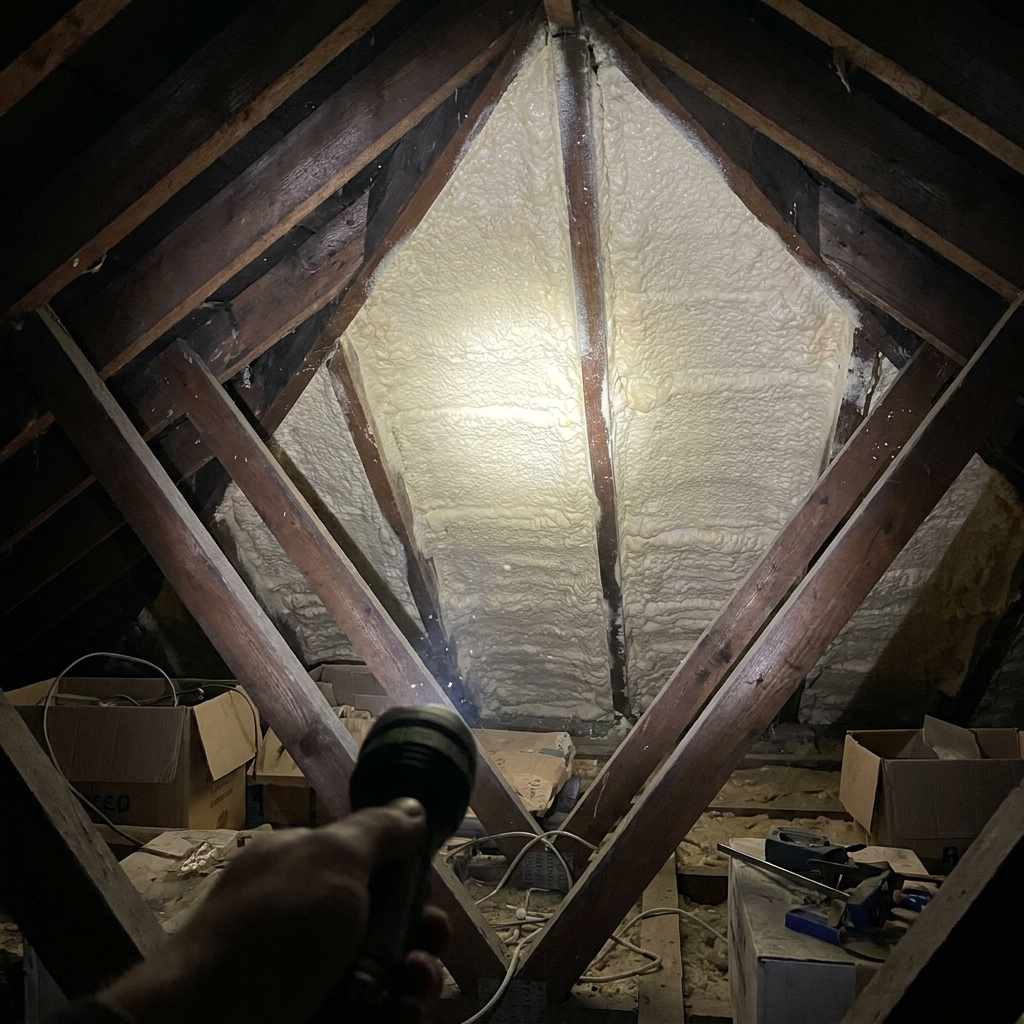
The short answer
Most domestic loft spray foam removals take roughly one to three days on site, though larger roofs, dense closed-cell foam or a hard bond to the timbers can extend this. Re-felting and re-insulating add time. Because it is hand work, duration tracks how stubborn the foam is and how good the access is. Always get an independent inspection before booking removal.
Spray foam removal is a manual process — cutting, scraping and lifting foam off the roof structure without damaging the timbers — so the timescale depends on how much foam there is, how hard it has bonded, the roof pitch and the access. This page gives a realistic range for a typical UK loft, explains what speeds the job up or slows it down, and sets out what happens after the foam is off so you can plan the whole project, not just the stripping.
Timescale at a glance
- Typical loft job about 1–3 days
- Faster open-cell, good access, small roof
- Slower closed-cell, hard bond, steep roof
- Adds time re-felting & re-insulation
- Before booking independent inspection
How many days is a typical removal?
For a standard domestic loft, removal of spray foam usually takes in the region of one to three days on site. A small roof with softer open-cell foam and easy access can be a single day; a larger roof, dense closed-cell foam, or foam that has bonded hard to the felt and timbers can run longer. The work is methodical because the goal is to take the foam off cleanly without scarring the structural timbers, which a surveyor will later want to inspect.
| Roof / foam | Indicative time on site |
|---|---|
| Small roof, open-cell, easy access | About a day |
| Average loft, mixed conditions | One to two days |
| Large or steep roof, closed-cell, hard bond | Two to three days or more |
| Plus re-felting & re-insulation | Additional time |
What makes it faster or slower
Duration is really a function of how stubborn the foam is and how reachable it is. The same factors that drive cost drive time.
- Foam type — closed-cell is denser and slower to remove than open-cell.
- Bond strength — foam fused to felt or timber must be eased off carefully.
- Roof size and pitch — more area and steeper angles take longer.
- Access — a cramped loft hatch or low headroom slows the work.
- Making-good — re-felting, repairs and re-insulation extend the project.
What happens after the foam is off
Stripping the foam is only part of the job. Once it is removed, the roof often needs the felt or breathable membrane reinstating, any damaged timbers repairing, and the loft re-insulated to a compliant standard — see reinsulating after removal. These steps add days but are essential to leave the roof performing and inspectable. Build them into your timeline rather than assuming the job ends when the foam is in the skip.
Planning around the disruption
Beyond the days on site, plan for the practicalities. The loft usually needs clearing before work starts, access has to be protected, and there will be noise and dust while the foam is stripped. If you are removing foam to support a sale or remortgage, build in time for the independent inspection beforehand and for any completion report afterwards — a lender or buyer may want both, and arranging them can add days or weeks to the overall timeline even though the physical work is short. Weather can also affect scheduling, since re-felting a roof is best done in dry conditions.
A realistic project plan therefore has three phases: assessment (inspection and quotes), the removal and making-good itself, and documentation. The middle phase is the one to two days most people picture; the phases either side are where the calendar time actually goes. Asking a firm for a written programme covering all three avoids the common surprise of thinking the job is “a day” when the full process spans longer.
It is also worth confirming how many people the firm will send and whether the timescale assumes a full crew. A larger team can compress the on-site days but does not change the careful, methodical nature of the work; a single operative on a big roof will naturally take longer. Pin the timescale, the crew size and the scope down in writing together, so the days quoted match the job being priced.
Inspect before you book
Before scheduling any removal, get an independent inspection from a RICS surveyor or competent specialist who does not sell removal. RICS’s 2023 guidance recognises that foam is not automatically a defect; whether removal is needed depends on the foam type, ventilation and the condition of the timbers. An impartial inspection confirms the right course of action before you commit days of disruption and a four-figure bill — and if it finds removal is not needed, it saves you the whole timescale. This page is general information, not surveying or financial advice; an independent inspection is essential.
Frequently asked questions
Can spray foam removal be done in a day?
Sometimes — a small roof with softer open-cell foam and good access may be a single day. Larger roofs, closed-cell foam or a hard bond typically take two to three days or more, before re-felting and re-insulation.
Does removal include re-insulating the loft?
Not necessarily. Stripping the foam is one stage; re-felting, repairs and fitting new compliant insulation are separate steps that add time. Confirm the full scope and timeline in writing.
Why does closed-cell foam take longer to remove?
Closed-cell foam is denser and rigid and bonds harder to the timbers and felt. Removing it cleanly without damaging the roof structure is slower, careful work.
Should I inspect before booking removal?
Yes. An independent inspection by a RICS surveyor or specialist who does not sell removal confirms whether removal is genuinely needed, before you commit to the disruption and cost.
Sources & further reading
- RICS — consumer guidance on spray foam insulation and mortgage lending (2023)
- PCA (Property Care Association) — spray foam in roofs
- GOV.UK — loft insulation and energy efficiency guidance
This guide is general information, not surveying, structural, legal or financial advice. Whether spray foam needs removing depends on the foam type, install quality, ventilation and your roof timbers’ condition, and an independent inspection by a RICS surveyor or qualified specialist (not a free survey from a company that profits from removal) is essential before you decide.