The short answer
Removing spray foam from a typical UK loft roof generally costs £2,000–£5,000+ in 2026, depending on roof size, foam type, how hard it has bonded and access. Larger or harder roofs cost more, and re-felting and re-insulation add to the total. Lofts are where foam most often raises lender concerns, so get an independent inspection before paying for removal.
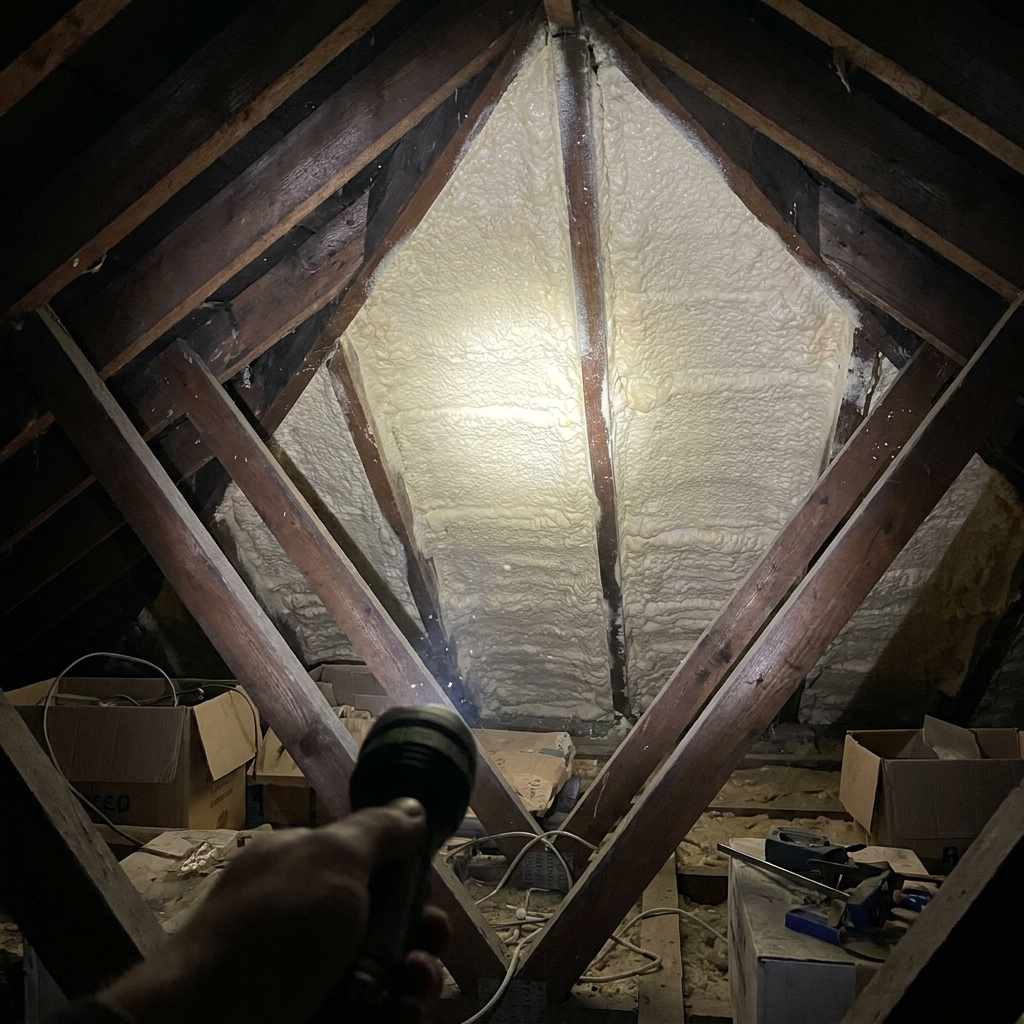
The loft is where spray foam is most commonly sprayed onto the underside of the roof — and where it most often triggers lender and surveyor caution, because it can obscure the timbers and affect ventilation. This page focuses on the cost of removing loft foam specifically: the typical range, what a complete quote should cover, and why an independent inspection is the step that decides whether you should be spending at all.
Loft removal at a glance
- Typical loft cost £2,000–£5,000+
- Most-flagged area loft / underside of roof
- Main drivers foam type, bond, access
- Often extra re-felting & re-insulation
- First step independent inspection
Typical loft removal cost
For a standard domestic loft, removing the spray foam from the underside of the roof generally costs £2,000–£5,000 or more in 2026. The figure depends on the same drivers as any removal: roof size and pitch, the foam type, how hard it has bonded to the rafters and felt, and access through the loft hatch. Dense closed-cell foam on a large, steep roof sits at the higher end; a small roof with softer open-cell foam sits lower.
| Loft / roof | Where in the range |
|---|---|
| Small loft, open-cell, good access | Lower end |
| Average loft | Mid range |
| Large/steep roof, closed-cell, hard bond | Upper end or beyond |
| With full making-good | Add re-felting & re-insulation |
What a complete loft quote should include
Stripping the foam is one stage. A complete loft job usually also involves clearing debris, reinstating the felt or breathable membrane, repairing any timbers damaged during install or removal, and fitting new compliant loft insulation. Make sure your quote states which of these are included; a “strip only” price is not the finished job.
- Debris clearance and disposal of removed foam.
- Re-felting the roof where the underlay is disturbed.
- Timber repairs to any scarred rafters.
- New insulation to a compliant standard.
- Completion evidence — photos or a report for your lender or buyer.
Why the inspection comes first
Loft foam is exactly where an independent inspection earns its fee. RICS’s 2023 guidance recognises that foam in the roof is not automatically a defect; whether it needs removing depends on the foam type, ventilation and the condition of the timbers. An impartial surveyor records that evidence — which a lender will want anyway — and tells you whether the four-figure removal cost is necessary. Paying for the inspection first either avoids an unnecessary job or ensures the right one is done.
Open-cell vs closed-cell in the loft
The foam type on your loft roof is one of the biggest cost levers. Open-cell foam is softer and more vapour-open, and tends to be quicker to strip from the rafters. Closed-cell is denser and rigid, bonds harder to the timbers and felt, and is the type more often flagged by surveyors precisely because it is so difficult to remove cleanly and can seal the roof against vapour movement. If you do not know which you have, an independent surveyor can identify it — and that single fact does a lot to predict where in the cost range your loft will fall.
Why loft foam affects value and lending
Loft foam is not only a removal cost; it can affect the property’s saleability and the willingness of a lender to lend against it. Because the loft roof is structural, surveyors and valuers focus on whether they can assess the timbers and whether the roof is ventilated. Foam that prevents that assessment is what tends to trigger caution — not the foam in itself. This is why the removal cost and the valuation question are linked, and why documenting the work matters as much as doing it.
Seen that way, the loft removal cost can be an investment in the property’s liquidity: spending to restore an inspectable, well-documented roof may be what allows a sale or remortgage to proceed. But that only holds if removal is genuinely warranted, which is exactly the judgement an independent surveyor — not a removal salesperson — should make. Spending several thousand pounds to satisfy a problem that does not exist helps no one, so the inspection earns its fee before the removal does.
Putting it together
Budget the loft removal as a whole project — strip, make good and re-insulate — not just the headline strip price. Get itemised quotes from more than one reputable firm, avoid free surveys from removal-incentivised companies, and use the inspection report as your impartial brief. This page is general information, not surveying, structural or financial advice; an independent inspection is essential.
Frequently asked questions
How much is loft spray foam removal in the UK?
A typical domestic loft removal generally costs £2,000–£5,000 or more in 2026, depending on roof size, foam type, bond strength and access. Re-felting and re-insulation add to the total.
Why is loft foam such a common concern?
Spray foam is most often applied to the underside of the loft roof, where it can obscure the timbers and affect ventilation. That is why it most frequently raises lender and surveyor questions.
Does the loft quote include new insulation?
Not always. Some quotes cover only stripping the foam. Re-felting, timber repairs and new compliant loft insulation can be separate costs, so confirm the full scope in writing.
Should I inspect the loft before removal?
Yes. An independent inspection records the foam type and the condition of the timbers — evidence a lender will want — and confirms whether removal is genuinely needed before you commit to the cost.
Sources & further reading
- RICS — consumer guidance on spray foam insulation and mortgage lending (2023)
- PCA (Property Care Association) — spray foam in roofs
- GOV.UK — loft insulation standards and energy efficiency
- UK Finance / mortgage lender positions on roof insulation
This guide is general information, not surveying, structural, legal or financial advice. Whether spray foam needs removing depends on the foam type, install quality, ventilation and your roof timbers’ condition, and an independent inspection by a RICS surveyor or qualified specialist (not a free survey from a company that profits from removal) is essential before you decide.