The short answer
Spray foam can affect a house valuation, mainly by narrowing the pool of buyers and lenders rather than by changing the building’s intrinsic worth. A valuer may reflect the foam by flagging the roof as un-assessable or by valuing cautiously, which can reduce the figure or attach conditions. The impact depends on foam type, install quality, roof condition and the local market. An independent inspection helps protect value.
Owners often ask whether spray foam “devalues” their home. The honest answer is that the effect is usually indirect: foam can shrink the number of buyers and lenders willing to proceed, which pressures price and speed of sale, and a valuer may reflect that uncertainty in their figure. This page explains how foam feeds into a valuation, what drives the size of the effect, and how to limit it.
Spray foam and valuation at a glance
- Always cuts value? No — effect is indirect
- Main effect Smaller buyer/lender pool
- Drives the impact Foam type, install, roof condition
- Protects value Independent inspection report
- Worst case Cautious valuation or condition
How foam feeds into a valuation
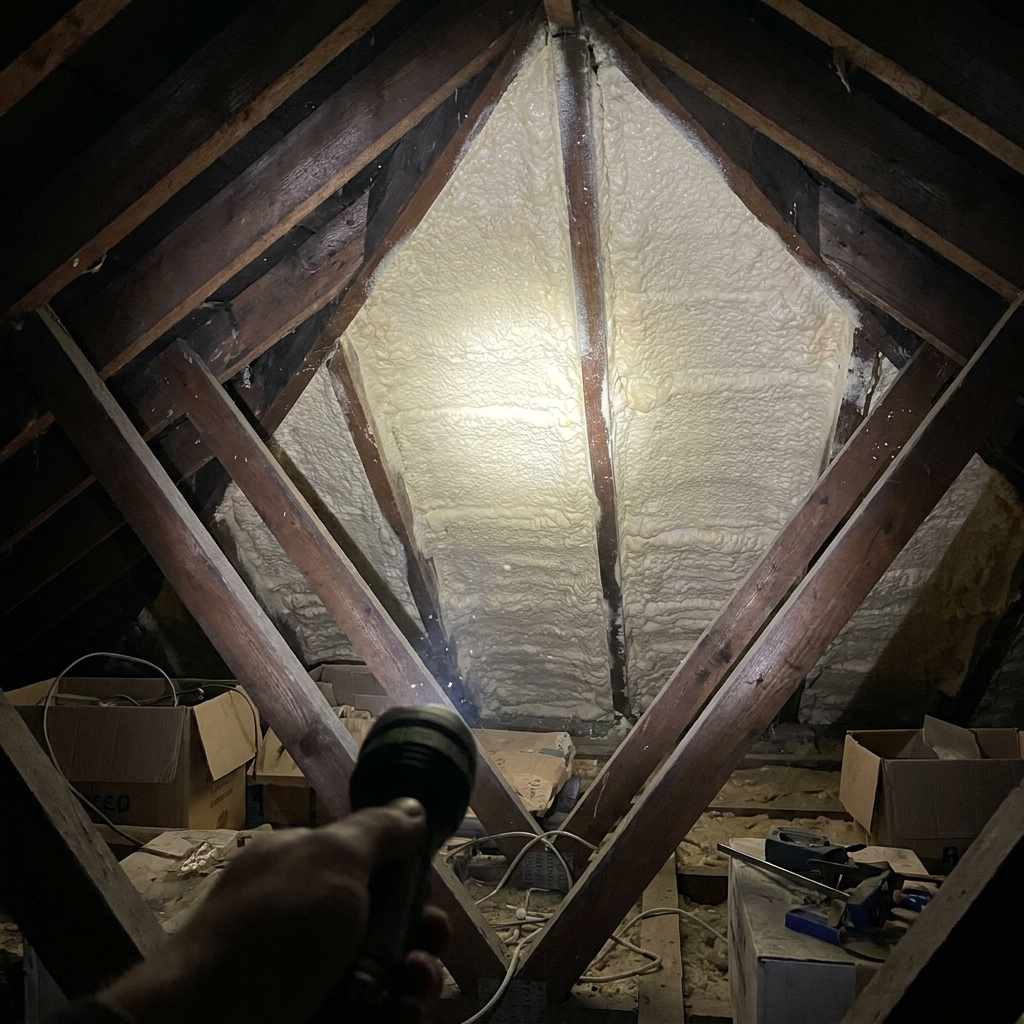
A valuer’s job is to estimate what a property would realistically sell for, taking account of anything that affects its desirability and saleability in the open market. Spray foam enters that judgement in two distinct ways. First, it can prevent the valuer assessing the roof at all — the timbers, the felt and the ventilation are hidden behind the foam — so they may flag the roof as un-assessable and value cautiously to reflect that unknown. Second, the valuer knows from experience that foam narrows the field of willing buyers and lenders, which softens demand and therefore the price the property can command. So even a structurally sound roof can attract a cautious valuation, not because anything is wrong with it, but because the foam simultaneously creates uncertainty and shrinks the pool of people able to buy.
Why the effect is usually indirect
It is important to separate two ideas that owners often conflate. The bricks and mortar of a sound, well-insulated home are not made intrinsically less valuable by the mere presence of correctly installed foam — the building still does its job. What actually changes is the market for it: if fewer buyers can readily get a mortgage on the property, competition between buyers falls, and reduced competition tends to lower the achievable price and lengthen the time to sell. That is why the impact of foam is best understood as a saleability effect rather than a structural one. And it is precisely why evidence that resolves the lending question — rather than any physical work — can substantially protect value: restore the buyer pool and you restore much of the competitive tension that supports the price. See selling your house for how this plays out in a live sale.
What drives the size of the impact
The valuation effect is not fixed; it ranges from negligible to significant depending on the specifics:
- Foam type — closed-cell foam bonded hard to the felt is more often flagged than more vapour-open open-cell.
- Install quality and ventilation — a well-specified, ventilated installation reassures a valuer; a crude one with no ventilation raises concern.
- Roof condition — any actual sign of damp or timber decay has a real, not merely perceived, effect on value until it is remedied.
- Local market — in strong markets with plenty of active cash buyers, the effect can be noticeably smaller.
- Evidence available — a clear independent inspection report can materially reduce the discount a cautious valuer or buyer would otherwise apply.
| Factor | Effect on valuation |
|---|---|
| Documented install + clean inspection | Limited or no discount |
| No evidence, foam un-assessable | Cautious valuation likely |
| Damp or decay present | Genuine value reduction until remedied |
| Strong local market, cash buyers active | Effect on price can be smaller |
How to protect your valuation
The most effective single step is an independent inspection from a RICS surveyor or qualified specialist who does not sell removal. A clear report on the foam type, ventilation and timber condition removes much of the uncertainty a valuer would otherwise have to price in, and gives prospective buyers and their lenders the confidence they need to proceed at full value. Keep your installation records to hand to support it. Only consider removal if the inspection identifies a genuine problem, or a serious buyer’s lender requires it as a condition: spending £2,000–£5,000+ on removal only makes financial sense when it genuinely restores value or unlocks a sale, not as a pre-emptive measure against a hit that good evidence could have prevented.
This page is general information, not valuation, surveying or financial advice. For a figure specific to your home, instruct a RICS valuer and obtain an independent inspection.
Frequently asked questions
Does spray foam reduce a house’s value?
It can, but usually indirectly — by narrowing the pool of buyers and lenders rather than reducing the building’s intrinsic worth. A cautious valuation often reflects uncertainty, which good evidence can reduce.
Why might a valuer mark a foam-insulated house down?
Because the foam hides the roof timbers, felt and ventilation, so they cannot verify its condition, and because foam narrows the market of willing buyers and lenders. Both can lead to a more cautious figure.
Can I protect my valuation if I have spray foam?
Yes. An independent inspection report on the foam type, ventilation and timber condition removes much of the uncertainty a valuer would otherwise price in, and reassures buyers and their lenders — often at a fraction of removal cost.
Will removing the foam restore the value?
Sometimes, but not always cost-effectively. Removal costs £2,000–£5,000+. Get an independent inspection first — if the roof is sound, a report may protect value without the expense of removal.
Sources & further reading
- RICS — 2023 consumer guidance on spray foam insulation and mortgage lending
- RICS — valuation standards (Red Book) and Home Survey Standard
- UK Finance — lending and property valuation positions
- Property Care Association (PCA) — roof condition, ventilation and moisture guidance
This guide is general information, not surveying, structural, legal or financial advice. Whether spray foam needs removing depends on the foam type, install quality, ventilation and your roof timbers’ condition, and an independent inspection by a RICS surveyor or qualified specialist (not a free survey from a company that profits from removal) is essential before you decide.