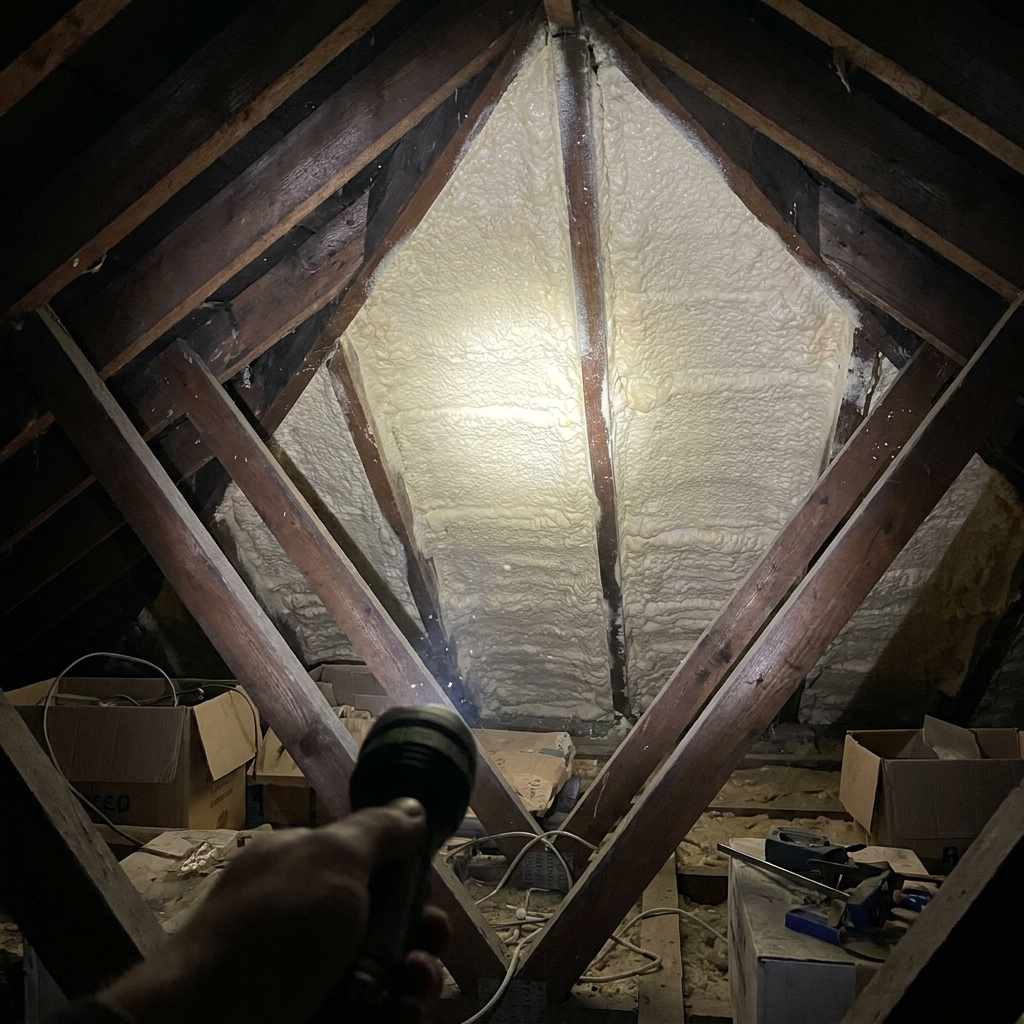
The short answer
Spray foam is removed mechanically — scraped, cut and sanded off the rafters and felt by hand and with power tools — because no practical chemical dissolves cured polyurethane. The loft is sealed against dust, operatives wear respiratory protection, the foam is broken back to the substrate, waste is bagged, and the exposed timbers are inspected before the roof is re-ventilated and reinsulated. Closed-cell foam is the hardest and dustiest to strip.
People often imagine spray foam can be peeled or melted off. It cannot. Once cured it is a solid that has bonded to the roof, so removal is fundamentally a demolition-and-clean task carried out with care to protect the felt and timbers underneath. Understanding the actual method demystifies the quotes you receive and helps you judge whether a contractor is proposing a thorough job or a quick, damaging one. It also explains why removal is labour-intensive and why the price reflects the foam type, roof size and access.
The removal method at a glance
- Core method Manual / mechanical stripping
- Chemical dissolver? No — none works practically
- Key tools Scrapers, oscillating cutters, sanders, brushes
- Protection Sealed area, RPE, skin protection
- Hardest foam Closed-cell — dense, bonded
- After stripping Inspect timbers, re-ventilate, reinsulate
Why it has to be mechanical
Cured spray polyurethane foam is a thermoset — it does not melt back into liquid when heated, and there is no safe, effective solvent that dissolves it in situ on a roof. So removal means physically breaking the foam off the surfaces it has bonded to, working it back to bare timber and felt. That is why the job is slow and labour-heavy rather than a quick treatment, and why anyone promising a fast chemical “wash off” should be treated with suspicion. The honesty of the method is itself a useful test of a contractor.
Preparing and protecting the property
A competent contractor starts by protecting the home, not by reaching for a tool. The loft and access route are sheeted, the work zone is isolated to stop dust migrating into living space, and the team wears respiratory protective equipment and skin and eye protection because cutting cured foam produces fine particulate that should not be inhaled or spread. This containment is not optional — it is the difference between a clean job and dust settling through the whole house, and the HSE’s general guidance on construction dust applies squarely here.
- Dust containment: sealed sheeting and isolated access routes.
- Personal protection: RPE, gloves and eye protection for operatives.
- Substrate awareness: identifying felt, sarking and timber before cutting begins.
- Power supply & lighting: proper task lighting so the timbers can actually be seen.
The stripping process
The foam is then worked off the structure methodically. Operatives use scrapers and oscillating multi-tools to break the bulk away from the rafters and the underside of the felt, followed by wire brushing and sanding to take off the residual skin that bonds tightly to the timber. Open-cell foam tends to crumble and comes away faster; closed-cell is dense and leaves a stubborn film that has to be sanded back, which is where most of the time and dust is generated. The goal throughout is clean, visible timber and an intact felt layer — not the fastest possible strip. A careful operative works in a controlled sequence rather than ripping large sections away and risking damage.
Dealing with the felt
Foam frequently bonds to the roofing felt — the secondary weather barrier beneath the tiles. Where the felt is sound, careful work can leave it in place; where it is perished or lifts with the foam, that barrier may need reinstating so the roof stays weathertight. This is a normal part of many removals and should be discussed and priced up front rather than discovered as a mid-job extra. See roof problems for why old felt complicates the job and can spray foam be removed for the realistic outcomes.
Waste, inspection and reinstatement
Foam waste is bulky and lightweight, so it is double-bagged and removed for proper disposal rather than left in the loft. Once the timbers are exposed, they should be inspected — ideally with your independent surveyor present — for moisture or decay that the foam may have hidden. The roof is then dried as needed, ventilation reinstated, and the loft reinsulated conventionally so it performs without the foam. For the full sequence from inspection to reinsulation, see how spray foam removal works.
| Stage | What happens |
|---|---|
| Protect | Seal area, fit RPE, isolate dust |
| Strip | Scrape, cut and sand foam off substrate |
| Felt | Retain or reinstate weather barrier |
| Inspect | Check timbers for moisture / decay |
| Reinstate | Re-ventilate and reinsulate |
Should you do it yourself?
Removal looks like simple scraping, but the dust hazard, the working-at-height risk, the chance of damaging felt and timbers, and the loss of an independent inspection make DIY rarely worthwhile. A botched DIY strip can also leave a finish a surveyor is unhappy with, undoing the very purpose of the work. This page is general information, not structural or safety advice; an independent inspection of your roof should come first.
Frequently asked questions
Can spray foam be chemically dissolved off a roof?
No. Cured polyurethane foam is a thermoset with no practical solvent. It must be removed mechanically by scraping, cutting and sanding.
How messy is spray foam removal?
Cutting cured foam creates significant fine dust, which is why a proper job seals the work area and uses respiratory protection. Closed-cell removal is the dustiest.
Will the roofing felt survive removal?
Sometimes. Sound felt can often be retained, but foam bonded to perished felt may lift with it, in which case the weather barrier is reinstated. This should be priced up front.
Is the foam removed in one day?
Often it takes longer than a day, especially for dense closed-cell foam, large roofs or awkward access. See our guide on how long removal takes.
Sources & further reading
- PCA — Property Care Association guidance on safe removal and roof reinstatement
- RICS — Spray foam insulation consumer guidance (2023)
- GOV.UK / HSE — guidance on dust control and respiratory protection during construction work
- GOV.UK — Building regulations Approved Document C on reinstating moisture resistance
This guide is general information, not surveying, structural, legal or financial advice. Whether spray foam needs removing depends on the foam type, install quality, ventilation and your roof timbers’ condition, and an independent inspection by a RICS surveyor or qualified specialist (not a free survey from a company that profits from removal) is essential before you decide.