The short answer
A mortgage refused over spray foam is a setback, not a dead end — because lender policies vary, another lender may well accept the same property. The recovery steps are: understand exactly why it was refused, commission an independent inspection, use a whole-of-market broker to find an accommodating lender, and only consider removal if an inspection or an essential lender genuinely requires it.
Few things are more deflating than a mortgage refused at the last hurdle because a valuer spotted foam in the roof. But a refusal from one lender reflects that lender’s policy on a given day — not a universal verdict on your home. This page sets out why refusals happen, why they are often recoverable, and the practical sequence for getting a deal back on track.
After a foam refusal at a glance
- Is it final? No — usually recoverable
- First action Get the refusal reason in writing
- Second action Independent inspection
- Third action Whole-of-market broker
- Last resort Removal, if genuinely required
Why the refusal happened
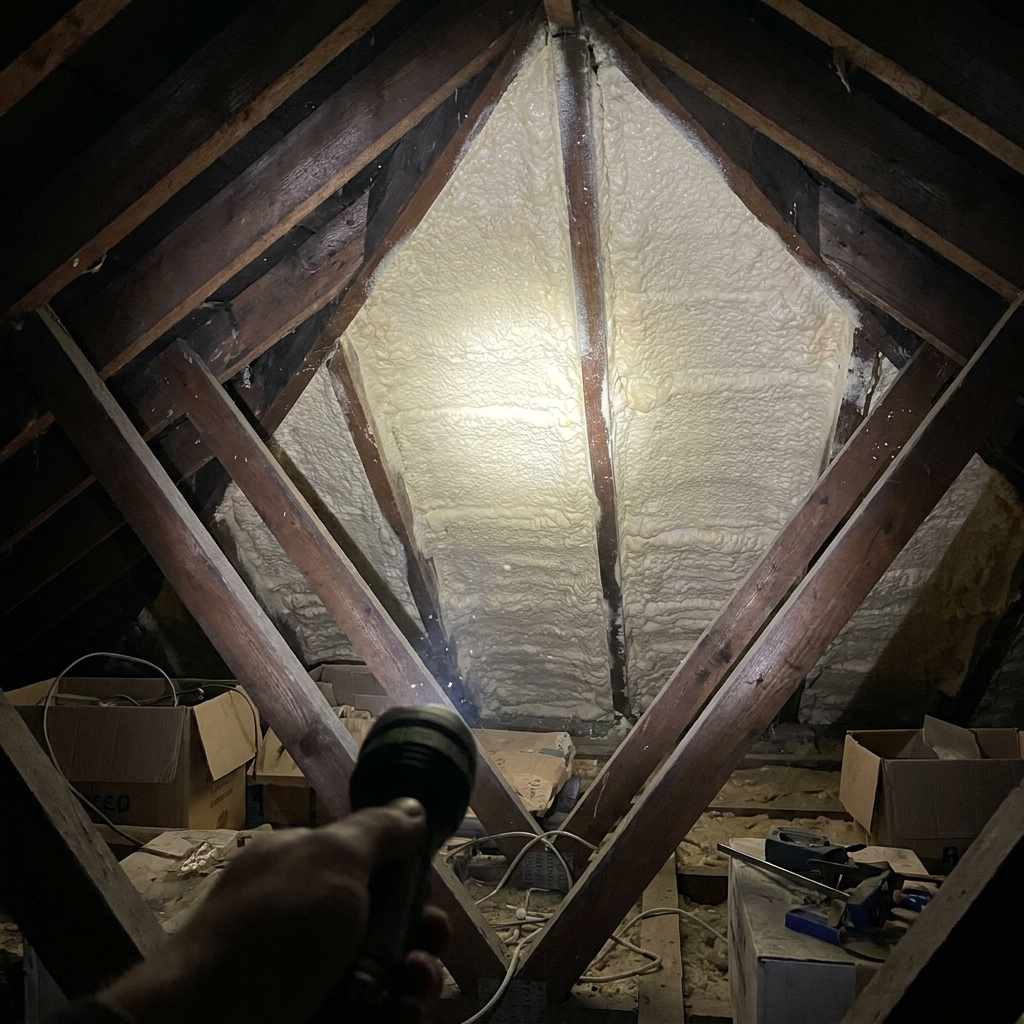
A foam-related refusal almost always traces back to the mortgage valuation. The valuer noted that the foam obscures the rafters, the felt and the ventilation, and that the roof’s condition therefore cannot be verified; the lender, applying its own policy to that uncertainty, decided not to proceed. Sometimes there is a genuine aggravating factor recorded too — evidence of damp, dense closed-cell foam applied with no ventilation, or visible roof problems such as sagging or staining. Far more often, though, the refusal is driven purely by the uncertainty the foam creates rather than by any proven defect in the roof. Knowing which of the two you are dealing with completely shapes your next move — a paperwork problem is solved very differently from a physical one — so the first thing to do is get the refusal reason in writing.
Why it is not the final word
Because there is no industry-wide rule on spray foam and lenders set their own criteria, a refusal from one lender is simply not a refusal from all of them. Another lender may treat the very same roof completely differently — accepting it as standard, or accepting it on the strength of a satisfactory independent report. This is the single most important thing to grasp after a refusal, and it is easy to lose sight of in the disappointment of the moment: the property is not necessarily unmortgageable; this particular lender was simply not the right fit for it. See will lenders accept spray foam for the full spectrum of lender attitudes and why they diverge so much.
Your recovery sequence
Work through these steps in order rather than reacting in a panic:
- Get the reason in writing — ask the lender or broker exactly why it was declined, and distinguish “roof cannot be assessed” from “evidence of an actual defect”. The two demand different responses.
- Commission an independent inspection — a RICS surveyor or qualified specialist who does not sell removal assesses the foam type, ventilation and timber condition. This is the step that converts uncertainty into hard evidence.
- Engage a whole-of-market broker — share the inspection report so they can place you with a lender that is comfortable with sprayed roofs, instead of repeating the same application elsewhere blind.
- Consider removal only if genuinely required — if the inspection finds real problems, or an essential lender insists despite the evidence, only then weigh removal costs of £2,000–£5,000+ against the alternatives.
| Refusal reason | Best response |
|---|---|
| “Roof cannot be assessed” | Independent inspection + new lender via broker |
| Closed-cell, no ventilation | Inspection to assess moisture risk; possible remediation |
| Evidence of damp / decay | Investigate and remediate before reapplying |
| Strict lender policy only | Switch to a more accommodating lender |
What not to do
There are three predictable mistakes to avoid. Do not rush into removal on the strength of one refusal — it is expensive, irreversible and frequently unnecessary, and you may discover afterwards that a different lender would have lent regardless. Do not accept a removal firm’s “free survey” as your evidence; a company that is paid to remove foam has a clear commercial incentive to recommend removal, which is the opposite of the impartial assessment a lender needs. And do not conclude the house is worthless or unsellable — foam-related refusals are very frequently resolved with the right inspection and the right lender, leaving the property to change hands at a fair price.
This page is general information, not mortgage, surveying or legal advice. After a refusal, take advice from a qualified broker and commission an independent inspection.
Frequently asked questions
My mortgage was refused over spray foam — is the house unmortgageable?
Usually not. A refusal reflects one lender’s policy, and policies vary widely. Another lender may accept the same property, especially with a satisfactory independent inspection report. Try a whole-of-market broker before giving up.
What should I do first after a foam-related refusal?
Get the refusal reason in writing, then commission an independent inspection. Distinguishing ‘roof cannot be assessed’ from ‘evidence of a defect’ tells you whether you need a new lender or actual remedial work.
Do I have to remove the foam after a refusal?
Not automatically. Removal is expensive and often unnecessary. An independent inspection and a more accommodating lender resolve many refusals without removal. Only remove if a report or an essential lender genuinely requires it.
Can a broker really fix a foam refusal?
Often, yes. A whole-of-market broker knows which lenders currently accept sprayed roofs and can place your application with one, turning a refusal into an approval without changing the property.
Sources & further reading
- RICS — 2023 consumer guidance on spray foam insulation and mortgage lending
- UK Finance — lending criteria and mortgage application guidance
- GOV.UK — mortgages and home finance guidance
- Property Care Association (PCA) — roof condition and moisture guidance
This guide is general information, not surveying, structural, legal or financial advice. Whether spray foam needs removing depends on the foam type, install quality, ventilation and your roof timbers’ condition, and an independent inspection by a RICS surveyor or qualified specialist (not a free survey from a company that profits from removal) is essential before you decide.