The short answer
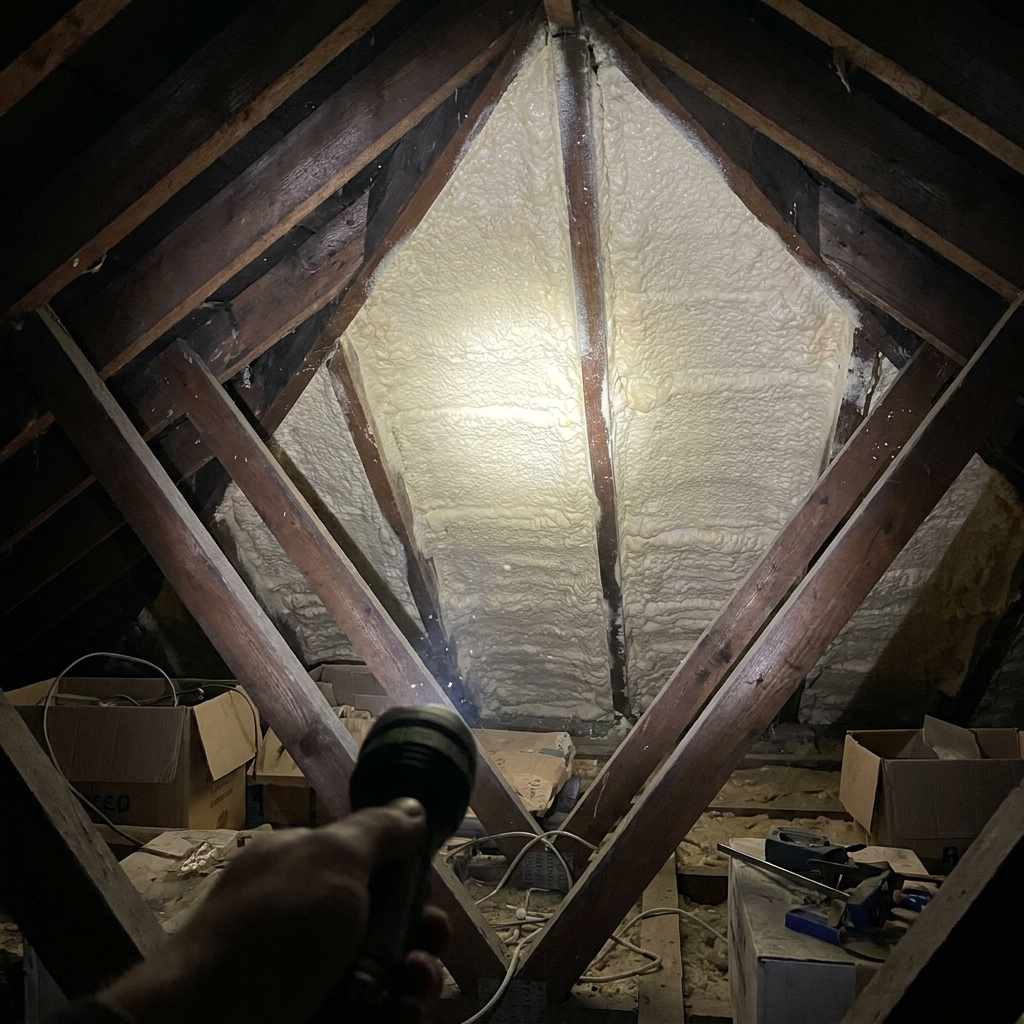
Spray foam insulation is a two-part polyurethane liquid that is sprayed on site, where it reacts and expands into a foam that sets hard against the surface. In UK homes it is most often applied to the underside of the roof — against the rafters and felt — to insulate the loft. It comes in two main types, open-cell and closed-cell. It insulates well, but because it can obscure the timbers and affect ventilation, many lenders and surveyors treat it with caution.
Spray foam — properly sprayed polyurethane foam, or SPF — has been marketed heavily to UK homeowners as an energy-saving upgrade, sometimes under grant schemes. The product itself is well understood in building science; the controversy is almost entirely about where and how it has been applied in older pitched roofs. To understand the removal debate, it helps to understand exactly what the material is, how it goes on, and why the same product that performs in a new warm-roof design can be a liability in a Victorian loft.
Spray foam insulation at a glance
- What it is Two-part polyurethane sprayed as liquid, expands into foam
- Where it is used Most often the underside of pitched roofs / lofts
- Two types Open-cell (soft, vapour-open) & closed-cell (dense, rigid)
- Main benefit Strong thermal insulation, air-tightness
- Main concern Obscures timbers, can affect roof ventilation
- Lender view Often cautious — independent survey advised
What the material actually is
Spray polyurethane foam is created on site by mixing two chemical components — commonly an isocyanate and a polyol resin — through a heated spray gun. The instant they combine they react, expand many times in volume and cure into a solid foam within seconds. Because it is formed in place, it follows every contour and bonds tightly to the surface, which is what makes it an effective air-seal and insulator. It is broadly the same chemistry used in many rigid insulation boards; the difference is that here it is applied wet, directly to the building, so the installer’s skill, the mix ratio and the surface preparation all affect the result. A poorly mixed or badly applied foam can cure unevenly, which is one reason install quality matters as much as the product itself.
Where it is used in UK homes
By far the most common — and most scrutinised — application is the underside of a pitched roof, sprayed onto the rafters and the back of the roofing felt to create a warm or insulated loft. It is also used in flat roofs, agricultural buildings and occasionally walls and floors. The roof application is the one that drives the mortgage and removal conversation, because the roof is the most safety- and moisture-critical part of the house and the one a surveyor most needs to see. Foam at the rafter line effectively converts a traditional cold, ventilated loft into a sealed warm space — a legitimate construction in the right design, but a problem when it is bolted onto an old roof that was never built for it.
The two main types
Not all spray foam is the same, and the distinction matters enormously for both performance and removal. The two families — open-cell and closed-cell — share a name but behave very differently in how they handle water vapour and how hard they are to take off again.
| Type | Character | Vapour behaviour | Removal |
|---|---|---|---|
| Open-cell | Soft, low density | More vapour-open | Easier |
| Closed-cell | Dense, rigid | Acts as a vapour barrier | Harder |
Our dedicated guide on open-cell vs closed-cell foam goes into the differences in depth. In short, closed-cell is denser and a vapour barrier, which is precisely why it can trap moisture against timber if the roof is not designed for it, while open-cell is softer and more breathable but still alters how the roof manages moisture. Knowing which you have is the starting point for any sensible decision.
Why a useful product became a problem
Correctly specified, ventilated and installed, spray foam can perform. The issues that prompted RICS to issue consumer guidance, and many lenders to become cautious, are about misapplication rather than the chemistry itself:
- Obscured timbers: foam over the rafters and felt hides the very structure a surveyor needs to inspect for decay.
- Ventilation: spraying the rafter line can close off the airflow a traditional cold roof relies on.
- Trapped moisture: applied over old felt or without a designed vapour strategy, foam can hold dampness against the wood — a condensation risk.
- Inspection & removal: once bonded, foam is difficult to lift to check what is underneath.
- Mis-selling: a great deal of domestic foam was sold door-to-door or through grant schemes with little regard for whether the roof suited it.
How it was sold — and why that matters
Much UK domestic spray foam was promoted as an energy-saving upgrade, sometimes under government grant and Green Deal-era schemes, and a significant share was sold through unsolicited doorstep or telephone approaches. Trading Standards and Citizens Advice have long flagged this pattern, because a sales-led install is less likely to have considered the roof’s ventilation or the felt’s condition. If your foam came with no specification, no ventilation design and no paperwork, that history is itself relevant to whether it was a sound job — and to whether you were mis-sold.
What this means for you
If your roof has spray foam, the practical question is not “is spray foam bad?” in the abstract, but “is this foam, in this roof, causing a problem?” That is answered by a RICS surveyor or qualified specialist who does not sell removal — see is spray foam insulation bad? and signs you may need it removed. This page is general information, not surveying or financial advice; an independent inspection of your specific property is essential.
Frequently asked questions
Is spray foam insulation any good?
As a material it insulates and air-seals well. The problems are about application in pitched roofs — obscured timbers and ventilation — not the chemistry itself. Correctly specified and ventilated foam can perform.
What is spray foam made of?
It is polyurethane, formed on site by mixing two liquid components (an isocyanate and a polyol) that react and expand into foam within seconds of being sprayed.
How do I tell open-cell from closed-cell foam?
Open-cell is soft and spongy; closed-cell is hard and rigid. A surveyor or specialist can confirm the type, which affects both performance risk and removal cost.
Does spray foam always need removing?
No. Removal depends on the foam type, install quality, ventilation and the condition of the timbers &mdash and on your lender. An independent inspection should decide, not a removal firm.
Sources & further reading
- RICS — Spray foam insulation consumer guidance (2023)
- GOV.UK — Building regulations Approved Documents C and L on moisture and energy efficiency
- PCA — Property Care Association on roof ventilation and insulation moisture risk
- BRE — Building Research Establishment guidance on roof insulation and condensation
This guide is general information, not surveying, structural, legal or financial advice. Whether spray foam needs removing depends on the foam type, install quality, ventilation and your roof timbers’ condition, and an independent inspection by a RICS surveyor or qualified specialist (not a free survey from a company that profits from removal) is essential before you decide.