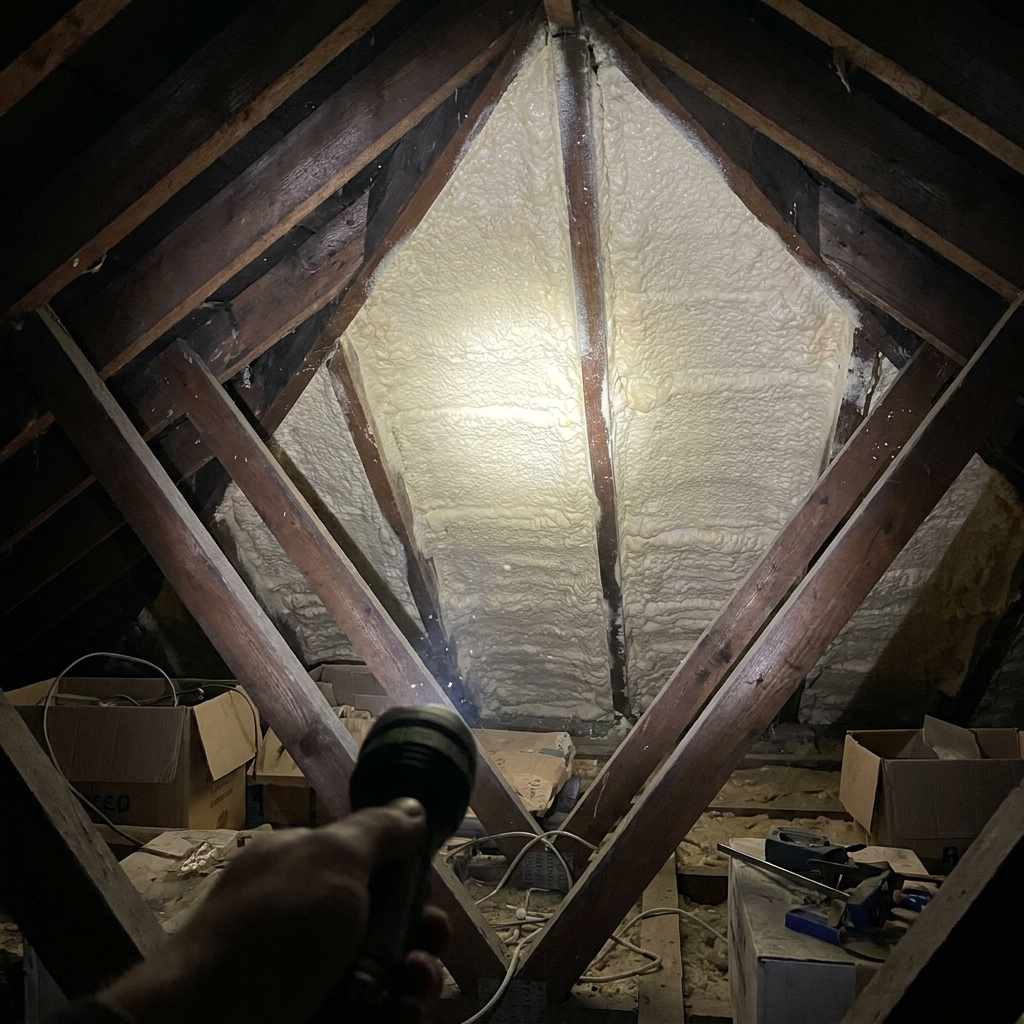
The short answer
The clearest signs you may need spray foam removed are a lender or surveyor flagging it, visible damp or staining on the timbers, a musty smell in the loft, and an undocumented doorstep-sold install. None of these is a final verdict on its own — they are reasons to get an independent inspection. The inspection, not the sign and certainly not a removal firm’s free survey, is what decides whether removal is genuinely needed.
It helps to know what should prompt you to investigate spray foam in your roof — without tipping into panic. Some signs are about the property transaction (a lender or buyer reacting to the foam); others are physical warnings that moisture may be at work behind it. Treat each as a trigger to get a professional opinion, not as proof that you must spend thousands on removal. The genuine signs below are the ones a chartered surveyor would take seriously.
Warning signs at a glance
- Sign 1 Lender / surveyor flags the foam
- Sign 2 Damp, staining or moisture readings
- Sign 3 Musty smell in the loft
- Sign 4 Undocumented, doorstep-sold install
- Sign 5 Closed-cell foam over old felt
- What decides Independent inspection, not the sign alone
Sign 1: a lender or surveyor flags it
The most common trigger is a property transaction. If a mortgage valuation, a buyer’s survey or a remortgage flags the spray foam, that is a clear sign you need to act — though often the fix is an independent specialist report rather than removal. This is a procedural sign rather than a structural one: the foam is obscuring the timbers and the lender simply wants certainty about a part of the house it cannot see. Many people first learn their foam is an issue at exactly this point, when a sale or remortgage stalls. See spray foam and mortgages and selling your house.
Sign 2: damp, staining or high moisture
Physical evidence of moisture is the sign that points to genuine building risk rather than just a paperwork problem. Look for water staining on any visible timber at the gable ends or around the loft hatch, damp patches, salt deposits, or elevated readings if a surveyor takes them with a moisture meter. Because the foam hides most of the structure, these clues are partial and may understate what is happening behind the foam — but any of them justifies getting behind it to check properly. This connects to condensation and damp.
Sign 3: a musty or damp smell
A persistent musty, earthy smell in the loft can indicate trapped moisture and the early conditions for decay, even before staining becomes visible. Smell is a soft sign — it can have other causes, from stored items to a long-closed space — but combined with foam over the rafters and any sense of dampness in the air it is worth investigating rather than ignoring, because odour can be the earliest warning.
Sign 4: an undocumented, doorstep-sold install
How the foam was sold and installed matters as much as how it looks today. Foam fitted after an unsolicited doorstep or cold-call sale, with no specification, no ventilation design and no paperwork or guarantee, is more likely to have been applied without regard to the roof’s actual needs — and may have been mis-sold. Trading Standards and Citizens Advice have long warned about exactly this pattern of pressure selling to homeowners. A lack of documentation also makes lenders more cautious, because there is no evidence the work was done to any standard.
Sign 5: high-risk foam and roof combinations
Some combinations carry more inherent risk and lower the threshold for investigating, even without other symptoms: dense closed-cell foam, foam sprayed directly over old or perished felt, and roofs where ventilation has clearly been sealed off at the eaves. These do not guarantee a problem — plenty of such roofs stay dry — but they make a proper inspection more important and more urgent than for a well-ventilated, documented install.
| Sign | What it suggests | Next step |
|---|---|---|
| Lender flag | Inspection-access issue | Independent report |
| Damp / staining | Possible trapped moisture | Get behind the foam |
| Musty smell | Early moisture / decay | Specialist check |
| No paperwork | Possible mis-sale / poor install | Inspection & advice |
The one thing that actually decides
Whatever signs you see, the decision to remove should rest on an independent RICS surveyor or qualified specialist assessing the foam type, ventilation and timber condition — not on a sign alone, and certainly not on a free survey from a firm that profits from removal. The signs above tell you when to investigate; the inspection tells you what, if anything, to do. See do I need spray foam removed? and why remove it. This page is general information, not surveying, structural or financial advice; an independent inspection of your roof is essential.
Frequently asked questions
Does a musty smell in the loft mean I need foam removed?
Not on its own — it can have other causes — but combined with foam over the rafters it is worth an inspection to check for trapped moisture and early decay.
If my lender flagged the foam, must I remove it?
Not necessarily. Some lenders accept an independent specialist report instead of removal. Ask what evidence they require and get an independent inspection before committing.
Can I see damaged timbers myself from the loft hatch?
Usually only partially, because the foam hides most of the structure. Any visible staining or damp justifies a professional inspection that can assess behind the foam.
Is a doorstep-sold install automatically a problem?
Not automatically, but undocumented, cold-call installs are more likely to have ignored ventilation and may have been mis-sold. They warrant an independent inspection and possibly advice on mis-selling.
Sources & further reading
- RICS — Spray foam insulation consumer guidance (2023)
- PCA — Property Care Association on moisture signs and timber decay
- Trading Standards / Citizens Advice — on doorstep selling and mis-sold insulation
- GOV.UK — Building regulations Approved Document C on moisture and ventilation
This guide is general information, not surveying, structural, legal or financial advice. Whether spray foam needs removing depends on the foam type, install quality, ventilation and your roof timbers’ condition, and an independent inspection by a RICS surveyor or qualified specialist (not a free survey from a company that profits from removal) is essential before you decide.