The short answer
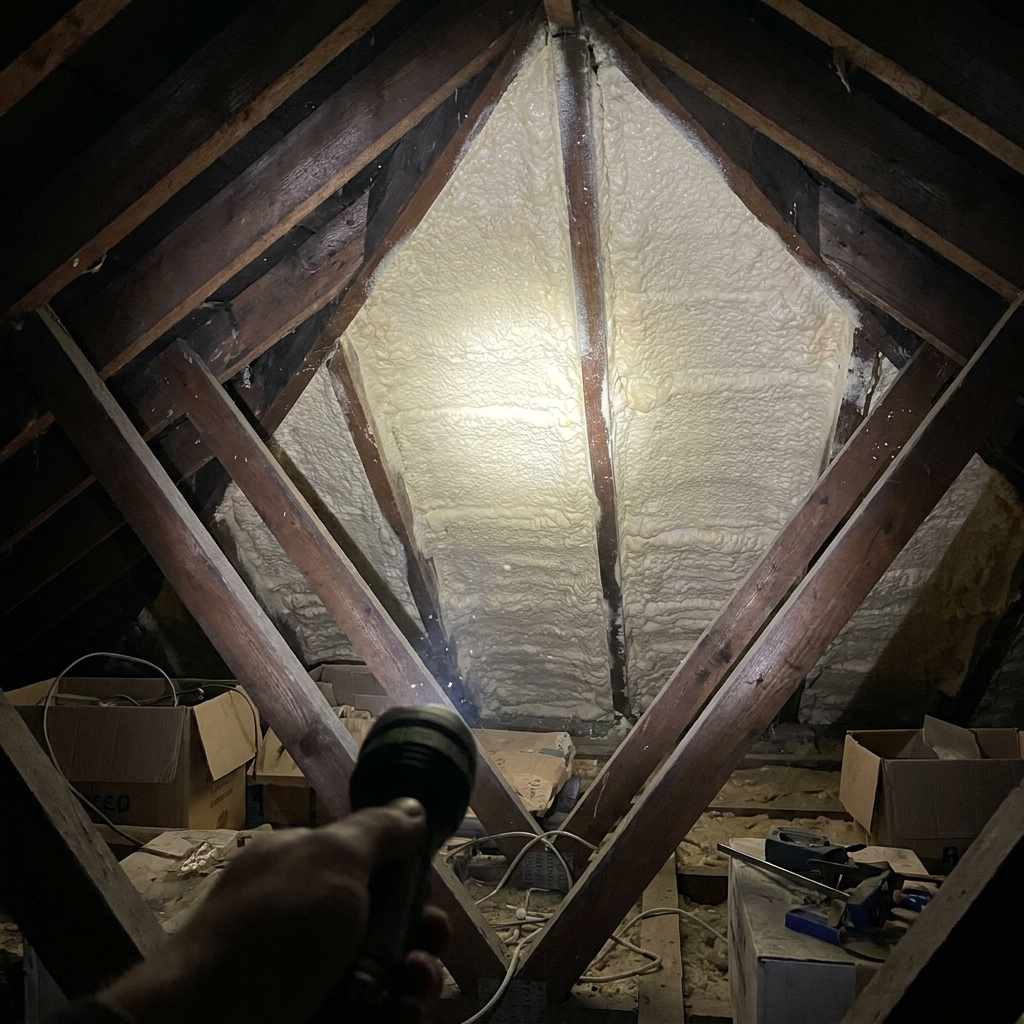
Spray foam is not automatically bad or dangerous — correctly specified, ventilated and installed foam can perform well. The problems are real but specific: foam can obscure the roof timbers from inspection, and if it traps moisture it can contribute to condensation and decay. That is why many lenders and surveyors are cautious. Whether your foam is a problem depends on the type, install quality, ventilation and timber condition — questions for an independent inspection, not a removal firm.
“Is spray foam bad?” is the wrong question framed the right way to sell removals. The accurate position, supported by RICS and building-science bodies, is more nuanced: spray foam is a legitimate insulation material that can perform when designed and installed correctly, but it has genuine downsides in pitched roofs that explain the caution it attracts. This page separates the real concerns from the scaremongering so you can judge your own situation — before paying anyone to strip your roof.
The balanced view at a glance
- Automatically dangerous? No
- Always wrong? No — depends on type, install, ventilation
- Real concern 1 Obscures timbers from inspection
- Real concern 2 Can trap moisture → condensation / decay
- Lender stance Often cautious, not outright banned
- Decide with Independent RICS / specialist inspection
What is genuinely true
There are real, documented concerns with spray foam in roofs, and it is worth stating them plainly rather than dismissing them:
- Inspection: foam over the rafters and felt hides the structure, so a surveyor cannot confirm the timbers are sound.
- Moisture: in the wrong design, foam can trap water vapour against the timber, risking condensation and, over time, decay.
- Ventilation: spraying the rafter line can close off a cold roof’s designed airflow.
- Lending: the above make some lenders cautious, affecting mortgages and resale value.
- Removal difficulty: once bonded, foam is awkward and costly to take off, so a bad install has lasting consequences.
What is overstated
Equally, a lot of what is said about spray foam is exaggerated to drive sales. It is not inherently toxic to live beneath once it has cured, it does not automatically destroy every roof, and it is not banned in the UK. Many foamed roofs are dry, ventilated and structurally sound years after installation. The RICS guidance exists precisely to bring balance — to stop both reckless installation and reckless, fear-driven removal. The honest professional position is caution and inspection, not alarm.
When foam performs
Spray foam is more likely to be fine where it was correctly specified for the roof, where ventilation was maintained or designed in, where the felt and timbers were sound at the time of spraying, and where there is no evidence of moisture since. In a purpose-designed warm-roof construction with a proper vapour-control strategy, foam can be entirely appropriate and perform for decades. The material is not the villain; misapplication in an unventilated traditional roof, often after a doorstep sale, is the issue that gave it a bad name.
When foam is a problem
Conversely, foam is more likely to be a genuine problem where it was sprayed over old or perished felt, where ventilation was sealed off, where there are signs of damp or staining, or where the install was a doorstep-sold, undocumented job with no specification. In those circumstances the risk of trapped moisture and hidden decay is real, and an inspection is overdue. The roof problems page covers the warning signs in detail, and signs you may need removal sets out what should prompt action.
| More likely fine | More likely a problem |
|---|---|
| Ventilation maintained | Ventilation sealed off |
| Sound felt at spray time | Sprayed over perished felt |
| Documented, specified install | Doorstep-sold, undocumented |
| No moisture signs | Staining, musty smell, damp |
What about health and fire?
Two further worries come up often, and both deserve a measured answer. On health, the chemicals are reactive during spraying — which is why installers wear full protection — but once the foam has fully cured it is inert and not generally a hazard to live beneath. The main health point for homeowners is the dust generated during removal, which is why a proper strip-out controls and contains it. See health concerns for the detail. On fire, like any organic insulation foam has fire-safety considerations governed by building regulations and product specification; this is a matter for correct specification rather than a reason for blanket alarm, and is covered in fire safety. Neither point changes the central message: the real, roof-specific risks are moisture and inspection, judged by an independent professional.
How to get a real answer
The only honest way to know whether your foam is bad is to have the timbers inspected, because the verdict depends entirely on the condition behind the foam — not on the word “foam” itself. A RICS surveyor or qualified specialist who does not sell removal can assess the type, ventilation and moisture and tell you whether action is needed, or whether your roof is one of the many that is perfectly sound. This page is general information, not surveying, structural or financial advice; an independent inspection of your specific roof is essential before you act on any answer.
Frequently asked questions
Is spray foam insulation dangerous to health?
Once cured, spray foam is not generally a health hazard to live beneath. The main concerns are structural and moisture-related, plus dust during removal. See our health concerns page for detail.
Is spray foam banned in the UK?
No, it is not banned. It is a legitimate insulation material. The caution from lenders and surveyors is about inspection access and moisture risk, not a prohibition.
Will spray foam definitely rot my roof?
No. Foam only risks decay where it traps moisture against timber in a poorly ventilated roof. Many foamed roofs stay dry and sound. An inspection of the timbers tells you which yours is.
Should I remove my spray foam just in case?
Not without an inspection. Stripping a sound, ventilated roof can waste thousands. Remove only if an independent survey or your lender gives a genuine reason.
Sources & further reading
- RICS — Spray foam insulation consumer guidance (2023)
- BRE — Building Research Establishment on roof moisture and condensation risk
- PCA — Property Care Association on ventilation and timber decay
- Trading Standards / Citizens Advice — on mis-selling and doorstep insulation sales
This guide is general information, not surveying, structural, legal or financial advice. Whether spray foam needs removing depends on the foam type, install quality, ventilation and your roof timbers’ condition, and an independent inspection by a RICS surveyor or qualified specialist (not a free survey from a company that profits from removal) is essential before you decide.