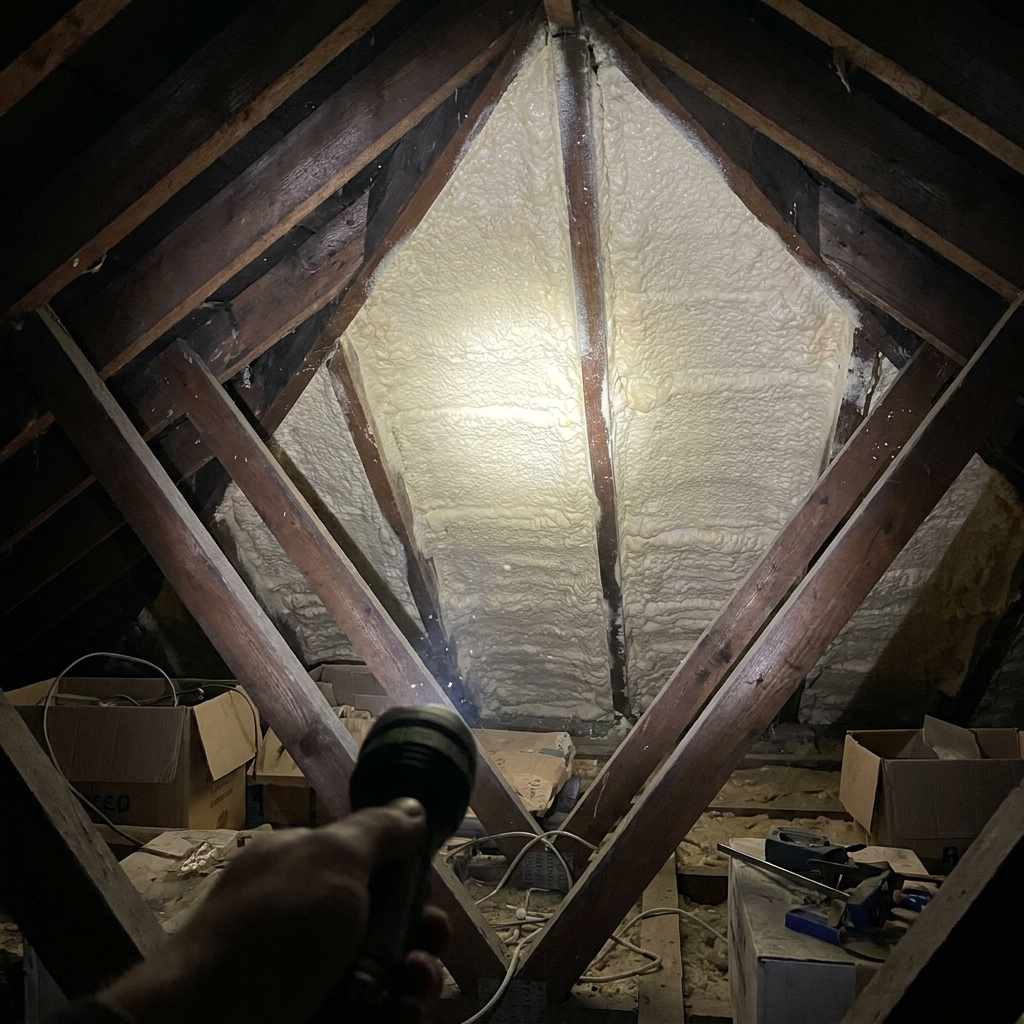
The short answer
Yes — spray foam can almost always be removed from a roof. It is a manual, mechanical job: the foam is scraped, cut and sanded off the rafters and felt. The realistic caveats are that closed-cell foam is harder and dearer to strip, foam bonded to old felt may lift it, and a perfectly invisible finish is not always possible. None of that stops removal — it just shapes the cost and the plan. Get an independent inspection first.
Homeowners sometimes fear that once spray foam is on, it is on for good — that the roof would have to be replaced to get rid of it. That is not true. Removal is well established, and specialists strip foamed roofs routinely. What varies is how difficult and expensive it is, and whether the felt and timbers come through cleanly. This page gives the realistic answer: yes it can be removed, with honest caveats about what “removed” looks like in practice.
Can it be removed? At a glance
- Removable? Yes — almost always
- Method Mechanical stripping, not chemical
- Hardest case Dense closed-cell over perished felt
- Felt risk May lift with the foam — plan for it
- Roof replacement? Rarely needed just to remove foam
- First step Independent inspection & quote
The direct answer
Yes. In the overwhelming majority of cases spray foam can be removed from a roof without replacing the roof itself. Removal contractors do this work routinely, week in and week out. The foam is broken off the rafters and the underside of the felt mechanically — there is no need to take the tiles off or rebuild the structure simply to get the foam out. The question is rarely “can it be removed?” and almost always “how difficult, how clean, and how much?” Understanding those three variables lets you read a quote and judge whether a contractor is being straight with you.
What makes removal harder
Several factors push a job from straightforward to challenging, and they are the same factors that drive the price up or down:
- Foam type: dense closed-cell bonds harder and takes far more sanding than soft open-cell, which tends to crumble away.
- Felt condition: foam on old, perished felt may lift it, meaning the weather barrier must be reinstated.
- Access: a cramped, low loft with little headroom is slower and harder to work than a tall, open one.
- Roof size and complexity: larger roofs, valleys, dormers and cut-up shapes all take longer.
- Foam depth: a thick application of foam is proportionally more work than a thin skim.
See what affects removal cost for how these feed into a quote, and why two similar-looking roofs can be priced very differently.
Will it ever look perfect?
Be realistic about the finish. Mechanical removal can leave timbers clean and the felt intact, but on dense foam over old felt a faint residue or some surface marking can remain even after careful sanding. This is cosmetic and does not affect the structure or, generally, a surveyor’s ability to assess the timbers. What matters to a lender is that the structure is visible and sound — not that it looks brand new. A contractor who promises a flawless, factory-fresh finish on a heavily foamed old roof is over-promising.
| Scenario | Removal outlook |
|---|---|
| Open-cell, sound felt | Straightforward, cleaner finish |
| Closed-cell, sound felt | Harder, dustier, achievable |
| Foam on perished felt | Felt likely reinstated; still removable |
| Decay found underneath | Removal plus remedial joinery |
What about the timbers underneath?
Removing the foam may reveal decay that was hidden behind it. That is not a reason to leave the foam on — the decay does not go away if it stays covered — it is a reason the inspection matters, so you know in advance what you are dealing with and can budget for any repairs rather than being surprised. A sound roof simply gets re-ventilated and reinsulated; a roof with early decay gets the joinery it needs at the same time, which is more efficient than discovering it later.
How long does removing it take?
Because removal is manual, the time it takes tracks the difficulty factors above. An average loft with open-cell foam and good access can sometimes be cleared in a day or so; a large or cut-up roof with dense closed-cell foam over perished felt can run to several days, especially once felt reinstatement and any timber repairs are added. A contractor should give you a realistic timescale in writing, and you should be wary of anyone quoting a suspiciously quick turnaround on a heavily foamed roof, as speed usually comes at the expense of care. See how long removal takes for more, and remember the loft will need reinsulating afterwards.
The sensible order of events
Commission an independent RICS surveyor or qualified specialist to confirm the foam type and timber condition, get two or three quotes that reflect your specific roof, check the contractor’s references and insurance, and only then commit. Keep the inspection and the removal as separate transactions where possible, so the diagnosis is impartial. See how removal works and why people remove it. This page is general information, not surveying or structural advice; an independent inspection is essential before you proceed.
Frequently asked questions
Can all spray foam be removed?
Almost always, yes. Even dense closed-cell foam over old felt can be stripped — it is just harder and more expensive. Removal rarely requires replacing the roof itself.
Does removing spray foam mean a new roof?
Usually not. The foam is taken off the existing structure; the tiles and roof generally stay. Re-roofing is only needed if the roof was already failing for other reasons.
Can spray foam be removed without damaging the felt?
Sound felt can often be retained. Foam bonded to perished felt may lift it, in which case the weather barrier is reinstated as part of the job.
Will removal leave the timbers perfectly clean?
Often very clean, though dense foam can leave faint surface residue. This is cosmetic; what matters is that the timbers are visible and sound for inspection.
Sources & further reading
- RICS — Spray foam insulation consumer guidance (2023)
- PCA — Property Care Association on removal feasibility and roof reinstatement
- GOV.UK — Building regulations Approved Document C on weather resistance
- Trading Standards / Citizens Advice — on exaggerated removal sales claims
This guide is general information, not surveying, structural, legal or financial advice. Whether spray foam needs removing depends on the foam type, install quality, ventilation and your roof timbers’ condition, and an independent inspection by a RICS surveyor or qualified specialist (not a free survey from a company that profits from removal) is essential before you decide.