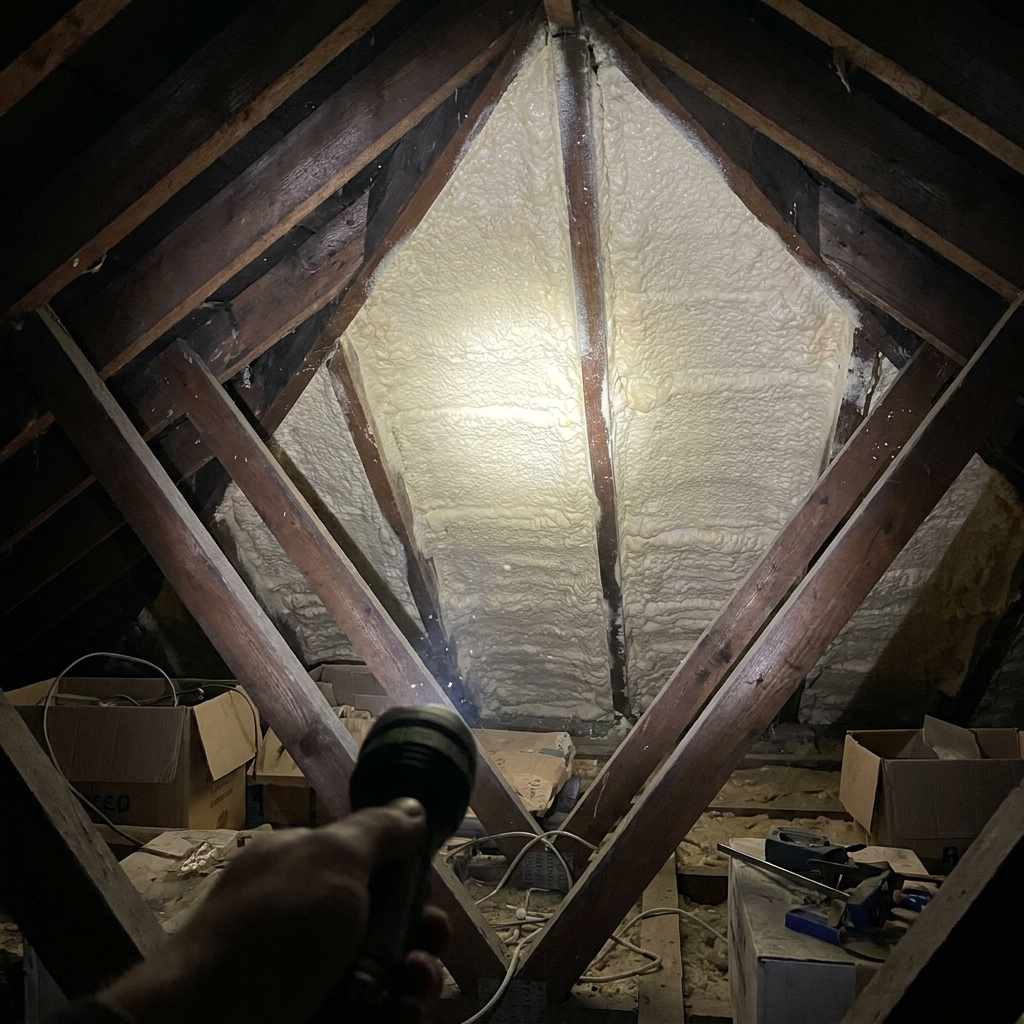
The short answer
The one reliable method for removing cured spray foam is mechanical stripping: scraping, cutting and sanding it off the rafters and felt by hand and power tool. “Chemical” removal does not work practically on cured polyurethane, and “encapsulation” (boarding over the foam) does not remove it or solve the inspection problem. Be cautious of any method that promises a fast, cheap shortcut. The right method for your roof depends on the foam type and felt — confirmed by an independent inspection.
Search for spray foam removal and you will see various “methods” advertised, some of which are marketing rather than genuine techniques. It is worth being clear about what actually works, because choosing the wrong approach can waste money or leave the underlying problem — hidden, possibly damp timbers — unsolved. This page sets out the real method, the variations within it, and the claims that deserve scepticism, so you can judge a contractor’s proposal on its merits.
Removal methods at a glance
- Reliable method Mechanical stripping
- Chemical removal Not practical on cured foam
- Encapsulation Covers foam — does not remove or fix inspection
- Variation Hand tools vs power tools by foam type
- Felt handling Retain or reinstate
- Method choice Driven by foam type, felt, access
The one method that works: mechanical stripping
Cured spray foam is removed physically, and there is no genuine alternative to that. Operatives break the bulk of the foam off the rafters and felt with scrapers and oscillating cutters, then sand and wire-brush the residual bonded skin back to clean, visible timber. Everything else marketed as a “method” is really just a variation on this theme — the choice of tools, the amount of sanding and the care taken with the felt — not a fundamentally different technique. See how spray foam is removed for the step-by-step detail of the work.
Variations within mechanical removal
The method flexes with the job rather than changing in principle:
- Open-cell foam: softer, often broken out quickly with scrapers and minimal sanding.
- Closed-cell foam: dense and bonded, needing heavier cutting and extensive sanding of the residual skin.
- Felt retention: careful stripping to preserve sound felt and keep the roof weathertight.
- Felt reinstatement: where old felt lifts with the foam, the secondary weather barrier is renewed.
- Dust control: sealing and respiratory protection scaled to the size of the job.
Claims to question
Several advertised “methods” do not stand up to scrutiny, and recognising them protects you from wasting money:
| Claim | Reality |
|---|---|
| Chemical / solvent removal | No practical solvent dissolves cured foam in situ |
| “Wash off” / fast strip | Removal is slow, manual labour by nature |
| Encapsulation (board over) | Hides foam; does not remove it or restore inspection |
| Leave it, just ventilate | May help airflow but leaves timbers hidden |
Why “just ventilate” is not a removal method
Some firms suggest adding vents and leaving the foam in place. Improving ventilation can genuinely help a borderline roof breathe, and in some cases an independent surveyor may consider it a reasonable measure. But it does not remove the foam, does not expose the timbers for inspection, and so generally does not resolve the mortgage obstacle. It is a mitigation, not a cure, and it should only ever be proposed by someone independent — not by a firm with a financial interest either way.
Why method choice matters financially
Because the real work is manual, the “method” mainly determines how much labour and disposal the job needs — which is why closed-cell roofs cost more to strip than open-cell ones, and why old felt adds work and cost. A contractor proposing a genuine mechanical strip with proper felt and timber care, dust control and waste disposal is quoting for the right method; one promising a cut-price chemical shortcut is not, and a low headline price often hides corners cut. Compare against what affects cost.
What a genuine method statement should include
A trustworthy contractor will describe the actual method in writing rather than just naming a price. Look for a quote that sets out how the work area will be protected and dust controlled, how the foam will be mechanically removed, how sound felt will be preserved or perished felt reinstated, how the timbers will be exposed for inspection, how the waste will be disposed of, and how the roof will be left ready to reinsulate. A method statement that covers these points shows the firm understands the real job; a vague one-line quote with a headline figure and no detail is a warning sign. Ask the questions in questions to ask a removal company before signing anything.
Choosing the right approach for your roof
The correct method for your roof depends on the foam type, the felt condition and access — all of which an independent surveyor can establish before you commission anyone. That keeps the contractor honest and the quote realistic, and it means you are buying the work your roof actually needs rather than the work that is easiest to sell. See the removal process and choosing a company. This page is general information, not surveying or structural advice; an independent inspection of your roof is essential.
Frequently asked questions
Is there a chemical method to remove spray foam?
No practical one. Cured polyurethane has no effective in-situ solvent, so removal is mechanical — scraping, cutting and sanding.
Can I just board over the spray foam instead of removing it?
Encapsulation hides the foam but does not remove it or restore inspection access, so it usually will not satisfy a lender or resolve trapped-moisture risk. It is not equivalent to removal.
Why are some removal methods so much cheaper?
A genuine mechanical strip with dust control, felt care and disposal is labour-intensive. Suspiciously cheap quotes often cut corners or rely on shortcut claims that do not actually solve the problem.
Which method is right for my roof?
It depends on the foam type, felt condition and access. An independent surveyor should establish these before you commission removal, so the method and quote fit your roof.
Sources & further reading
- RICS — Spray foam insulation consumer guidance (2023)
- PCA — Property Care Association on removal techniques and roof reinstatement
- Trading Standards / Citizens Advice — on misleading removal method claims
- GOV.UK — Building regulations Approved Document C on moisture resistance
This guide is general information, not surveying, structural, legal or financial advice. Whether spray foam needs removing depends on the foam type, install quality, ventilation and your roof timbers’ condition, and an independent inspection by a RICS surveyor or qualified specialist (not a free survey from a company that profits from removal) is essential before you decide.