The short answer
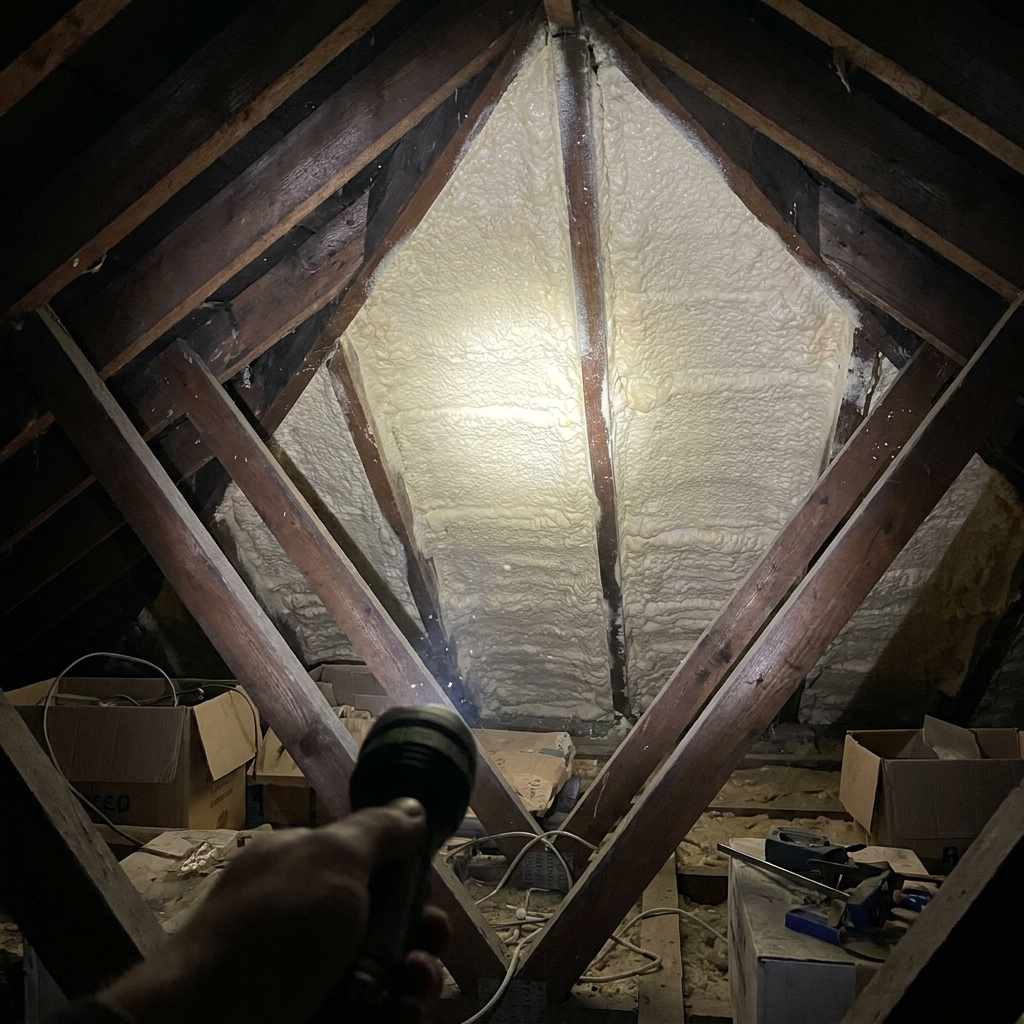
The main problems spray foam can cause in a roof are hidden timbers, lost ventilation, trapped moisture and bonded-on felt. Foam over the rafters stops a surveyor seeing the structure; sealing the rafter line can shut off airflow; and if vapour is trapped against the timber, condensation and decay can follow. Not every foamed roof has these problems — it depends on the type, ventilation and install. Confirm with an independent inspection, not a removal sales visit.
To judge whether spray foam is harming a particular roof, you need to understand the specific ways it can go wrong — not a vague sense that foam is bad. Each problem has a mechanism rooted in how a pitched roof manages heat and moisture. Knowing them lets you read your own roof’s warning signs and ask a surveyor the right questions. None of these problems is universal; they appear when the foam, the ventilation or the install was wrong for that roof.
Roof problems at a glance
- Problem 1 Hidden timbers — no inspection access
- Problem 2 Lost roof ventilation
- Problem 3 Trapped moisture / condensation
- Problem 4 Timber decay over time
- Problem 5 Felt bonded / damaged on removal
- Universal? No — depends on roof & install
Problem 1: hidden roof timbers
This is the most consistent issue and the one that drives the mortgage problem. When foam is sprayed across the rafters and the underside of the felt, it covers the very timbers a surveyor must inspect. Even a perfectly sound roof becomes “unverifiable” — the surveyor cannot certify what they cannot see, so they default to caution in their report. That is why foam affects mortgages regardless of whether anything is actually wrong underneath, and why this single problem can stall a sale or remortgage on an otherwise healthy house.
Problem 2: lost ventilation
A traditional cold pitched roof relies on air moving through the void — in at the eaves, out at the ridge — to carry away moisture. Spraying foam at the rafter line can close off that path entirely. Ventilation is not optional in such roofs; without it, humid air from the home has nowhere to go and the conditions for condensation build up steadily. The PCA and BRE both emphasise ventilation as central to a healthy roof, and the loss of it is the root cause behind most of the moisture problems that follow.
Problem 3: trapped moisture and condensation
This is the mechanism behind the genuine structural risk. Warm, moist air rises from the house through the ceiling. If it reaches a cold surface — and especially if a closed-cell vapour barrier or old felt holds it there — it condenses into liquid water. Foam sprayed directly onto perished felt can sandwich moisture against the timber with no route to dry out. Persistent dampness, rather than a single wetting event, is what eventually threatens the wood; see condensation and damp for how this develops.
Problem 4: timber decay
Where moisture is trapped against timber long enough, decay can develop — wet rot or, in the worst cases, more serious fungal attack that spreads through the structure. This is the outcome surveyors and lenders most fear, because it affects the roof’s structural integrity and can be expensive to remedy with splicing or replacement rafters. Critically, the foam hides it until removal, which is why undiscovered decay is the real reason an independent inspection matters before, not after, you commit to anything.
Problem 5: felt and removal complications
Foam often bonds to the roofing felt, which is the secondary barrier that keeps wind-driven rain out if a tile slips. On removal, the felt may lift or tear with the foam, sometimes meaning that barrier has to be reinstated. In older roofs the felt may already be perished beneath the foam. This does not mean foam should never be removed — it means the job has to be planned and priced honestly, and the cost reflects it; see what affects cost.
| Problem | Mechanism | Consequence |
|---|---|---|
| Hidden timbers | Foam covers structure | Mortgage / survey block |
| Lost ventilation | Rafter line sealed | Humidity build-up |
| Trapped moisture | Vapour held at cold surface | Condensation |
| Timber decay | Prolonged dampness | Structural risk |
How to find out if your roof is affected
These problems are detectable — staining, a musty smell, damp readings and timber checks all tell the story — but only by getting under or behind the foam, which needs a professional with the right access and equipment. Remember that the presence of foam alone does not prove any of these problems exist; it simply prevents you ruling them out from the loft hatch. Look at signs you may need removal, then commission an independent RICS surveyor or qualified specialist rather than a removal firm. This page is general information, not surveying or structural advice; an independent inspection is essential.
Frequently asked questions
Does spray foam always cause roof problems?
No. The problems — trapped moisture, lost ventilation, decay — depend on the foam type, the ventilation and the install. Many foamed roofs remain dry and sound. The constant issue is hidden timbers, which affects mortgages even on a healthy roof.
How do I know if foam has damaged my roof timbers?
You usually cannot see it without removing or accessing behind the foam. Warning signs include damp staining, a musty smell and high moisture readings, but a specialist inspection is needed to confirm.
Does spray foam damage roofing felt?
It can bond to the felt, and removal may lift or tear it. In older roofs the felt may already be perished. A removal plan should account for reinstating the weather barrier if needed.
Can spray foam roof problems be fixed without full removal?
Sometimes ventilation can be improved, but if the foam is trapping moisture or blocking inspection, removal is usually the route to a lasting fix. An independent survey should guide the decision.
Sources & further reading
- RICS — Spray foam insulation consumer guidance (2023)
- PCA — Property Care Association on roof ventilation, condensation and timber decay
- BRE — Building Research Establishment on cold roof ventilation and moisture
- GOV.UK — Building regulations Approved Document C, resistance to moisture
This guide is general information, not surveying, structural, legal or financial advice. Whether spray foam needs removing depends on the foam type, install quality, ventilation and your roof timbers’ condition, and an independent inspection by a RICS surveyor or qualified specialist (not a free survey from a company that profits from removal) is essential before you decide.